💌 Just a quick note before we get started: this post contains affiliate links. That simply means I might earn a small commission (at no extra cost to you) if you decide to book or buy through one of the links. It helps me keep Postcards from Kirsty running — and hopefully helps you plan your own adventure too!
Singapore may be a relatively young country—only gaining independence in 1965—but don’t let that fool you. This Singapore itinerary is proof that it’s one of the most modern, innovative, and futuristic destinations I’ve ever visited (though, fair warning, it is on the pricey side!).
From its striking skyline and cutting-edge architecture to its rich blend of cultures, world-class food, and buzzing nightlife, Singapore has so much to offer. It’s no surprise that many travellers choose to stop here en route to other destinations—exactly what we did.
Our visit to Singapore was part of a larger three-week Southeast Asia itinerary, where we spent three days exploring the city before heading on to Malaysia. And honestly? Even with just a few days, Singapore completely won me over.
It’s spotless, incredibly safe, and feels years ahead of its time. While it may not be packed with endless attractions, simply wandering the streets, soaking up the atmosphere, and eating your way through the city makes the trip worthwhile.
If it’s your first time visiting, this Singapore itinerary is perfect for you—and like us, you can easily slot it into a bigger Asia adventure.
Best Time to Visit Singapore: Weather, Festivals & Travel Tips
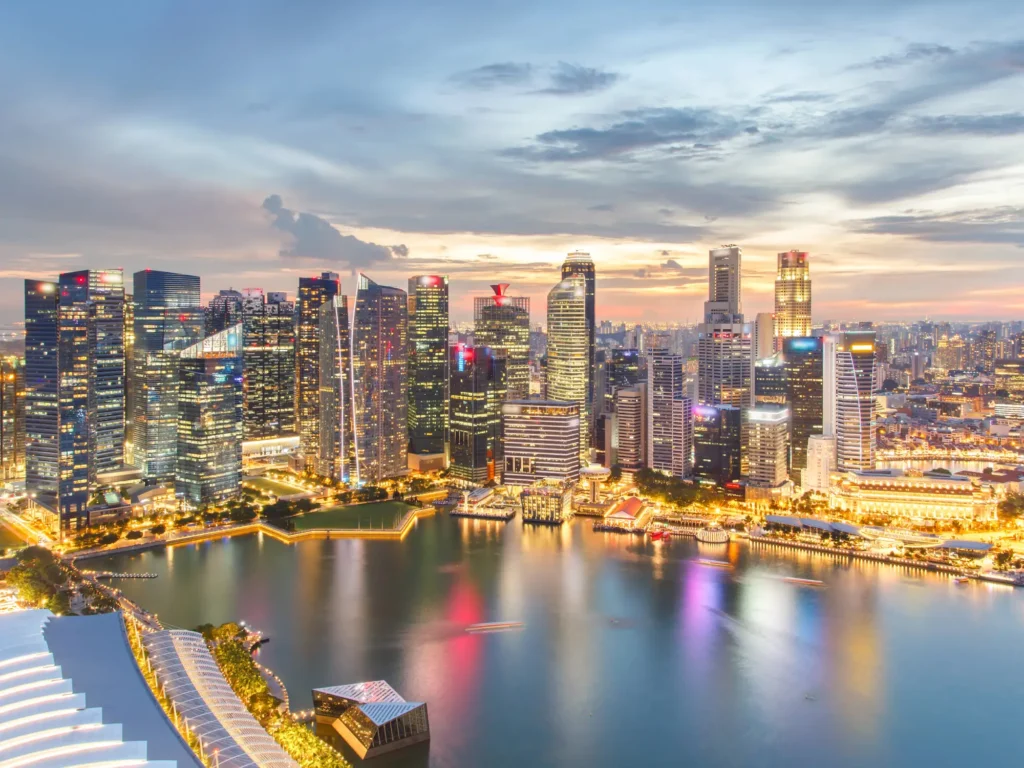
The best time to visit Singapore is generally between December and June, when the city experiences less rainfall, lower humidity, and more sunshine—ideal conditions for sightseeing and exploring.
That said, Singapore is a fantastic year-round destination, with fairly consistent weather throughout the year. No matter when you visit, you’re likely to be greeted with warm temperatures and plenty of opportunities to get out and explore.
I visited Singapore in July and was pleasantly surprised. It was much quieter than I expected, with fewer crowds than peak season. The only downside was the heat—it was incredibly hot and humid, which made walking around the city a little exhausting at times.
Aside from that, I had a really enjoyable experience visiting in the height of summer, and I’d still recommend it if that’s when your travels take you.
How to Get from Singapore Airport to the City Centre
Singapore’s main airport is Singapore Changi Airport (SIN)—and it’s consistently ranked as one of the best airports in the world. Getting from the airport into the city is easy, affordable, and efficient, with several transport options to suit different budgets and travel styles.
How to Get from Singapore Airport to the City by MRT
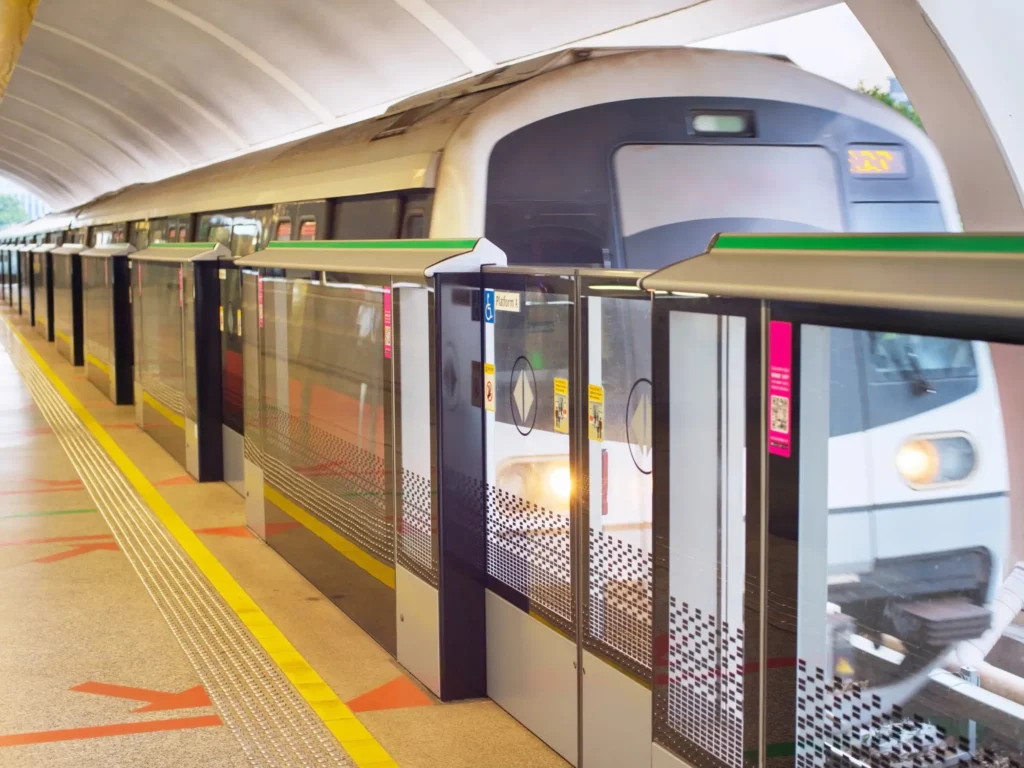
Singapore’s underground system, the MRT, is one of the best ways to get around the city. It’s clean, fast, affordable, and fully air-conditioned—perfect for escaping the tropical heat.
The MRT station at Changi Airport is located in the basement of Terminals 2 and 3. If you arrive at Terminal 1, you’ll need to hop on the Skytrain to Terminal 3 first.
A journey into the city takes around one hour and costs roughly £2 one-way. Tickets can be purchased from automated machines or the Passenger Service Centre.
To reach the city, you’ll need to transfer once:
- Option 1: Take the train from Changi Airport to Tanah Merah, then switch to the East–West Line towards Tuas Link.
- Option 2: Take the train from Changi Airport to Expo, then transfer to the Downtown Line towards Bukit Panjang.
If you’re unsure which route suits you best, it’s worth checking the full MRT map before you travel.
⏰ Good to know: The MRT does not run 24 hours. The first train from Changi to Tanah Merah departs at 5:31am (Mon–Fri) and 5:59am (Sundays & public holidays). The last connecting train towards Tuas Link leaves at 11:18pm.
Taking the Bus from Singapore Airport to the City
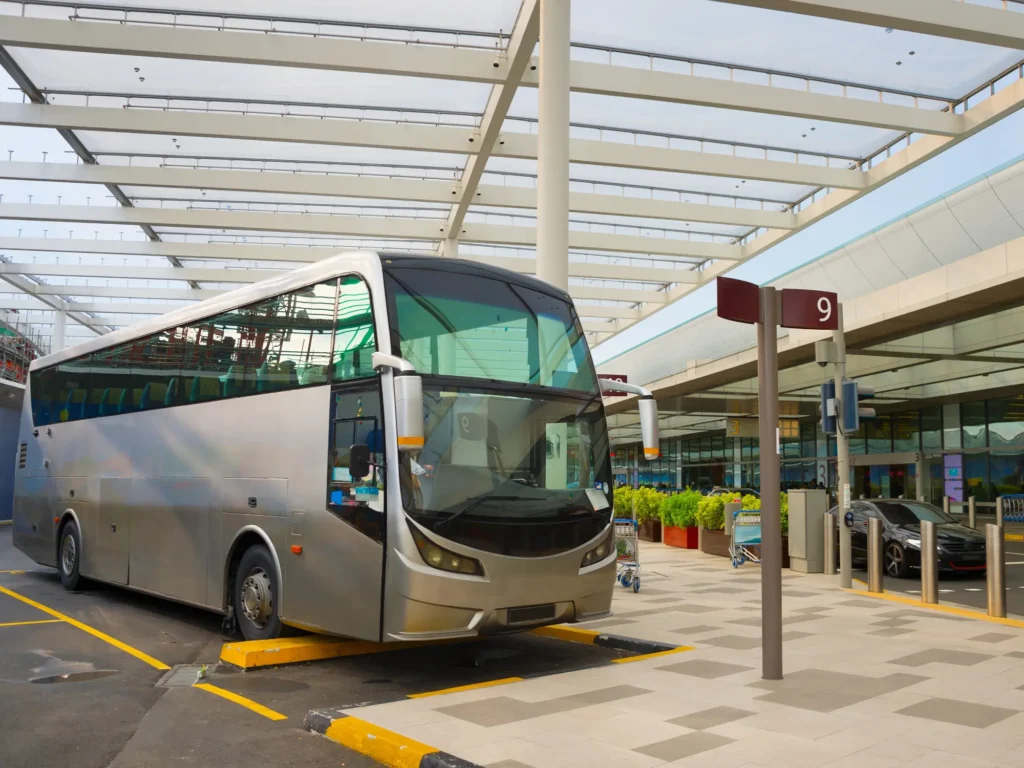
If you prefer a more relaxed option, buses are another affordable way to reach the city.
You can book a hotel shuttle bus from the Ground Transportation Desk in the arrivals hall. These serve many major hotels and run hourly between 7am and 11pm, with tickets costing around £7 per adult.
Public buses are even cheaper. The most popular is Bus 36, which passes Raffles Boulevard and Orchard Road. It runs from around 6am to midnight, takes about an hour, and costs roughly £2 one-way.
Other public bus options include 24, 27, 34, 53, 110, and 858, departing from Terminals 1, 2, and 3 via the basement bus bays.
If you arrive at Terminal 4, you can catch:
- Buses 24, 34, 36, and 110 near Car Park 4B
- Buses 27, 53, and 858 near the SATS Inflight Catering Centre 1
Singapore Airport to City by Taxi (Fastest & Easiest Option)
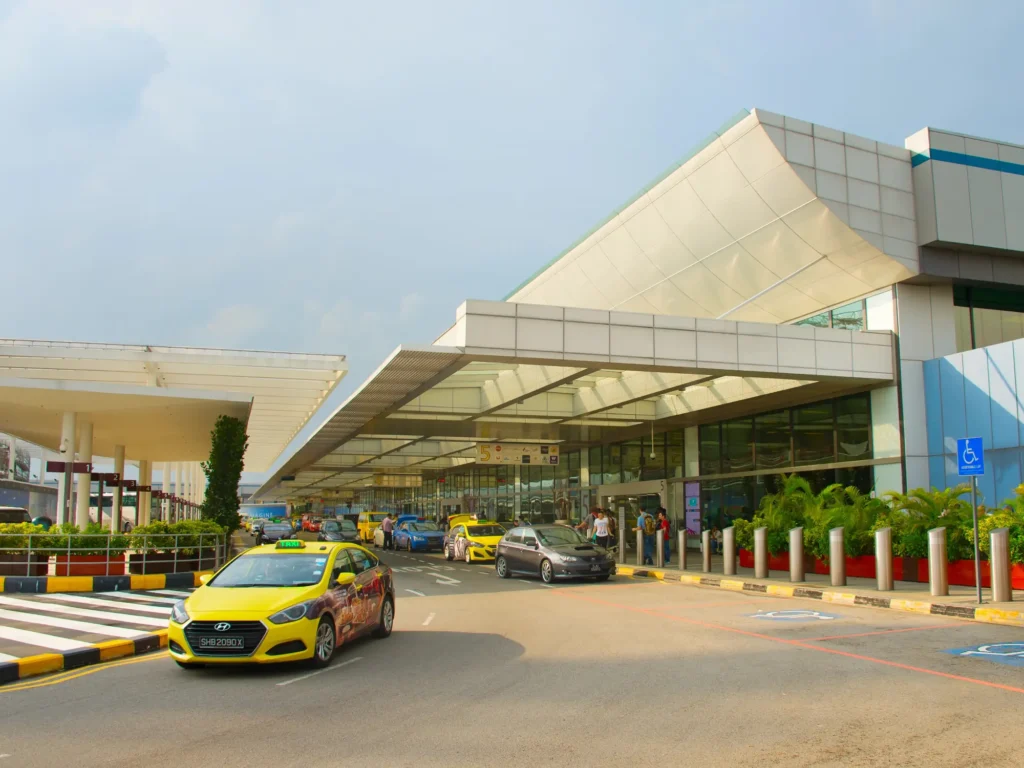
Getting a taxi from Singapore Airport to the city is the most comfortable and convenient option, especially if you’re arriving late, carrying lots of luggage, or just want a stress-free journey.
You’ll find taxi ranks at the arrivals areas of Terminals 1, 2, 3, and 4. A ride to downtown Singapore takes around 20–30 minutes and typically costs between £10 and £25, depending on traffic. All fares are metered.
There is also a small airport surcharge (around £3–£5) added to your fare.
Alternatively, you can use Grab (Singapore’s version of Uber) by downloading the app and booking a ride directly from the terminal.
If you prefer to organise everything in advance, a private airport transfer is another great option. Some vehicles can carry up to 15 people and start from around £13 per person.
Getting Around Singapore: Transport Tips for First-Time Visitors
Getting Around Singapore on Foot (Walking)
One of the best ways to explore Singapore is on foot—especially in the downtown area. The city centre is compact, mostly flat, and extremely pedestrian-friendly, making it easy and safe to walk around.
If you’re heading to neighbourhoods like Clarke Quay or Chinatown, expect a longer walk of around 20–30 minutes from downtown. But the upside? You’ll see so much more of the city along the way, from hidden cafés to impressive architecture.
Cycling in Singapore: Where & How to Rent Bikes
Singapore’s nature parks and recreational areas are perfect for cycling, thanks to their flat terrain and low traffic. These areas offer a peaceful way to explore the city at a slower pace.
Cycling in the downtown core, however, isn’t ideal. The roads are busy, and bike lanes are limited.
You can rent bikes from companies like City Scoot and GoCycling, with average prices around £7 per hour. If you’d rather not navigate on your own, a guided bike tour is a great alternative—and a fun way to learn about the city.
Using Grab & Taxis in Singapore (Fast & Convenient)
Grab is Singapore’s version of Uber and is one of the most convenient ways to get around the city. Just download the app, enter your destination, and you’re good to go. It’s often reasonably priced, especially for short distances.
Other ride-hailing apps you can use include Gojek, Ryde, and TADA.
If you prefer traditional taxis, you can easily flag one down on the street—there are over 14,000 taxis operating day and night throughout the city.
Getting Around Singapore by MRT (Metro System)
Singapore’s MRT (Mass Rapid Transit) system is one of the most efficient, affordable, and reliable ways to travel around the city. Trains run daily from 5:30am to midnight.
Like everything else in Singapore, the MRT is spotless, air-conditioned, and incredibly easy to use. The network consists of 6 lines and over 140 stations, connecting most of the city’s main attractions.
The Downtown Line is especially useful for tourists, as it passes many popular sights. To plan your route, it’s worth checking the full MRT map in advance.
Taking Public Buses in Singapore
Singapore has an extensive and well-organised bus network, with over 300 routes covering virtually every corner of the city.
Buses are affordable, clean, and easy to use. Fares vary depending on the distance travelled, but they’re generally very budget-friendly.
You can use this bus route map to plan your journey. If you’d rather keep things simple, a hop-on, hop-off bus is a great option—especially if you’re short on time and want to see the main highlights.
River Taxis in Singapore: A Scenic Way to Travel
River taxis are a fun and relaxing way to explore Singapore from a different perspective. Cruising along the Singapore River gives you incredible views of the skyline and waterfront areas.
The route includes Esplanade, Boat Quay, Clarke Quay, and Robertson Quay. If you’re staying near the river, this can even double as a scenic way to get around day-to-day.
3-Day Singapore Itinerary: Complete Overview
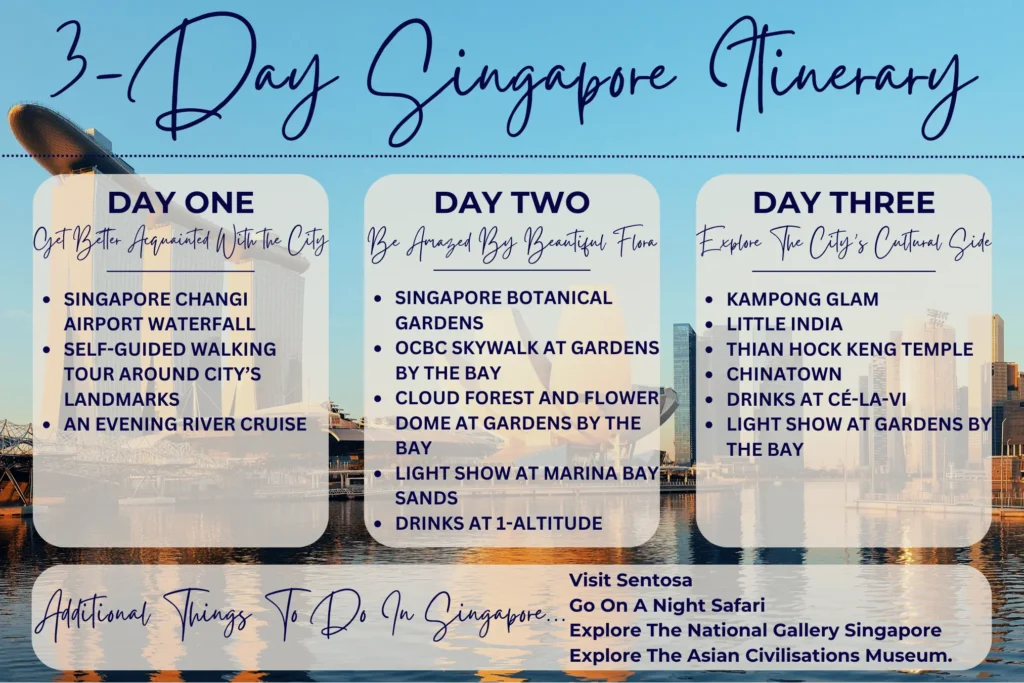
Day 1: Discover the Highlights of Singapore
Be Amazed by the Indoor Waterfall at Singapore Changi Airport
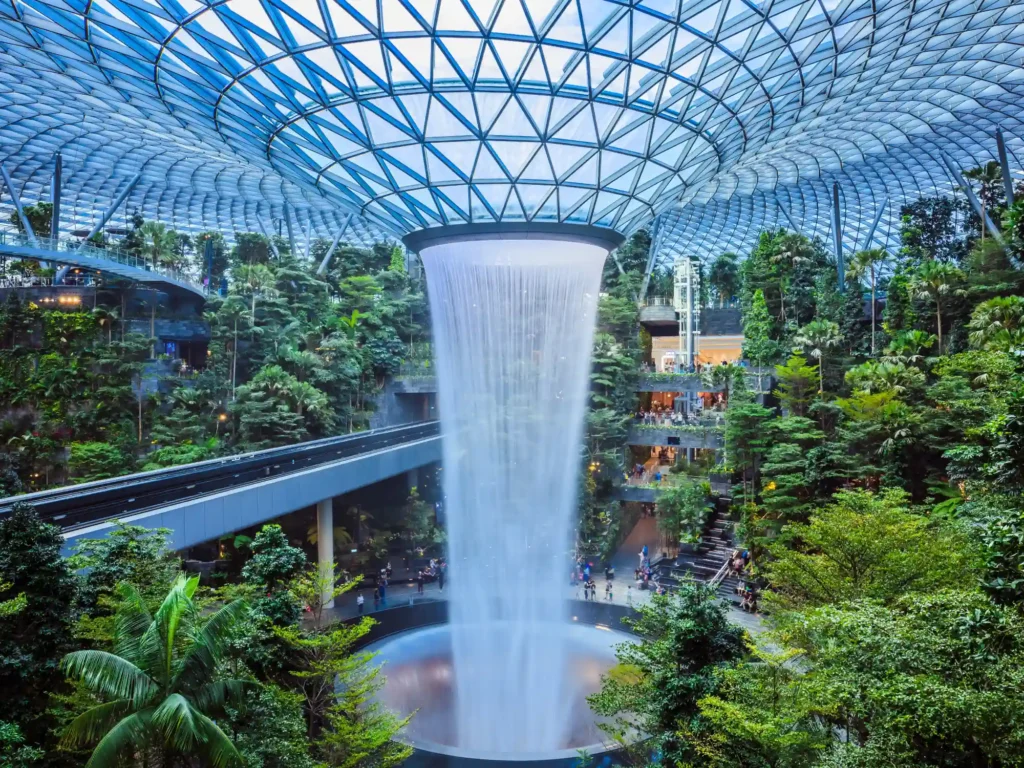
Before I fully get into day one of the itinerary, I want to mention one thing. If you are flying into Singapore Jewel Changi Airport, you need to visit the 40m rain vortex waterfall inside the airport. Yes, you read that correctly! Singapore’s airport is home to the tallest indoor waterfall in the world.
The waterfall can be accessed from Terminals 1, 2, and 3. If you arrive in Terminal 4 but really want to see it, you can take the free shuttle bus to Terminal 2. Bonus points if your flight arrives at night — you’ll also get to see the light show at the waterfall.
Self-Guided Walking Tour of Singapore City: Architecture & Landmarks
One of the best things to do in Singapore is simply walk around the city and soak up the incredible architecture. Best of all, it’s completely free!
The self-guided walking tour below will take you a full day, especially if you want to stop for lunch, visit museums, and explore the major landmarks along the way. These include the Raffles Hotel (where you can stop for a Singapore Sling), the Merlion Statue, the Singapore Flyer, the Helix Bridge, and Marina Bay Sands.
This route will also take you along the promenade, offering some of the best views of the city.
Alternatively, you can organise a private walking tour with a guide who will share insights about each landmark. Or, for something more unique, opt for a guided bike tour. If walking isn’t your thing, a hop-on, hop-off bus is another great way to see the main sights.
Top Sights to See in Singapore on a Walking Tour
(Starting at Clarke Quay, clockwise)
Clarke Quay – Riverside Restaurants and Bars
Clarke Quay is a historic riverside quay in Singapore’s business and financial district. It’s packed with restaurants and bars, and is also one of the departure points for Singapore River Cruises.
Raffles Hotel Singapore – History and the Singapore Sling
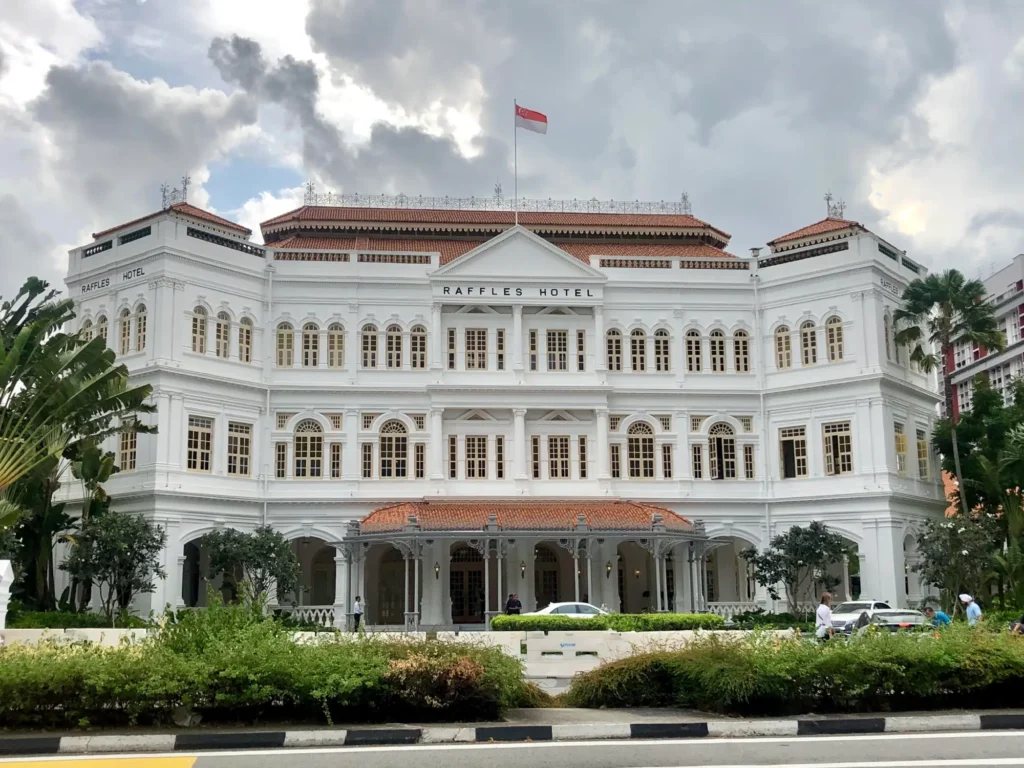
Founded in 1887, Raffles Hotel is one of the world’s most iconic luxury hotels. It is named after Singapore’s founder, Sir Stamford Raffles.
It’s also one of the few remaining 19th-century hotels in the world. With its beautiful neo-Renaissance architecture, it’s a refreshing contrast to Singapore’s modern skyscrapers.
The Long Bar at Raffles Hotel is where the Singapore Sling was first created in 1915, so it feels only fitting to stop here and try one in its birthplace.
St Andrew’s Cathedral & National Gallery Singapore – Culture and Art
With its impressive tower and spire, St Andrew’s Cathedral is hard to miss. It’s the largest cathedral and the oldest Anglican site of worship in Singapore.
You can visit the interior for free between:
- 9am–5pm (Tuesday–Friday)
- 11:30am–6:30pm (Saturday)
- 7:30am–5:30pm (Sunday)
Right next door is the National Gallery Singapore, which houses the world’s largest public collection of modern Southeast Asian art. It’s open from 10am–7pm, and general admission with a free guided tour costs around £12. Allow 2–3 hours to explore.
Singapore Flyer – Observation Wheel and Scenic Views
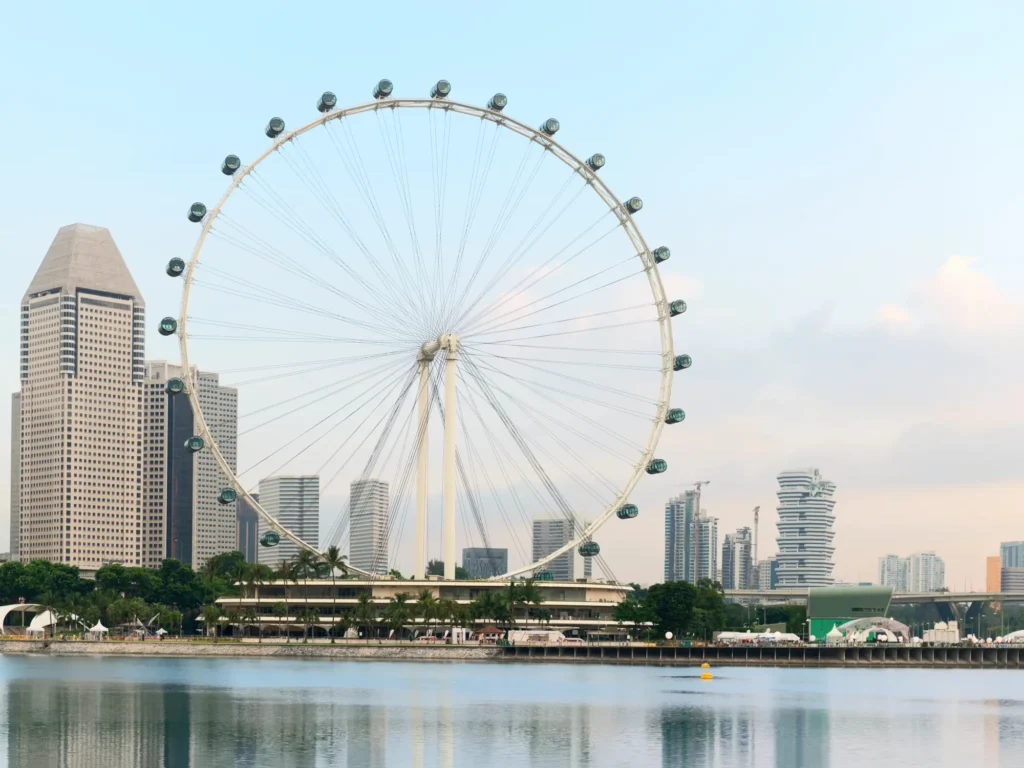
The Singapore Flyer is one of the world’s largest observation wheels, standing at 165 metres tall.
Tickets cost around £23 and include entry to the Time Capsule experience, which explores Singapore’s past, present, and future, followed by a 30-minute scenic ride.
Waterfront Promenade Singapore – Marina Bay Views
Looping around Marina Bay for about 2 miles, the Waterfront Promenade is a comfortable walking route that connects many of the city’s landmarks.
From here, you’ll get incredible views of Singapore’s skyline. It’s also a great place to stop for a refreshment — fresh coconut water, anyone?
Helix Bridge Singapore – Iconic Pedestrian Bridge
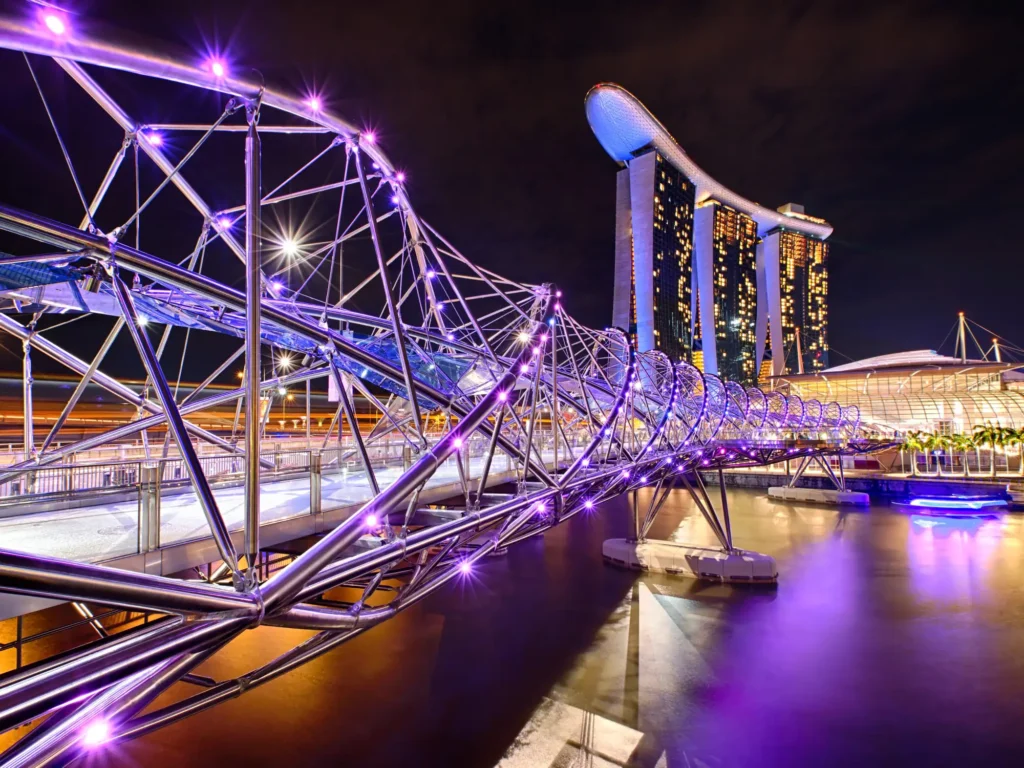
The Helix Bridge is a pedestrian bridge connecting the Olympic Youth Park to the Marina Bay waterfront.
Opened in 2010, its design was inspired by the double-helix structure of DNA. It’s especially beautiful at night when it’s lit up.
Marina Bay Sands – SkyPark Observation Deck & Infinity Pool
When you reach Marina Bay, you’ll get a fantastic view of Marina Bay Sands. Opened between 2010 and 2011, it has become one of Singapore’s most iconic landmarks.
The hotel consists of three high-rise towers topped by a massive ship-like structure, home to the rooftop bar, observation deck, and the world’s largest infinity pool.
Tickets to the SkyPark Observation Deck cost roughly £16–£19. In my opinion, the observation deck actually offers better views than the rooftop bar.
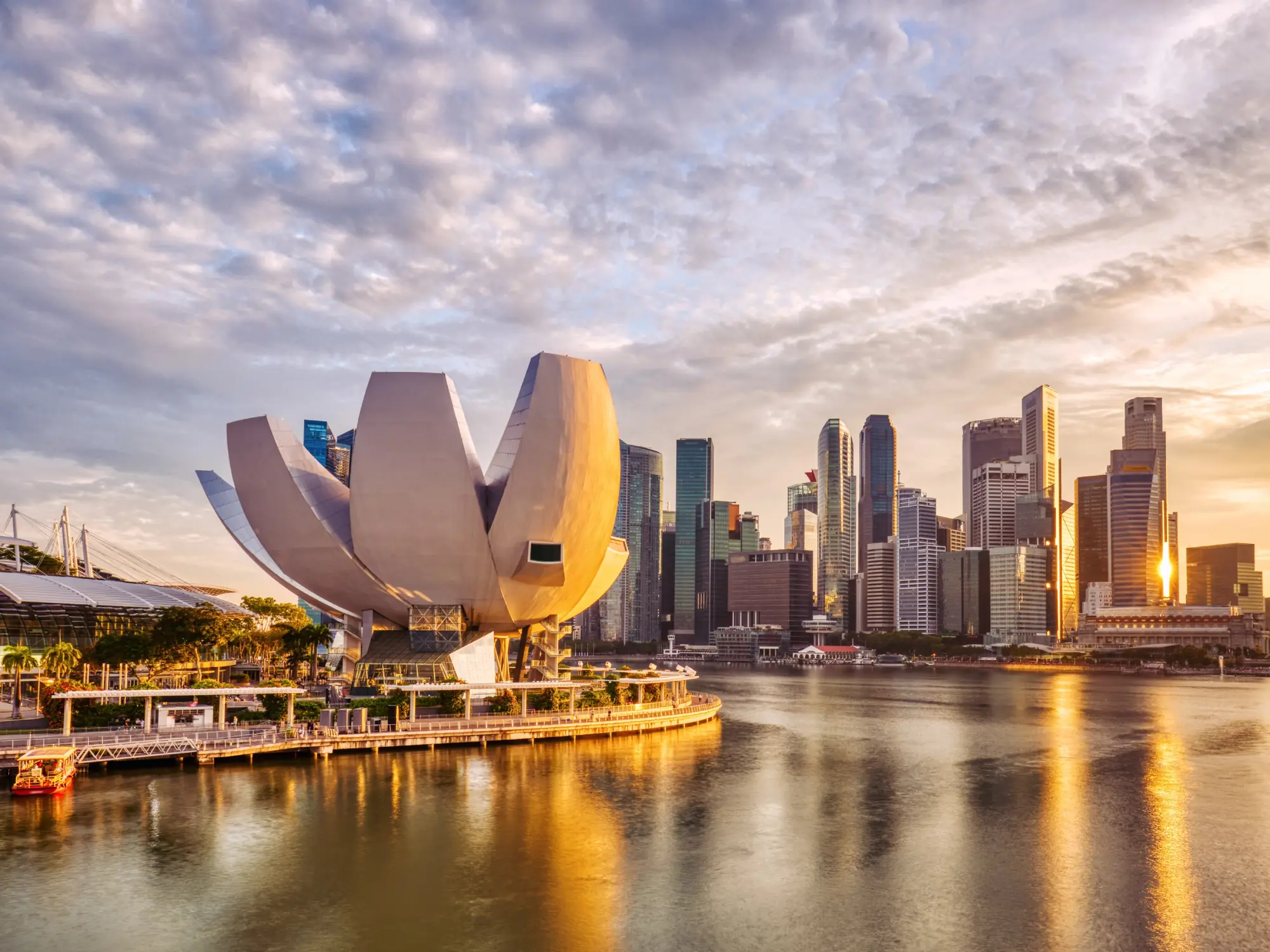
On the grounds, you’ll also find a huge luxury shopping mall and the ArtScience Museum, which hosts some really interesting exhibitions.
Merlion Singapore – Iconic Statue and Marina Bay
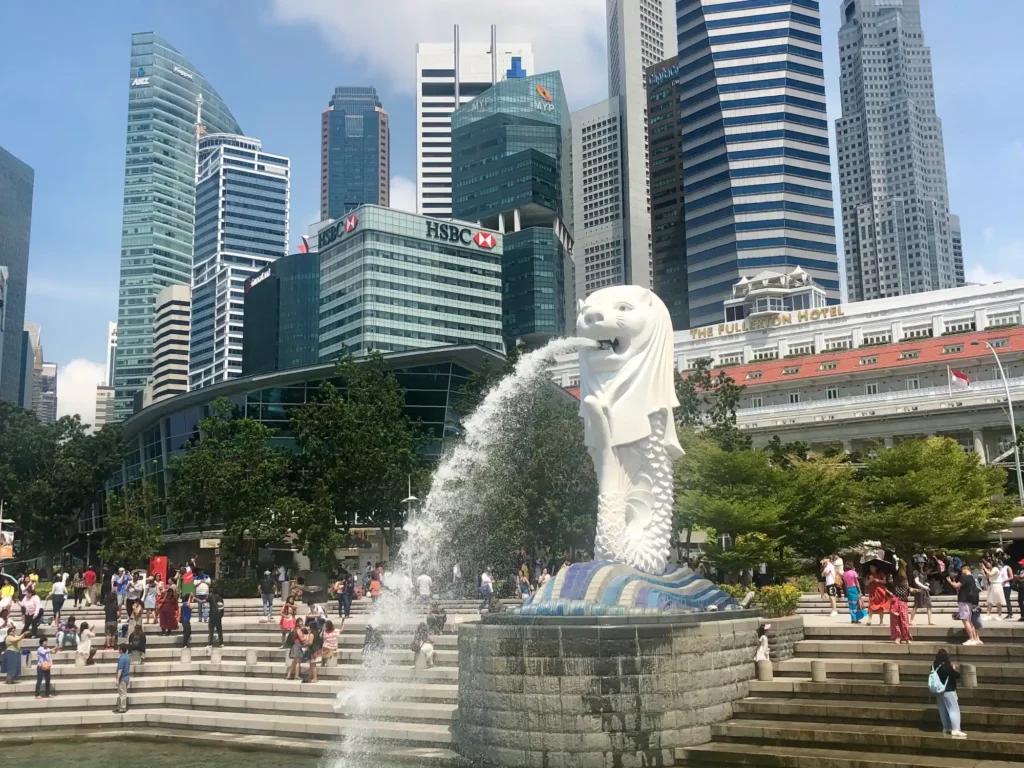
The Merlion is one of Singapore’s must-see attractions. This 28-metre-tall statue, half-fish and half-lion, overlooks Marina Bay.
Its body represents Singapore’s origins as a fishing village, while its lion head references the city’s original name, Singapura — meaning “Lion City” in Malay.
As one of the most popular tourist spots, it can get busy, so try to visit early in the day for a quieter experience.
Fullerton Hotel Singapore – Rooftop Bar and Architecture
The Fullerton is pure luxury and one of Singapore’s most iconic five-star hotels. Built in 1928, it’s architecturally stunning.
You can visit its rooftop bar, Lantern, which is framed by an infinity pool and greenery. The bar offers panoramic views of the city skyline.
Raffles Landing Site & Asian Civilisations Museum – Singapore History
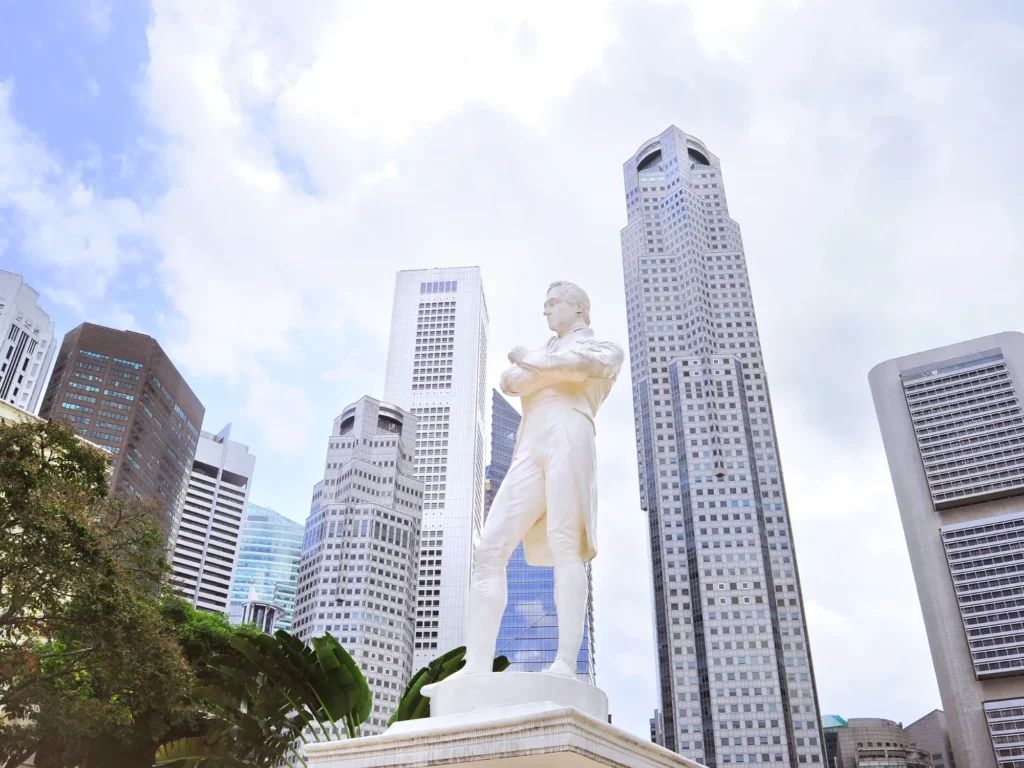
On this walking route, you’ll pass the statue of Sir Stamford Raffles, the founder of modern Singapore.
Right next to it is the Asian Civilisations Museum, which houses over 1,300 artefacts from across Asia. You’ll need a couple of hours to explore it fully, and adult tickets cost around £9.
Nearby, you’ll also find the Victoria Concert Hall, the Arts House, and the Parliament House.
Evening Boat Cruise Around Marina Bay Singapore
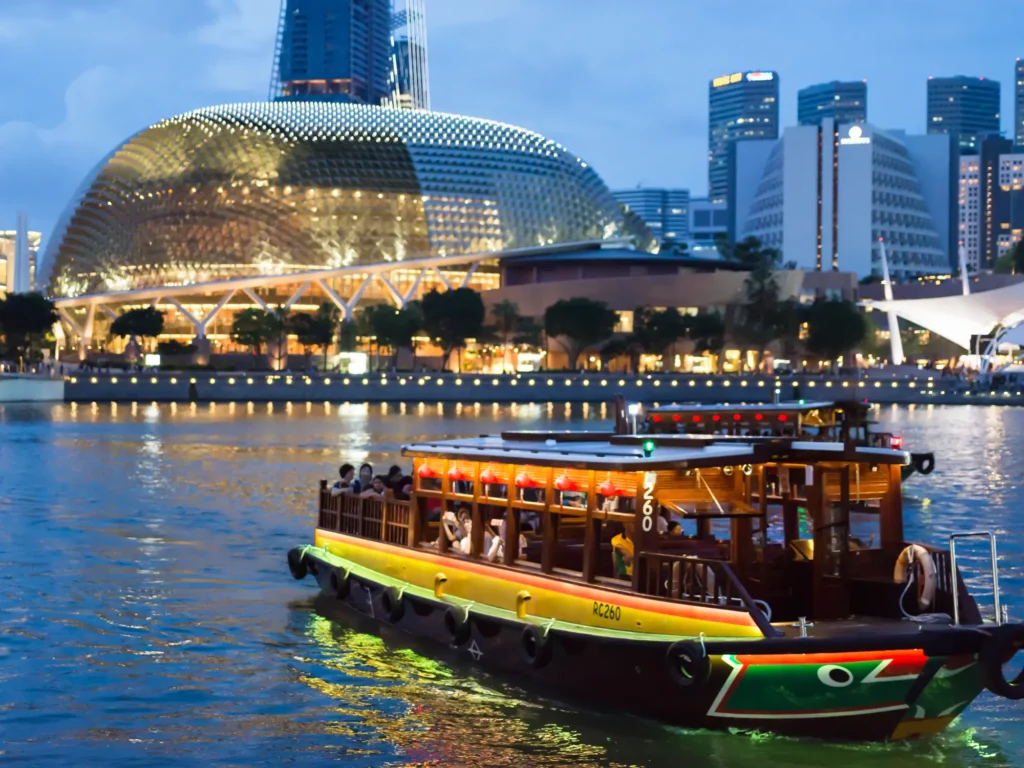
There are loads of companies offering river cruises along the Singapore River. We chose Singapore River Cruise, where tickets cost around £18 for a 40-minute round trip.
I’d really recommend doing this in the evening, as it offers a completely different perspective of the city.
For an even more special experience, you could opt for a Tall Ship Sunset Cruise with a five-course seated dinner.
Day 2: Explore Singapore’s Stunning Gardens & Nature
Explore the Singapore Botanic Gardens: UNESCO World Heritage Site
Founded in 1859, the Singapore Botanic Gardens showcases stunning tropical flora in a spectacular landscape. It is the first and only tropical botanic garden to be included on UNESCO’s World Heritage List.
Highlights include the National Orchid Garden, Ginger Garden, and Ethnobotany Gardens. Admission is free, and the gardens are open daily from 5am–12am.
This half-day Botanic Gardens walking tour lets you experience the gardens at sunrise, enjoy a local breakfast, and soak in the morning buzz of nearby Tiong Bahru.
Walk the OCBC Skyway at Gardens by the Bay: Singapore Supertrees Experience
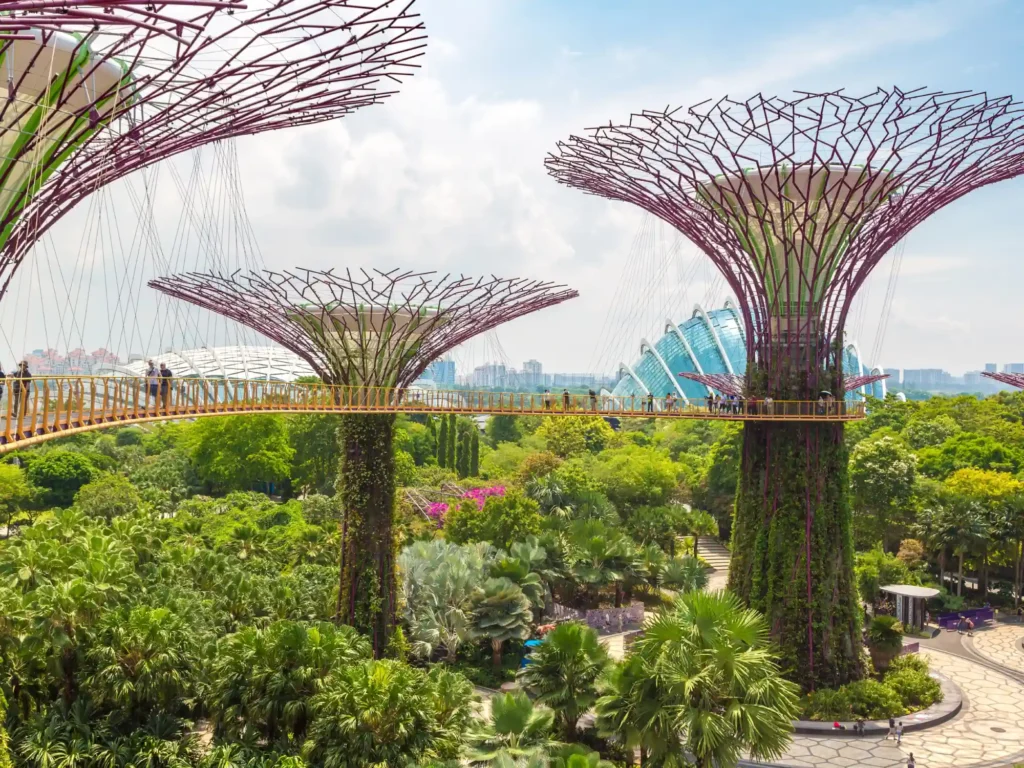
One of Singapore’s most iconic attractions, Gardens by the Bay, is home to a wide variety of rare plant species.
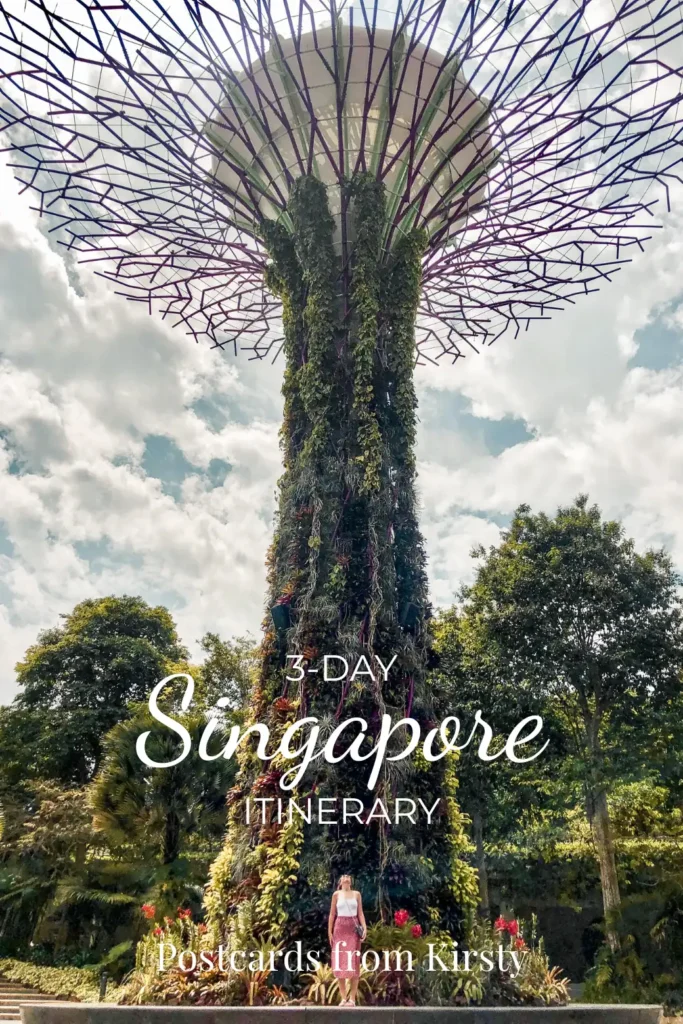
The highlight is the Supertree Grove, where you can walk along the OCBC Skyway, connecting all the supertrees, and reach the super-tree observatory for incredible views.
Tickets for the OCBC Skyway cost about £7 — well worth it for this unique Singapore experience.
Visit the Cloud Forest and Flower Dome at Gardens by the Bay
The Cloud Forest features one of the world’s tallest indoor waterfalls and a lush green mountain with plants from around the globe. Walk along the aerial skywalks to get close to some of the world’s most exotic plant species, including those native to cloud forest habitats.
Next, explore the Flower Dome, which holds the Guinness World Record for the largest glass greenhouse. Discover unusual plants from regions such as the Mediterranean and South Africa.
A combined adult ticket costs around £19. Both attractions are open from 9am–9pm, and a full visit usually takes about 2.5 hours.
Watch the Marina Bay Sands Light Show from 1-Altitude: World’s Highest Alfresco Bar
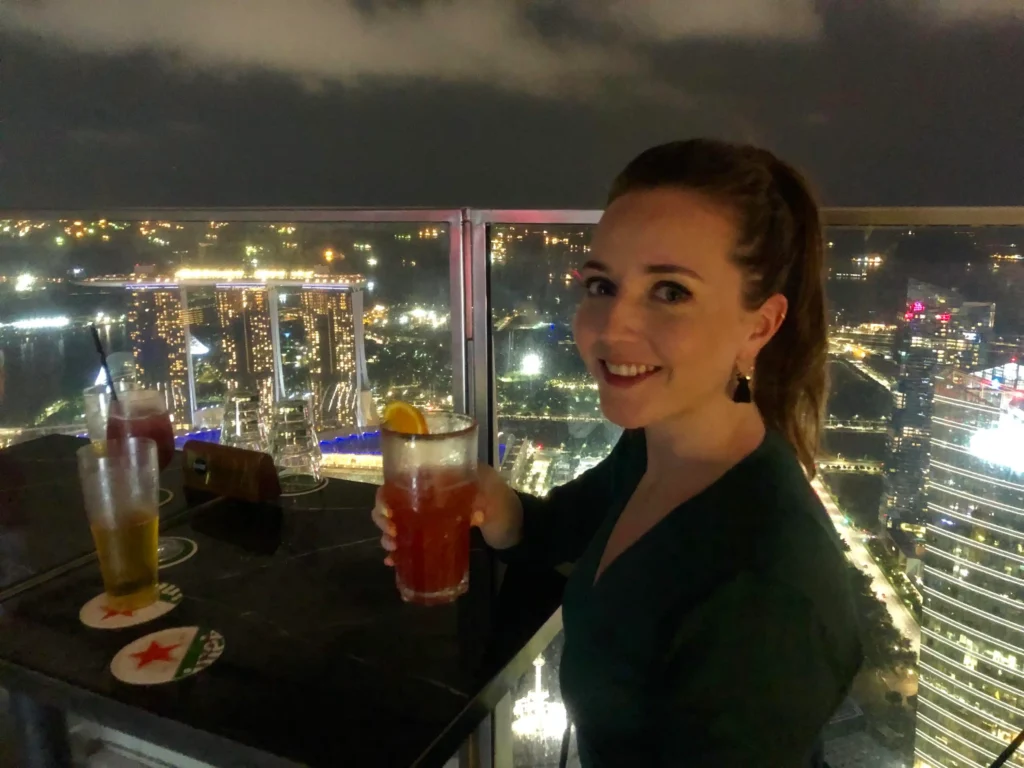
1-Altitude is the highest alfresco bar in the world at 282 metres, offering 360-degree views of Singapore. If you’re not afraid of heights, it’s an unforgettable spot.
From here, you can watch the Marina Bay Sands Light and Water Show, which takes place nightly at 8pm and 9pm. Cocktails are well-made but on the pricier side, costing around £10–11 each.
Day 3: Dive Into Singapore’s Culture & Heritage
Explore Kampong Glam Singapore: Muslim Quarter & Haji Lane
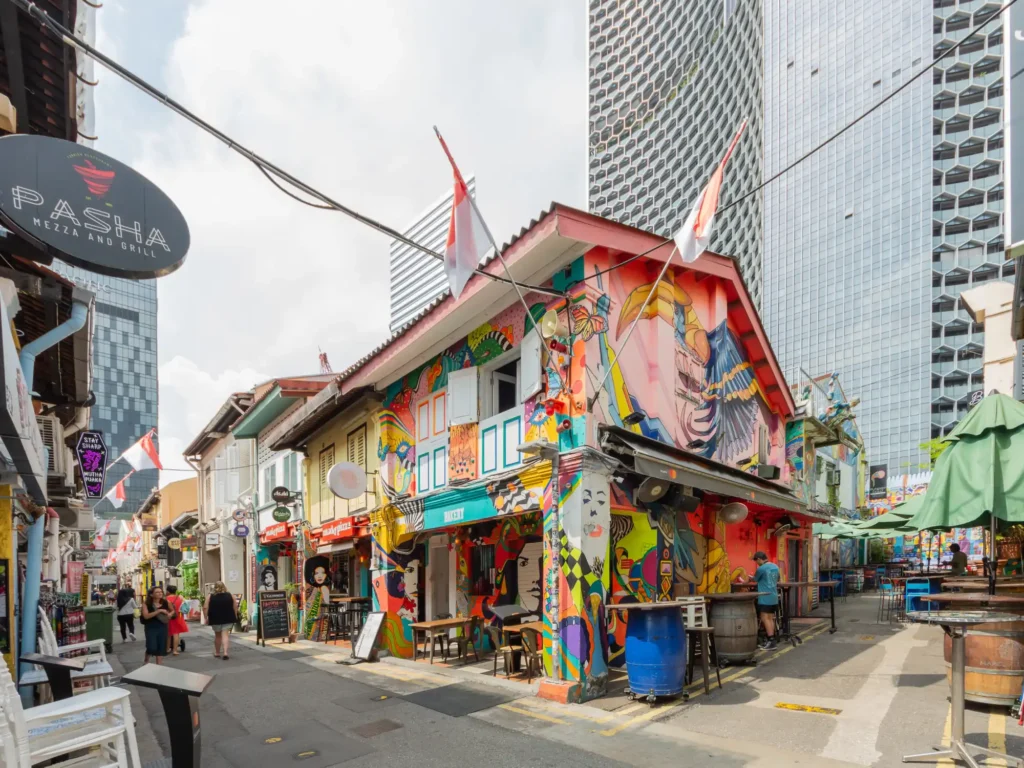
Kampong Glam is Singapore’s historic Muslim Quarter. Its 19th-century shophouses have been transformed into majestic buildings selling textiles, alongside restaurants serving flavorful Malay cuisine.
While in the area, don’t miss Haji Lane, packed with independent boutiques, trendy cafes, and vibrant street art. You can also join a local street food tour in Kampong Glam for a culinary adventure.
Other notable landmarks include:
- Sultan Mosque – Singapore’s most important mosque
- Istana Kampung Gelam – the former Sultan’s palace
- Malay Heritage Centre – showcasing local history
You can explore these areas on a Chinatown and Little India Walking Tour.
Discover Little India Singapore: Temples, Markets & Street Art
Little India is a vibrant cultural neighbourhood, full of temples, mosques, street art, and colourful shophouses.
Walk along Serangoon Road, the main commercial street, lined with shops selling silks and authentic Indian eateries. Stop by local hawker centres or join a Little India Food Tour for a taste of traditional Indian cuisine.
Must-see sites include:
- Indian Heritage Centre – learn about Indian culture in Singapore
- Sri Veeramakaliamman Temple – one of many notable temples in the area
- Sri Srinivasa Perumal Temple, Sakya Muni Buddha Gaya Temple, Leong San See Temple
- Little India Arcade – 1920s shophouses selling fabrics, henna, and souvenirs
Little India truly comes alive during Deepavali, the Hindu festival of lights, celebrated between October and November.
You can explore Kampong Glam, Chinatown, and Little India on a City Highlights Guided Tour.
Visit Thian Hock Keng Temple: Singapore’s Oldest Chinese Temple
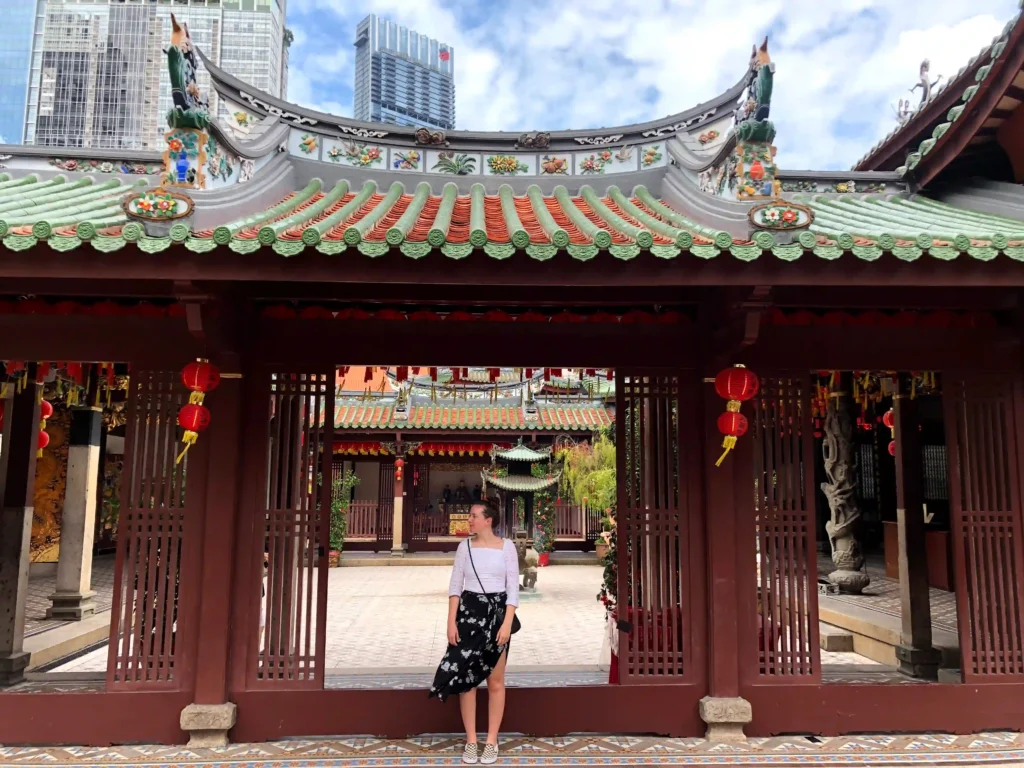
Built in 1839, Thian Hock Keng Temple is Singapore’s oldest Chinese temple. Located a short distance from Chinatown, its traditional façade offers a striking contrast to the modern skyscrapers nearby.
The temple is free to visit and open daily from 7:30am–5pm.
Explore Chinatown Singapore: Culture, Food & Temples
Chinatown is one of Singapore’s most vibrant neighbourhoods, offering a mix of traditional culture and modern trends.
Highlights include:
- Chinatown Food Street – traditional Chinese cuisine
- Club Street – trendy wine bars
- Souvenir shops and indie boutiques – clothes, crafts, and antiques
- Buddha Tooth Relic Temple – houses Buddha’s left canine tooth
- Sri Mariamman Temple – Singapore’s oldest Hindu temple, built in 1827
You can combine Thian Hock Keng Temple and Chinatown on a guided historic walking tour with lunch, or join a City Highlights Guided Tour including Kampong Glam and Little India.
Watch the Sunset from CÉ LA VI Singapore: Marina Bay Sands Rooftop Bar
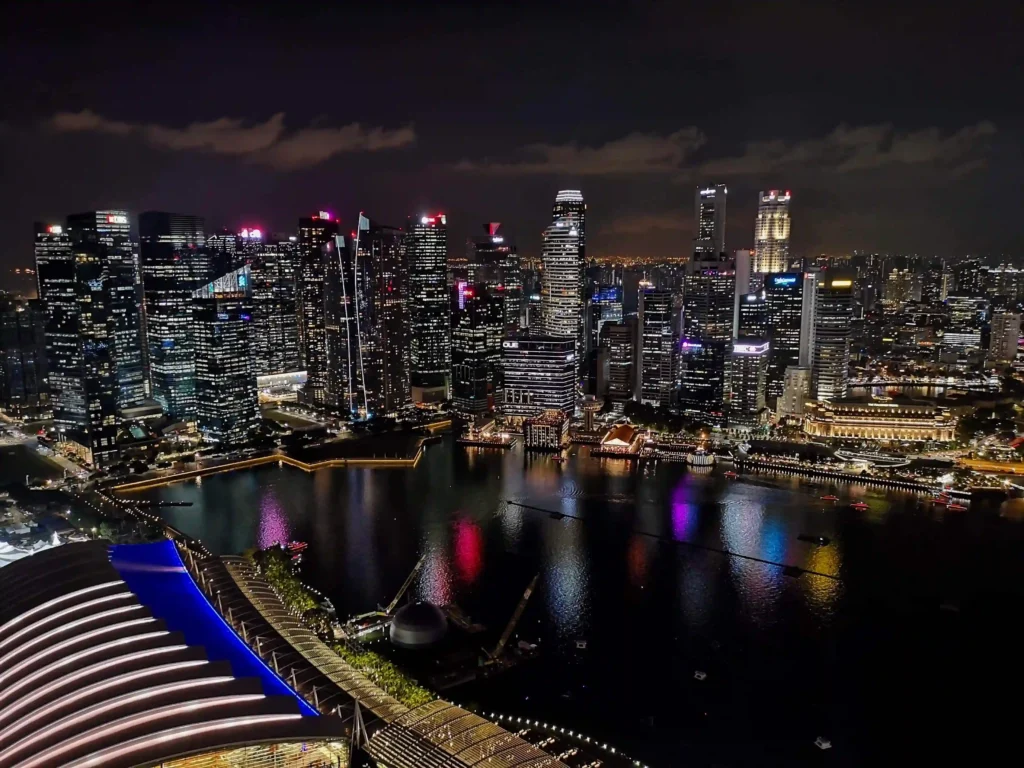
CÉ LA VI, atop the Marina Bay Sands Hotel, offers stunning views of the city skyline, Gardens by the Bay, and the Singapore Strait.
Cocktails are around £12 each — pricey if you plan to have a few — but it’s the perfect spot to enjoy a drink while watching the sunset over the city.
Tip: The stairs to the observatory deck are in front of the bar, so for better, uninterrupted views, head towards the pool area.
Enjoy the Gardens by the Bay Light and Sound Show Singapore
If you visit CÉ LA VI, don’t miss the Gardens by the Bay Light and Sound Show, held daily at 7:45pm and 8:45pm. The 10–15 minute show is free and offers a magical spectacle of lights over the Supertrees.
Extra Things to Do in Singapore If You Have More Time
Explore Sentosa Island, Singapore: Beaches, Universal Studios & Attractions
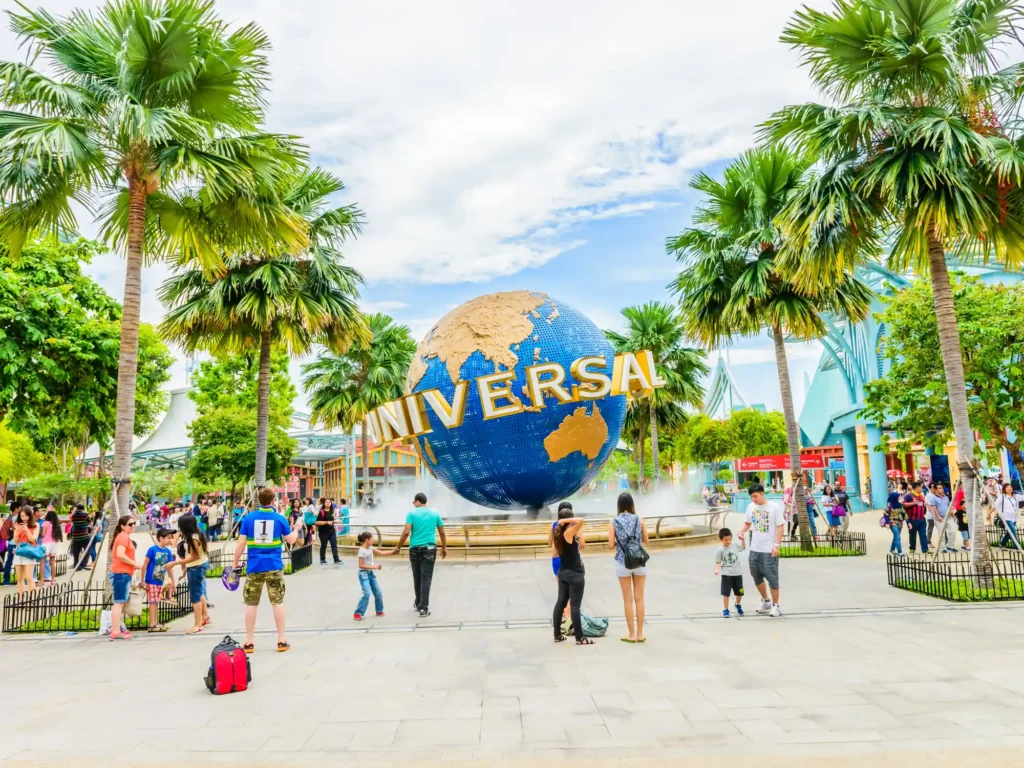
Sentosa is an island off the southwest coast of Singapore, designed as the city’s ultimate playground for tourists and locals alike.
On Sentosa, you can:
- Visit Universal Studios Singapore
- Ride the Sky Pass cable car
- Enjoy water fun at the Waterpark
- Play a round of golf
- Or simply relax and sunbathe on the beach
Sentosa is accessible by car, MRT, bus, or on foot. There’s also a free shuttle bus service that circulates around the island, making it easy to get from one attraction to another.
For something more adventurous, you can join a kayak fishing tour, hopping between Sentosa and the Southern Islands.
Experience the Singapore Night Safari: World’s First Nocturnal Wildlife Park
The Night Safari Singapore is the world’s first nocturnal wildlife park.
You can explore the park on a complimentary guided tram, or, if available, walk some of the trails to avoid crowds and experience the animals up close.
The tram ride lasts about 40 minutes and takes you through seven themed geographical zones. Tickets start at around £30 for adults.
Where to Eat in Singapore: Best Food & Hawker Centres
Top Tip: Visit Singapore Hawker Centres for Delicious Local Food
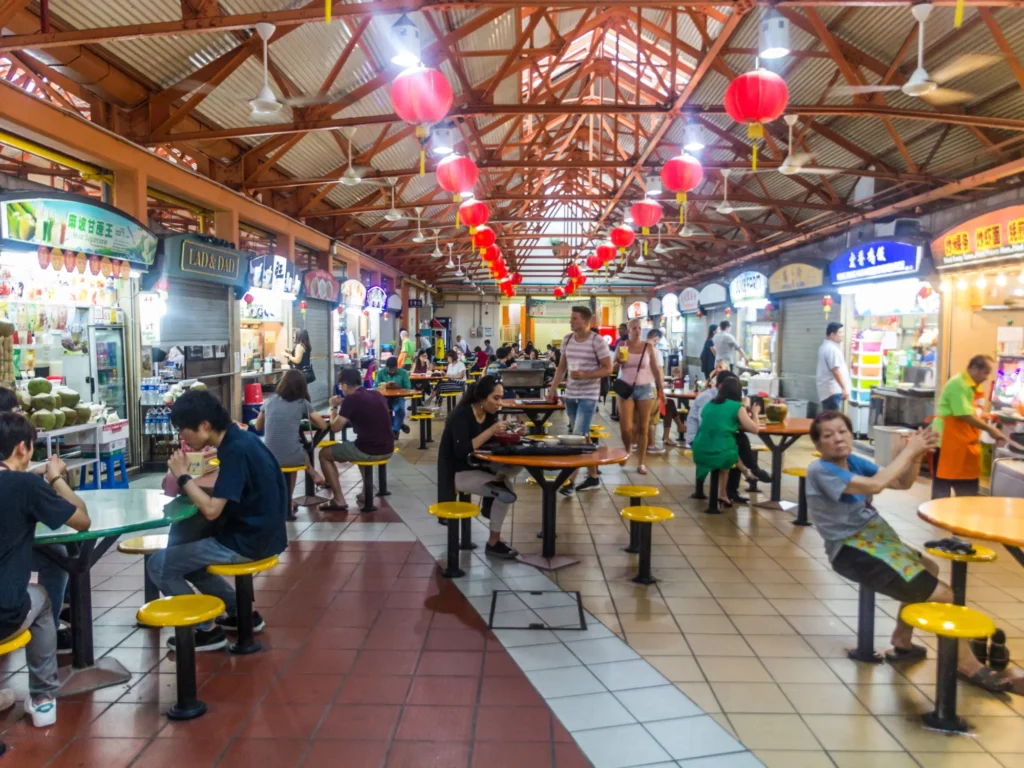
Whilst in Singapore, you need to visit a hawker centre. These open-air food hubs offer an amazing variety of dishes at extremely reasonable prices — and the food is absolutely delicious!
For a more immersive experience, you can join a Michelin and local hawker food tour or take a Singaporean cooking class to learn how to prepare traditional dishes yourself.
5 Best Cafes in Singapore: Coffee, Brunch & Unique Drinks
- The Wired Monkey Singapore (£) – A quintessential café serving fresh pastries daily and a wide variety of coffees, from classic brews to unique creations like French Mint Chocolate and 7-Spiced Chai.
- Fangko+ Coffee and Beer (£) – Modern Indonesian-inspired cuisine paired with quirky coffees, including whiskey coffee and avocado coffee. Don’t miss their Smash Chimken and Gula Melaka Kopi.
- My Awesome Cafe (££) – A cosy spot offering handcrafted sandwiches, salads, coffee, spirits, platters, and wine.
- Little Part 1 Cafe (££) – Despite the name, the menu is extensive, with over 50 items including burgers, pizzas, and pasta. They also offer a curated selection of local and international beers.
- Main Street Commissary (££) – A modern café and curatorial art space serving all-day breakfast and brunch, a wide selection of cakes, and excellent coffee.
5 Best Restaurants in Singapore: Michelin, Fine Dining & Local Flavours
- Annalakshmi Restaurant (£) – An Indian vegetarian restaurant serving home-cooked dishes in a buffet style. There are no fixed prices — guests pay what they wish.
- Rosso Vino (££) – Authentic Italian cuisine along the picturesque Robertson Quay waterfront. Widely regarded as one of the best Italian restaurants in Singapore, offering a curated menu of Italian specialities and wines.
- Ayasofya Turkish Restaurant (££) – Enjoy the best Turkish food in Singapore, infused with rich Mediterranean flavours.
- Shisen Hanten by Chen Kentaro (£££) – A Michelin two-star restaurant bringing bold traditional Cantonese flavours to Singapore for the first time.
- Odette (££££) – Modern French fine dining located in the National Gallery Singapore. This three-Michelin-star restaurant has been named the best in Asia and ranks among the best in the world.
Where to Stay in Singapore: Best Areas & Hotels
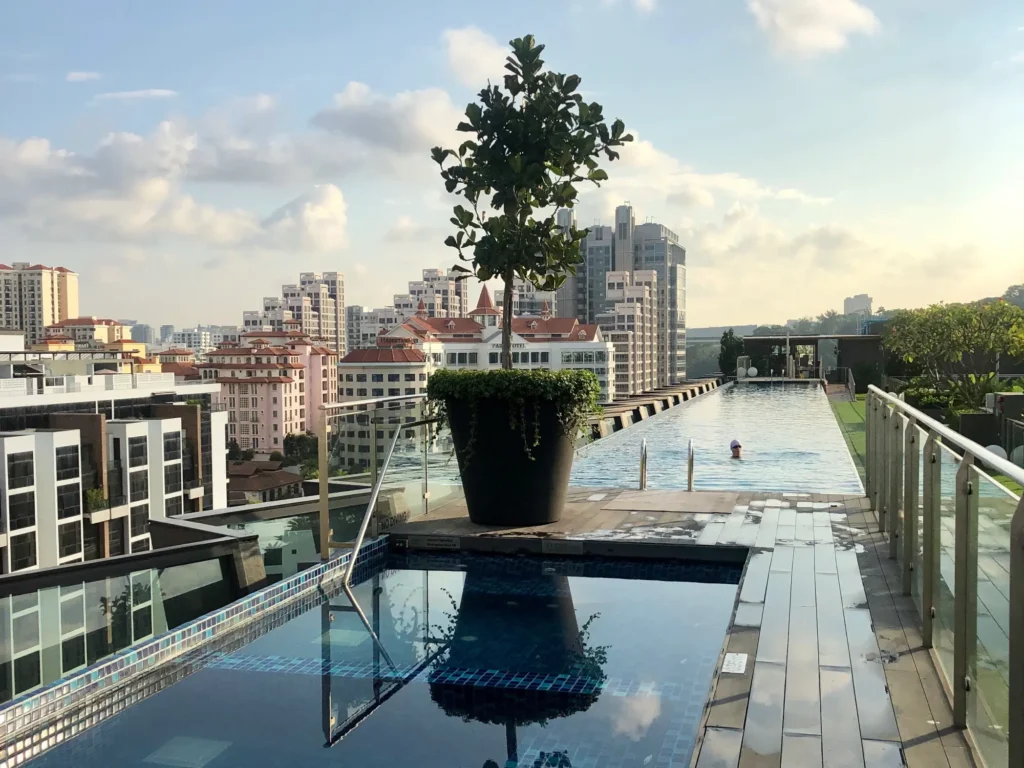
Budget Singapore Accommodation (£0–£100 per Night)
Located in the heart of Singapore’s vibrant Chinatown, JYU Capsule Hostel offers a modern and budget-friendly stay ideal for solo travellers and young couples. Guests enjoy air-conditioned capsule beds, secure lockers, and free WiFi, all within a clean and stylish environment. The hostel’s central location makes it easy to explore nearby attractions like Chinatown Heritage Centre, Maxwell Food Centre, and the bustling streets of Clarke Quay. With its combination of comfort, affordability, and a social, friendly atmosphere, JYU Capsule is perfect for travellers who want to experience Singapore’s culture without breaking the bank.
Atelier Singapore is a chic, boutique hotel located in Singapore’s city centre, close to the Singapore River and key attractions like Marina Bay and Boat Quay. This modern hotel features sleek rooms with air-conditioning, premium bedding, and high-speed WiFi, alongside amenities like a rooftop terrace, communal lounge, and daily housekeeping. Its stylish, contemporary design makes it ideal for travellers who appreciate aesthetics and comfort. The location is a major plus—walking distance to major dining, nightlife, and cultural spots—making it a convenient base for a short Singapore city trip.
Perfect for solo female travellers, KINN Capsule – HER Space is situated on South Bridge Road, right in the heart of Singapore near Chinatown, St Andrew’s Cathedral, and the Singapore River. This female-only capsule hotel offers private pods with privacy blinds, bedside power sockets, and small foldable tables, alongside shared amenities such as a pantry, laundry facilities, sun terrace, and free WiFi. Guests rave about its safety, cleanliness, and central location, making it an excellent choice for those looking for a secure, social, and stylish stay in the city’s cultural hub.
Mid-Range Singapore Hotels (£100–£200 per Night)
Located in Singapore’s vibrant Orchard Road area, KēSa House offers a stylish and contemporary stay ideal for both business and leisure travellers. Guests enjoy well-appointed rooms with modern décor, air-conditioning, and high-speed WiFi. The property features an outdoor pool, a fitness centre, and a 24-hour front desk, making it convenient for travellers at any hour. Its prime location puts you within walking distance of shopping malls, local eateries, and easy access to MRT stations, perfect for exploring the city. With a combination of comfort, modern amenities, and a central location, KēSa House is a great mid-range option for those seeking both convenience and style.
Mondrian Singapore Duxton is a boutique hotel located in the heart of the historic Duxton Hill district, a short stroll from Chinatown and the vibrant nightlife of Ann Siang Hill. This hotel features chic, modern rooms with air-conditioning, flat-screen TVs, and complimentary WiFi. Guests can enjoy an on-site restaurant, a stylish bar, and fitness facilities, while the hotel’s artistic interior design adds a unique touch to your stay. Its central location makes it ideal for exploring both cultural landmarks and trendy cafés. Perfect for travellers seeking a mix of comfort, style, and a taste of Singapore’s vibrant heritage.
Situated on Robertson Quay, one of Singapore’s most picturesque riverside neighbourhoods, The Robertson House offers a relaxed yet elegant stay. Guests can enjoy modern rooms with air-conditioning, private bathrooms, free WiFi, and thoughtful touches such as minibars and work desks. On-site amenities include an outdoor swimming pool, a restaurant serving local and international cuisine, a fitness centre, and 24-hour front desk service. The hotel is walking distance to the Singapore River, popular dining spots, and nightlife, making it perfect for couples or solo travellers who want a serene yet central base. With a riverside setting, comfortable amenities, and easy access to attractions, it’s an excellent mid-range option for your Singapore itinerary.
Luxury Singapore Accommodation (£200+ per Night)
Marina Bay Sands is an iconic luxury hotel situated in the heart of Marina Bay, offering unbeatable views of Singapore’s skyline. Guests can enjoy the world-famous infinity pool, a range of fine-dining restaurants, a high-end casino, and an on-site shopping mall. Rooms are modern and spacious, equipped with air-conditioning, flat-screen TVs, minibars, and WiFi. Its central location makes it ideal for exploring attractions such as Gardens by the Bay, the ArtScience Museum, and the Helix Bridge. With unparalleled amenities and a one-of-a-kind rooftop experience, Marina Bay Sands is perfect for travellers seeking luxury, entertainment, and Instagram-worthy moments.
Nestled in Singapore’s Orchard Road shopping district, the Four Seasons Hotel combines luxury with convenience. The hotel offers elegantly furnished rooms, an outdoor swimming pool, a full-service spa, and several on-site dining options. Guests can take advantage of the fitness centre, 24-hour concierge service, and complimentary WiFi throughout the property. Its prime location allows easy access to high-end shopping, local eateries, and nearby MRT stations, making it a perfect base for exploring the city. With its blend of refined comfort, attentive service, and central location, the Four Seasons provides a classic, sophisticated stay for couples and business travellers alike.
The Fullerton Hotel Singapore is a beautifully restored heritage hotel located in the Central Business District, just a short walk from Clarke Quay and Boat Quay. Guests can enjoy luxurious rooms with modern amenities, including air-conditioning, minibars, WiFi, and flat-screen TVs. Facilities include an outdoor swimming pool, spa and wellness centre, fitness centre, and multiple dining options. The riverside location provides scenic views and easy access to Singapore’s cultural landmarks, making it ideal for couples and tourists looking to combine comfort with a central, picturesque setting. Its historic charm, world-class service, and unbeatable location make it a standout choice for a high-end Singapore stay.
Loved this Singapore itinerary guide? Save it to Pinterest for your visit there!
I’d love it if you could drop a comment below, share my Pinterest pins, and subscribe to my blog to stay updated with new posts. Every bit of engagement helps my little travel blog grow!
This post is all about a 3-Day Singapore Itinerary.
Thanks so much for reading – it means the world!
Kirsty x