💌 Just a quick note before we get started: this post contains affiliate links. That simply means I might earn a small commission (at no extra cost to you) if you decide to book or buy through one of the links. It helps me keep Postcards from Kirsty running — and hopefully helps you plan your own adventure too!
Driving in Morocco is hands-down the best way to explore the country. Getting away from the busy tourist spots and exploring Morocco’s quieter, remote areas allows you to properly experience the authentic side of the country.
When it came to planning my own ten-day trip to Morocco, I knew I wanted to make my way to the vast, iconic Sahara Desert.
Public transport didn’t cut it, and I wasn’t content with heading straight to Merzouga. I wanted to wind my way through the Tisdrine bends in the Dades Valley, spend the night in Ait Ben Haddou, and stop at as many viewpoints as possible along the way. The only way to make it happen was hiring a car in Marrakech – much to my parents’ horror!
What I didn’t realise, though, was just how big Morocco is — and that getting from Marrakech to Merzouga, the gateway to the Sahara, would be far trickier than I’d imagined.
So if this sounds a lot like the kind of adventure you are planning, then keep reading – in this guide, I’ll share my experience with car hire in Morocco, answer the big question of whether driving here is safe, and give you practical tips to make your road trip smooth and stress-free.
Driving in Morocco: Quick Guide
- Is driving in Morocco safe? Yes, mostly, if you avoid driving at night and avoid the main cities.
- Do you need an international driving permit (IDP)? It depends on the country you are from. If you’re from the UK, like me, then you’ll need a 1968 IDP.
- Best car to rent in Morocco? A 4×4.
- Biggest challenge: Police checkpoints and getting stuck behind slow vehicles.
- My #1 tip for driving in Morocco: Download Google Maps offline and give yourself plenty of extra time. Journeys in Morocco almost always take longer than Google Maps predicts.
Essential Tips for Driving in Morocco
What to Know About Police Checkpoints When Driving in Morocco
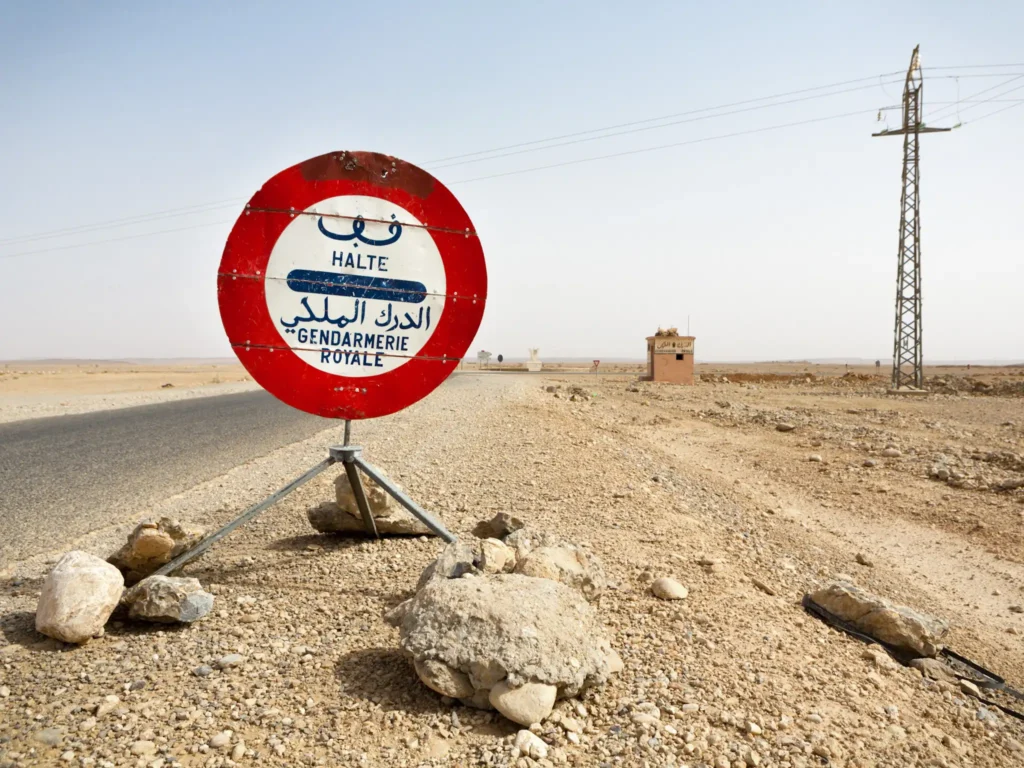
Police checkpoints are extremely common in Morocco, and they often appear when you least expect them. One minute you’re rounding a corner — BAM, checkpoint. Driving into a small Moroccan town? BAM, checkpoint again.
If you’re lucky enough to spot one from a distance, you’ll notice traffic cones, cars slowing down, police chatting with drivers, and signs mostly in French and Arabic.
When I first started driving in Morocco, I stopped at every single checkpoint. The officers often looked confused and waved me through. It wasn’t until the third or fourth time that I realised you don’t actually need to stop at all of them. You do need to slow down, but the police will signal if they want you to pull over.
From YouTube videos I’ve watched and chats with fellow travellers, driving fines in Morocco appear fairly common. I once heard about someone who received three fines in a single day!
I also met a fellow Scottish traveller in the Sahara who was stopped twice by the police — they avoided the first fine but got hit with the second.
That being said, it is possible to drive in Morocco without getting fined. I got pulled over once for not fully stopping at a stop sign in the middle of a roundabout (why that road sign was there still baffles me!), but I somehow talked my way out of a fine.
After a couple of days on the road, you’ll even start to anticipate checkpoints.
Top Tip: If local drivers flash their lights or slow down suddenly, it usually signals that a checkpoint lies ahead.
Expect to Overtake A LOT when Driving in Morocco
When I first started driving in Morocco, I naively thought I’d never need to overtake, even if I got stuck behind a slow vehicle. Well… let me tell you, overtaking is practically a necessity here.
When you’ve got five hours of driving ahead, nobody wants to crawl along at 20 km/h on an 80 km/h road just because the car in front is taking its time.
The good news is that there are plenty of opportunities to overtake, especially once you leave the bigger cities. The roads straighten out, visibility improves, and you can see for miles.
In a typical day of driving in Morocco, I must’ve overtaken at least five times — and it’s not just cars! Expect to carefully overtake animals, too. Keep an eye on the road signs: some sections allow overtaking, others don’t. Play it safe, stay alert, and soon, overtaking will feel like second nature.
Top Tip: For overtaking, give the vehicle in front plenty of space, take your time, and only overtake when the other side is completely clear.
Stick to the Speed Limits when Driving in Morocco
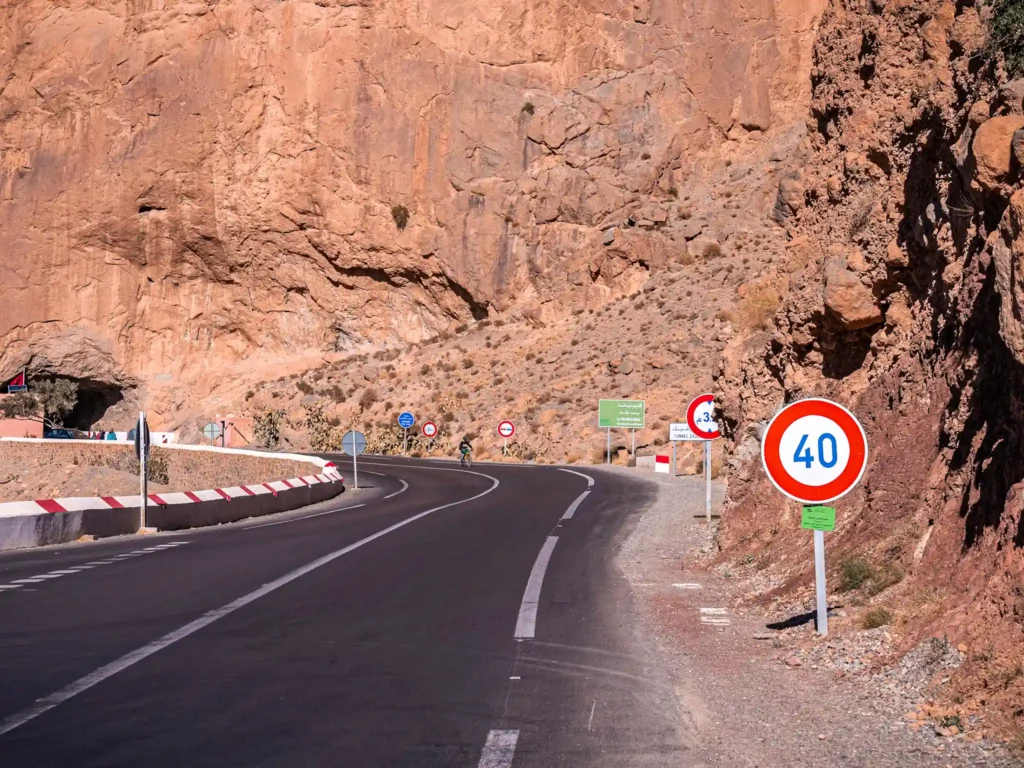
The police in Morocco take speed limits very seriously. Even just 5 km/h over the limit can land you a fine, so it’s worth staying vigilant. The good news is that road signs are generally clear and frequent, so you’ll usually know exactly what the limit is. As a guideline:
| Road Type | Speed Limit (km/hr) |
| Towns and cities | 40-50 |
| Country roads | 80-100 |
| Motorways | 100-120 |
Stick to these limits, drive attentively, and you’ll avoid any unwanted fines — and still enjoy the incredible scenery along the way.
Moroccans Drive on the Right
Like most countries in the world, Morocco drives on the right-hand side of the road. If you come from a country that drives on the left, like me, it can take a little time to adjust.
For me, the strangest part was having the steering wheel on the left and needing to use my right hand to change gears (which is the reverse of what I’m used to back home). It felt awkward at first, but you quickly get the hang of it — and soon it becomes second nature!
Prepare for All Types of Terrain when Driving in Morocco
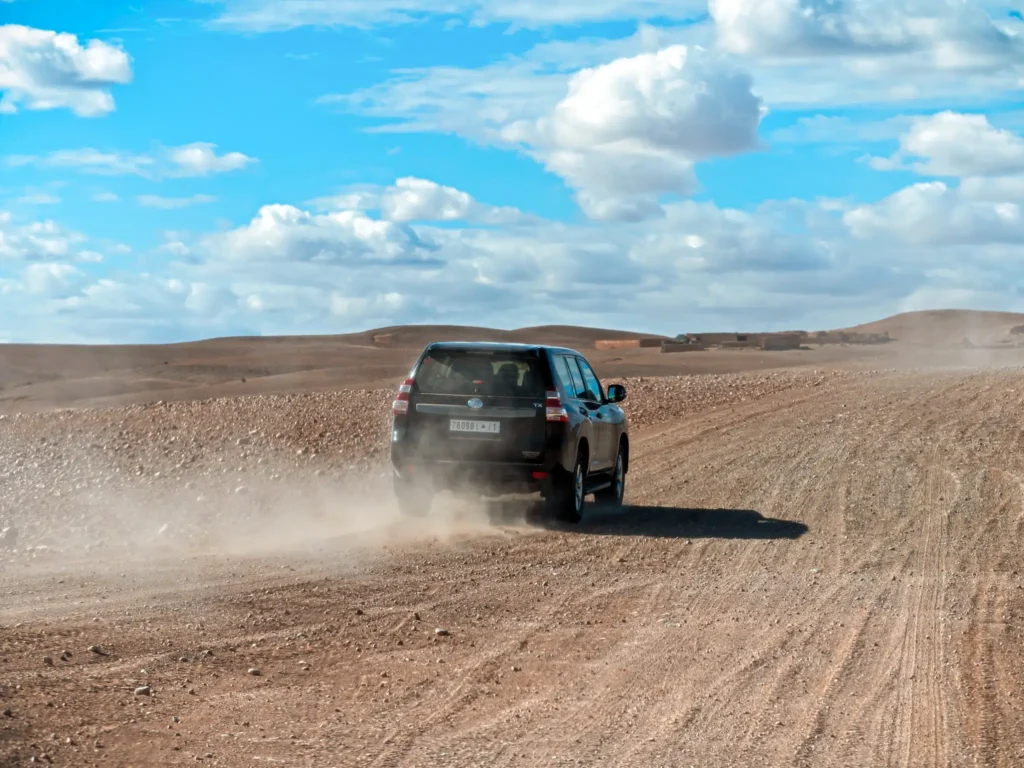
In the larger Moroccan cities and their surroundings, you can usually expect well-maintained tarmac roads. But as you venture further from the main cities or off the beaten track, the roads can get a lot rougher, covering all sorts of terrain.
For example, when I was heading to my accommodation in Merzouga, my sat nav confidently told me to turn right — except there was no road there. I ended up driving off-road on gravel for 10–15 minutes!
And the route to my accommodation in the Agafay Desert… honestly, I’m not sure it even qualifies as a road.
Since the 2023 earthquake, some road sections have been rerouted due to damage, often along dirt or gravel paths. On top of that, Morocco is investing heavily in road development, so expect plenty of roadworks.
While driving from Ouarzazate to Dades Valley, the road suddenly switched from smooth tarmac to long stretches of gravel, and let me tell you, it was not a smooth or enjoyable journey!
Understanding Moroccan Traffic Lights
Moroccan traffic lights are very similar to what you’ll find in most of Europe and the United States, with the usual red, yellow, and green lights. One difference to watch out for: a blinking green light actually means you should slow down or prepare to stop.
The best bit is the countdown timer, which tells you exactly how long you’ll have to wait before the light changes — such a simple thing, but it’s so handy! I wish this were a thing in the UK!
Renting a Car in Morocco: What You Need to Know
Why Choosing a Trusted Company Matters When Driving in Morocco
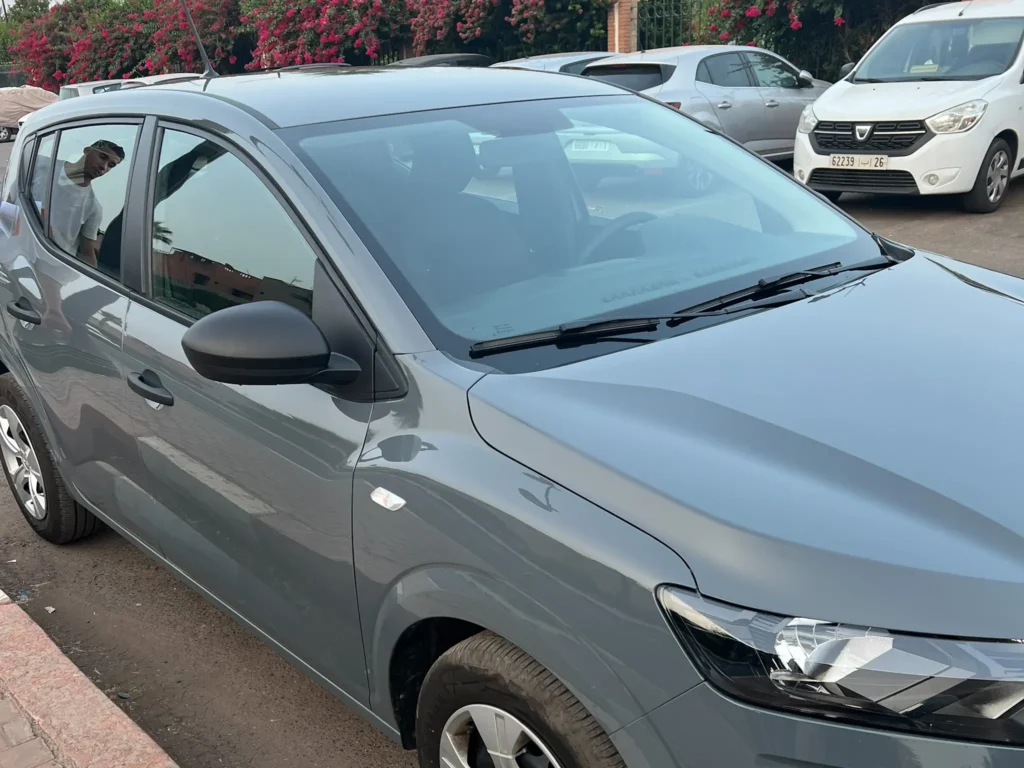
When I started looking into car rental companies in Morocco, I quickly realised that not all of them are created equal.
I chose Medloc Maroc, and I honestly can’t fault them. The rental process was really smooth from start to finish. Communication — mostly via WhatsApp — was easy and straightforward. They even delivered the car to just outside the Marrakech medina, which saved me a trip to the airport.
They encouraged me to take photos and videos of the car (you should also do this before you drive off), which felt reassuring, and I received exactly the car I requested — something you can’t always count on in Morocco. After returning the car, they promptly sent proof that they refunded my full deposit.
If you want to compare car rental companies, DiscoverCars and AutoEurope are both reliable. They let you compare hundreds of companies in Morocco, helping you find the best deal and the highest-rated service.
Top Tip: Do your research when choosing a car rental company in Morocco. Check that the company is legitimate using sites like TrustPilot, read reviews to ensure customers haven’t reported scams, and carefully review the terms and conditions. Know the excess costs, whether theft protection is included, and what insurance covers. Choosing the wrong car rental company can be an expensive mistake!
Why Extra Cover is Worth It When Driving in Morocco
It’s pretty standard to pay a deposit with most car rental companies in Morocco — and let me tell you, they don’t come cheap! The deposit protects the rental company if anything happens to the car. For example, if the car gets damaged or stolen during your rental, they’ll deduct the costs from your deposit.
For my rental with Medloc Maroc, the deposit was €1,200. Even though I’d done my research and carefully chosen Medloc, I’d still read plenty of stories about people getting scammed with car rentals in Morocco.
So to protect myself, I took out an insurance4carhire excess policy. This meant that if any dispute arose over my deposit, I could claim the money back through the insurance company. The policy cost just £26 (much better than losing €1,200) — and thankfully, I didn’t need to use it, but it did give me peace of mind!
Check If You Need an International Driving Permit for Driving in Morocco
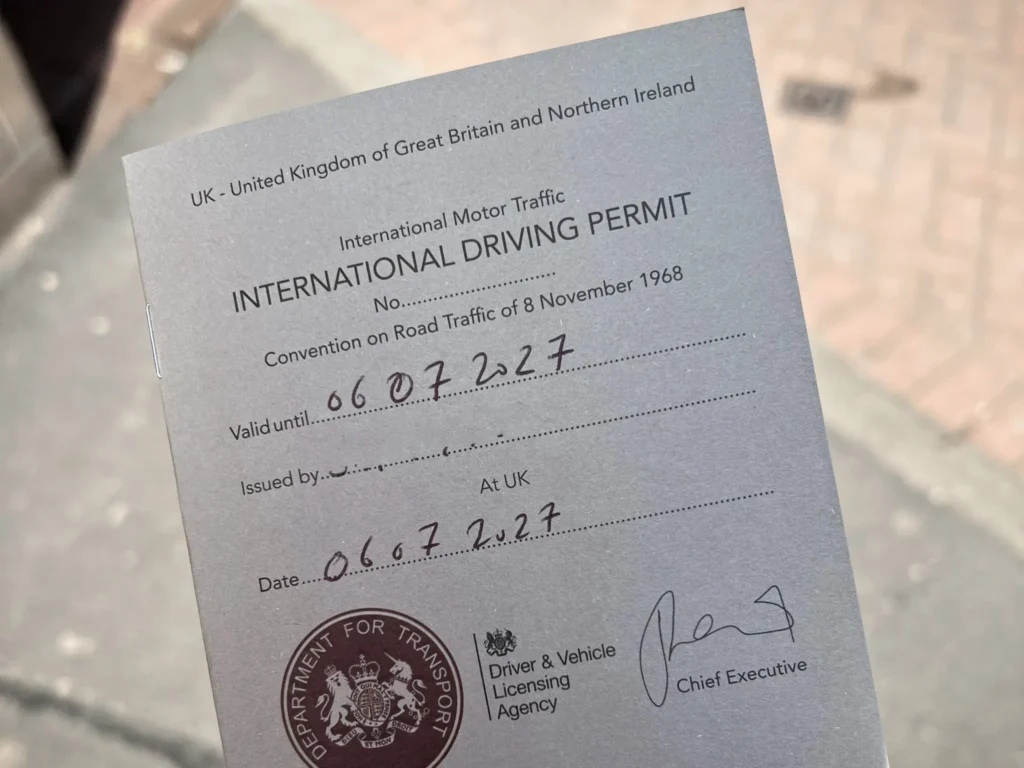
For UK citizens planning to drive in Morocco, you’ll need a 1968 International Driving Permit (IDP) before you go.
You can pick one up in person from select stores that have Paypoint. It costs just £5/6 and is straightforward to get — all you need is proof of UK residency, a full UK driving licence, a passport photo, and you must be over 18.
I never had my IDP checked while driving in Morocco, but it’s definitely worth having — just in case. If you’re not from the UK, check your government website to find out whether you need an IDP to drive in Morocco.
Using Your Foreign Driving Licence in Morocco
To drive in Morocco, you need a full driving licence that’s valid in your country of residence. For UK citizens, your full UK licence allows you to drive in Morocco for up to one year.
Your car rental company should also give you contact details and insurance documents, as police may ask you to show them at a checkpoint.
Top Tip: It’s important to keep all your documentation easily accessible in the car, including your passport, driving licence, International Driving Permit, and insurance documents.
Why You Should Opt for a 4×4 for Driving in Morocco
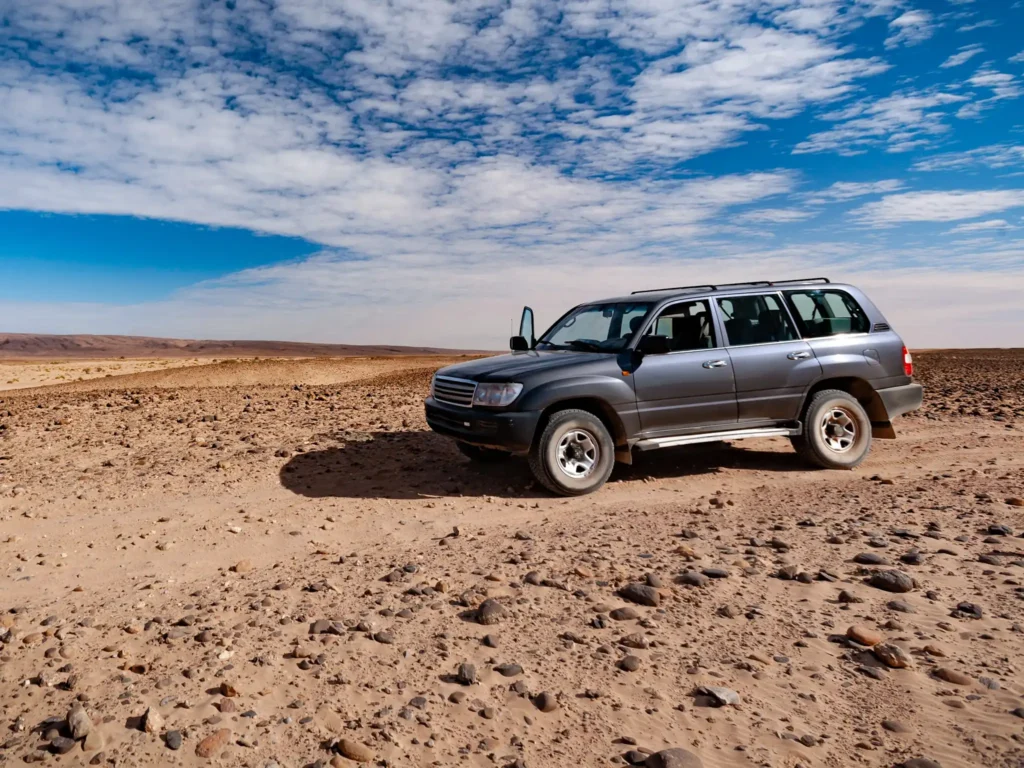
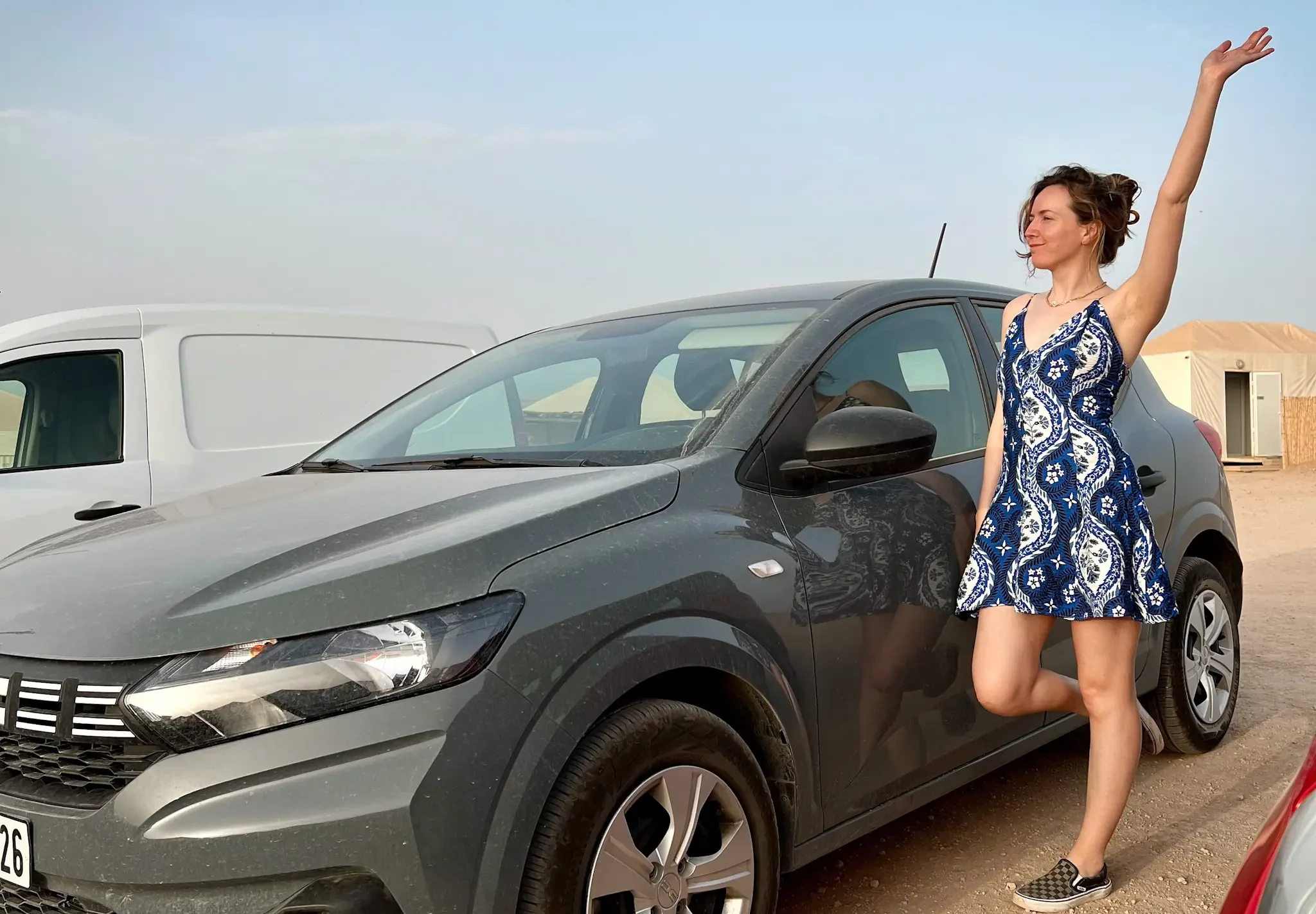
When I drove from Marrakech to Merzouga, I hired a Dacia Sandero hatchback, and it got me safely from A to B. It was a reliable little car — one I’d happily own back home.
But the moment I had to venture off-road, it became obvious it wasn’t built for that, and I couldn’t help but think the tyres were going to burst!
As I mentioned earlier, you can’t always count on driving on smooth tarmac in Morocco. Some roads are gravel, dirt, or just poorly maintained.
For comfort and peace of mind, a 4×4 is a much better option. It also opens up opportunities to explore more of the Moroccan countryside, like Fint Oasis, just outside Ouarzazate.
Automatic vs Manual Cars
When I was researching car rental companies in Morocco, automatic cars seemed much more common — and often cheaper — than manual ones.
This posed a bit of a dilemma for me… having never driven an automatic before, I definitely didn’t want to start in Morocco! In the UK, manual cars are far more popular, so I had to specifically request a manual from my rental company.
They initially tried to charge an extra €30 per day for a manual, but I managed to negotiate it at the same price as the automatic. Thankfully, on the day of rental, they actually delivered a manual car.
If you have a preference for automatic or manual, make sure you communicate it clearly with your rental company well in advance — it can save a lot of hassle on the day.
Clean Your Vehicle Before Returning Your Car Rental in Morocco
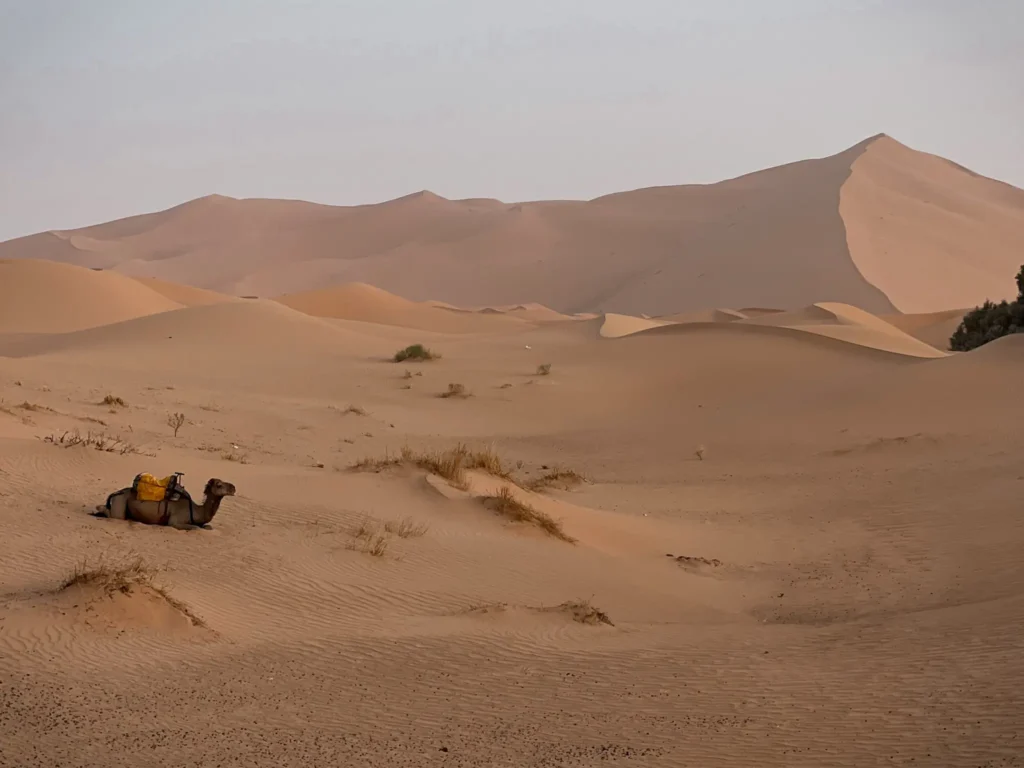
Morocco is a dusty country, so dirt from the roads and surrounding landscapes will almost certainly cover your rental car. Get your rental car washed before returning it.
Some travellers have been charged extra for returning their car dirty, so a quick wash is a small but important step to avoid unnecessary fees.
Top Tip: Most major petrol stations have car wash facilities, and they’re usually very cheap.
Navigating Cities and Highways When Driving in Morocco
Why You Should Avoid Driving in Morocco at Nighttime
Driving in Morocco at night can be tricky and potentially dangerous. In the bigger cities, traffic often becomes even busier and more chaotic after dark. Out in the countryside, the roads may be quieter, but they’re usually poorly lit.
Speed bumps and potholes — tricky enough to spot during the day — are almost invisible at night. Add to that animals on the road without reflectors and other cars that often only switch on headlights when it’s really dark, plus at points, single roads. Trust me, it’s just not even worth the risk.
It’s much safer (and far more relaxing) to plan your journey to drive only during daylight hours.
Why You Should Avoid Large Cities When Driving in Morocco
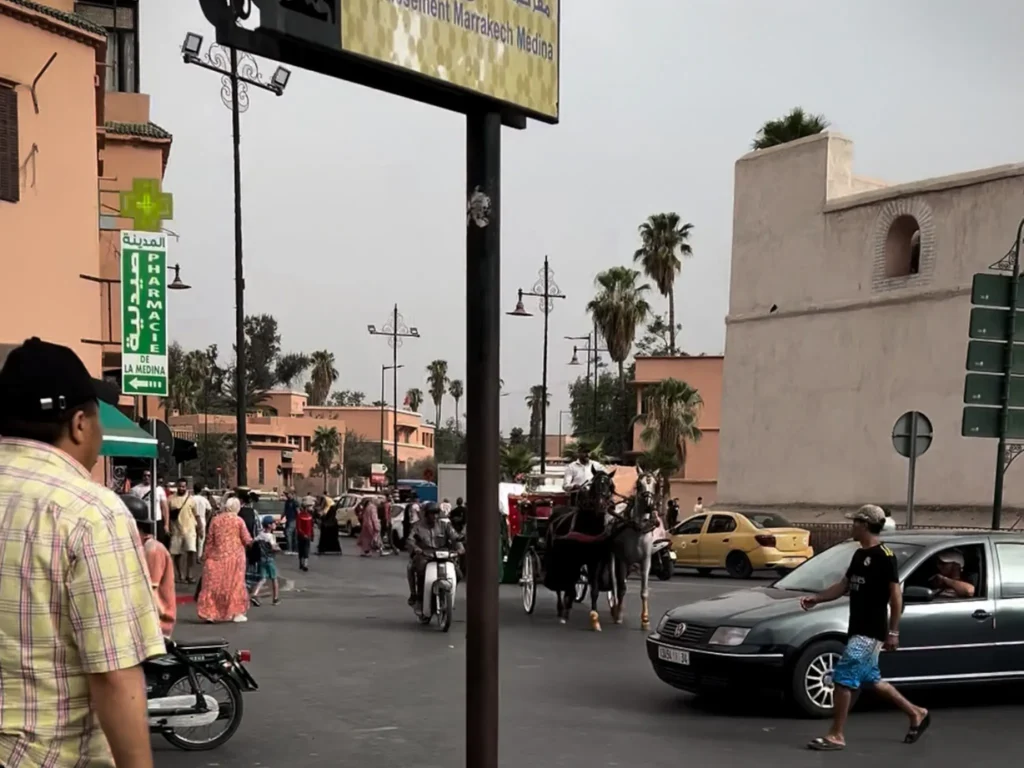
Now, I can only speak from my experience in Marrakech, but trust me — the traffic there is absolutely crazy.
I’ve heard that Morocco’s larger northern cities are just as chaotic. In these cities, you’ll find everything on the roads going in every direction at every speed, and lanes are more of a suggestion than a rule.
I tried to spend as little time in Marrakech as possible. My rental car was dropped off just outside the medina at 7am, when the streets were quieter, and I immediately made my way out of the city toward the Atlas Mountains. I’d suggest you get your rental car at a similar time in the morning!
Do not drive into the old medinas with a rental car. The roads are incredibly narrow and tricky to navigate — it’s just not worth the stress!
Top Tip: Avoid the old medinas with a rental car at all costs. The roads are incredibly narrow and tricky to navigate — it’s just not worth the stress!
Why You Should Avoid Driving in Morocco During Winter
I was in Morocco during the peak summer season, when the temperatures were absolutely scorching, so I was shocked when a local told me that Morocco actually gets snow in the winter — and not just a light dusting, but often a lot.
Snow can fall as early as October and as late as March. These winter conditions can make driving in Morocco more challenging, and in some remote areas, like the Atlas Mountains, heavy snowfall can even lead to road closures.
For guidance on when to go, check out my guide to the best time to visit Morocco.
Common Challenges When Driving in Morocco
Common Hazards to Watch Out For When Driving in Morocco
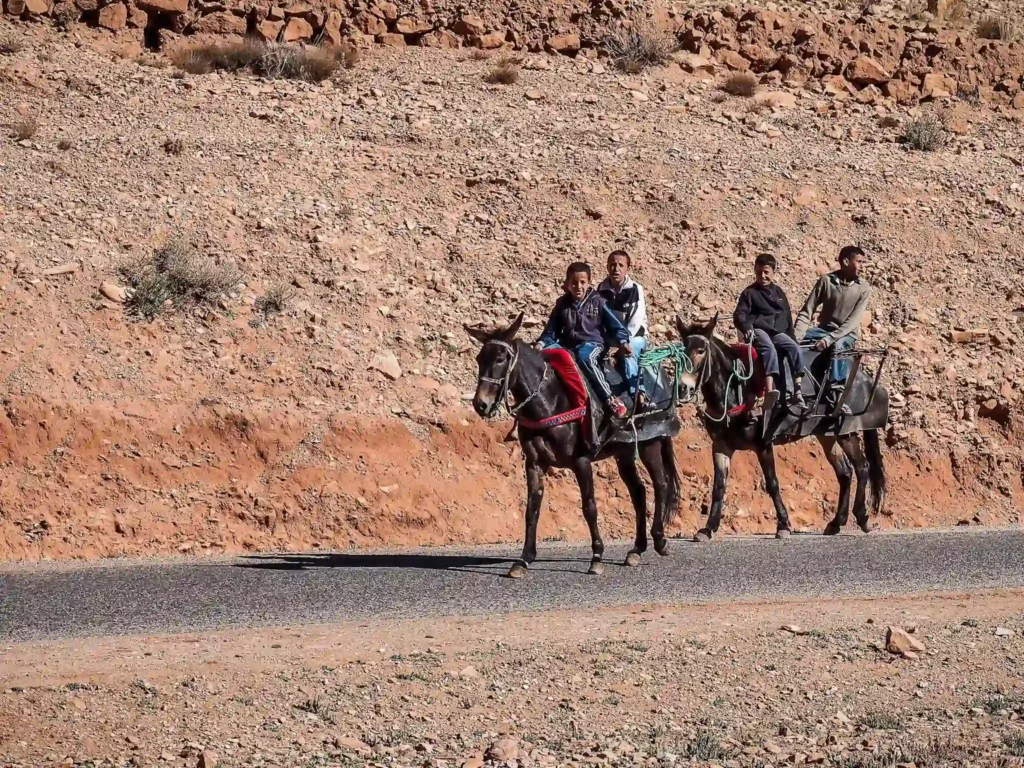
Prepare to share the road with far more than just cars. From motorbikes and trucks to horse-drawn carriages, donkey carts, and everything in between. Moroccan roads can be wonderfully chaotic!
Be prepared to honk and be honked at… A LOT! In Morocco, it’s not just a sign of frustration. Drivers honk to let you know they’re there, to warn of potential hazards, or simply to encourage you to move along. Chances are, you’ll find yourself honking a few times, too!
Top Tip: Take it slow when driving in Morocco. Moroccans are used to the chaos and will naturally weave around you. Once you leave the city, the roads become much quieter and far easier to navigate.
Safety Tips for Driving in Morocco
Use GPS with Caution when Driving in Morocco
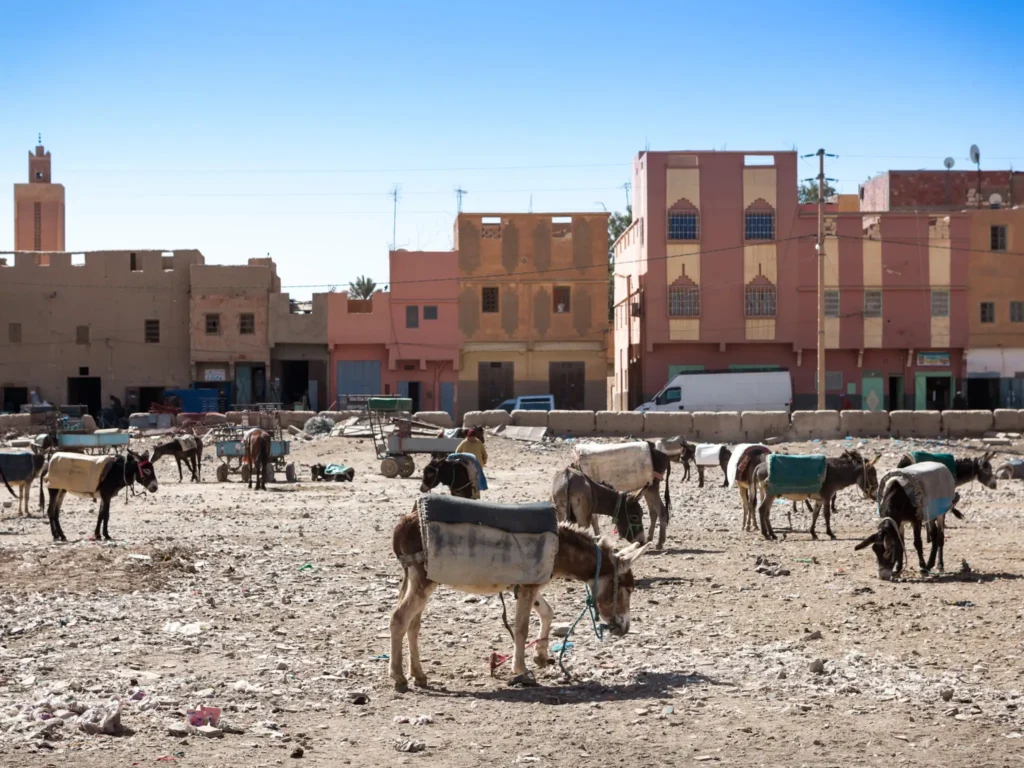
While GPS devices and apps like Google Maps can be helpful for navigating Morocco, they don’t always account for road conditions, vehicle type, or temporary closures. Some suggested routes can lead you down narrow, unpaved, or mountainous roads that aren’t suitable for standard cars.
When I was driving near Merzouga, a local told me about a donkey market in a nearby town I should visit. I popped it into Google Maps and set off.
Safe to say, we must have arrived on the day the market wasn’t on — and Google Maps guided us straight off-road onto bumpy, rough ground. I’ll admit, I felt a little panicked and worried we might get stuck, as at this point, it felt like we were in a very rural part of Morocco!
The moral of the story is that if Google Maps looks like it’s taking you somewhere unusual, double-check the route, especially in rural areas. Planning ahead and staying flexible will help you avoid getting stuck and make your Moroccan road trip safer — and much more enjoyable.
Essential Emergency Numbers You Should Know for Driving in Morocco
It’s important to know the key emergency numbers while driving in Morocco. For police assistance, dial 190 (from a landline) or 112 (from a mobile) — useful for reporting accidents, road incidents, or if you need help at a checkpoint.
For roadside assistance, dial 177 or contact your rental company directly, as many provide 24/7 support for breakdowns or vehicle issues.
You don’t necessarily need a Moroccan SIM to call these emergency numbers, but there are a few things to keep in mind:
- Calling from a foreign SIM or roaming:
- You can usually call Moroccan emergency numbers from your UK (or other foreign) SIM, but you may need to dial the country code first (+212).
- Roaming charges may apply, which can be really expensive.
- Local SIM card benefits (more on this later):
- Having a Moroccan SIM ensures you can call emergency numbers quickly and cheaply without having to input a country code. You’ll also be able to contact your car rental company without worrying about roaming fees.
Top Tip: Save these emergency numbers in your phone, and write them down in case your phone runs out of battery.
Best Routes for Driving from Marrakech to Merzouga
The Atlas Mountains Roads Are Safe
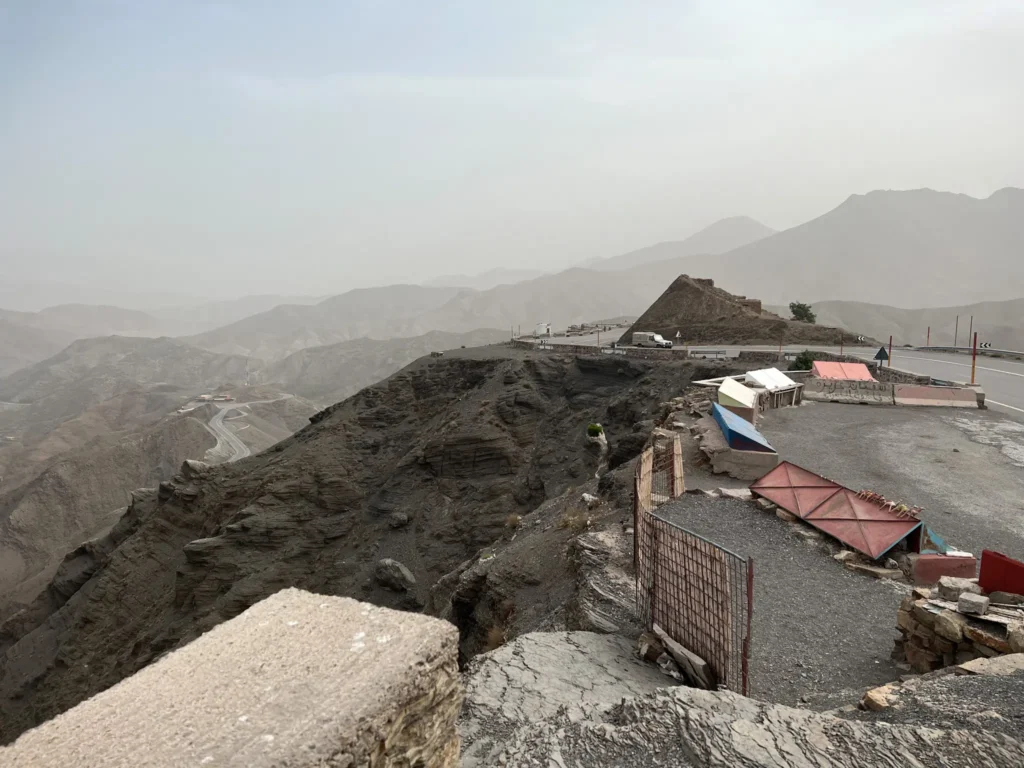
When I was researching driving in Morocco, I came across plenty of warnings about roads in the Atlas Mountains being a bit dodgy. I didn’t find this at all.
For me, the main road through the Atlas Mountains is perfectly safe. I can’t speak for venturing off onto minor roads, but the main route is well-maintained and straightforward.
One thing I noticed was that people often confuse the Tizi ‘n’ Tichka Pass in the Atlas Mountains, which connects Marrakech to Ouarzazate, with the Tisdrine Bends in Dades Valley. I drove both, and even went out of my way to experience the Tisdrine Bends.
The Tizi ‘n’ Tichka Pass in the Atlas Mountains is far less scary than it’s made out to be. The road isn’t overly bendy, it’s well-maintained, and there are passing areas, so you can take your time and let faster vehicles by.
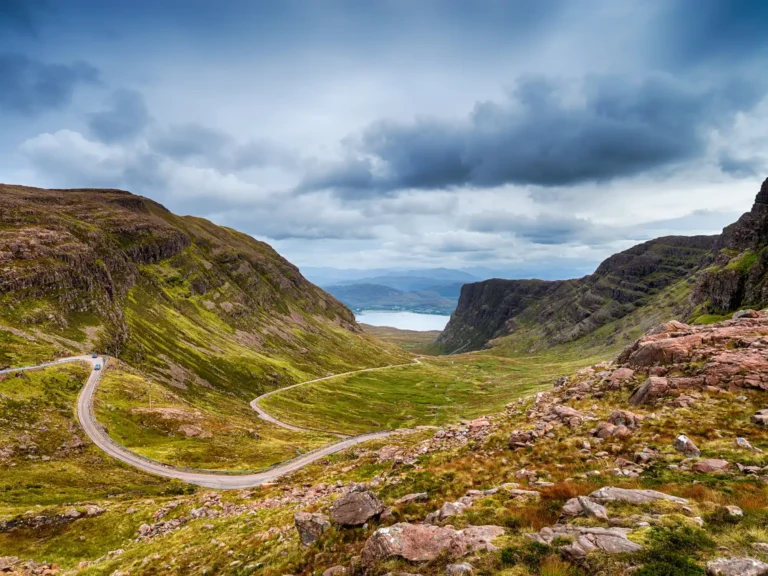
The Tisdrine Bends, on the other hand, are considered more challenging. I was a little nervous at first, but locals assured me that while it was dangerous in the past, it’s now perfectly safe.
And honestly, it wasn’t as bad as it looked at all. Driving the Tisdrine Bends turned out to be one of the highlights of my trip.
Fuel Stations, Toll Roads, and Parking When Driving in Morocco
Filling Up Petrol in Morocco
This might not be the most critical tip, but it’s worth knowing — especially if you come from a country like the UK, where self-service petrol stations are the norm.
In Morocco, you don’t fill up your own car with petrol. Instead, you drive up, and an attendant comes to your window. They’ll ask whether you need petrol or diesel, fill up your tank, and then return to your window for payment.
Interestingly, petrol in Morocco seems to last way longer than in the UK. For my 800-mile round-trip from Marrakech to Merzouga, I only had to fill up twice, spending a total of £94 for the week.
Top Tip: A bit of basic French or Arabic helps here to communicate whether you need petrol or diesel, etc., as there can be a bit of a language barrier.
Keep an Eye on Fuel Levels While Driving in Morocco
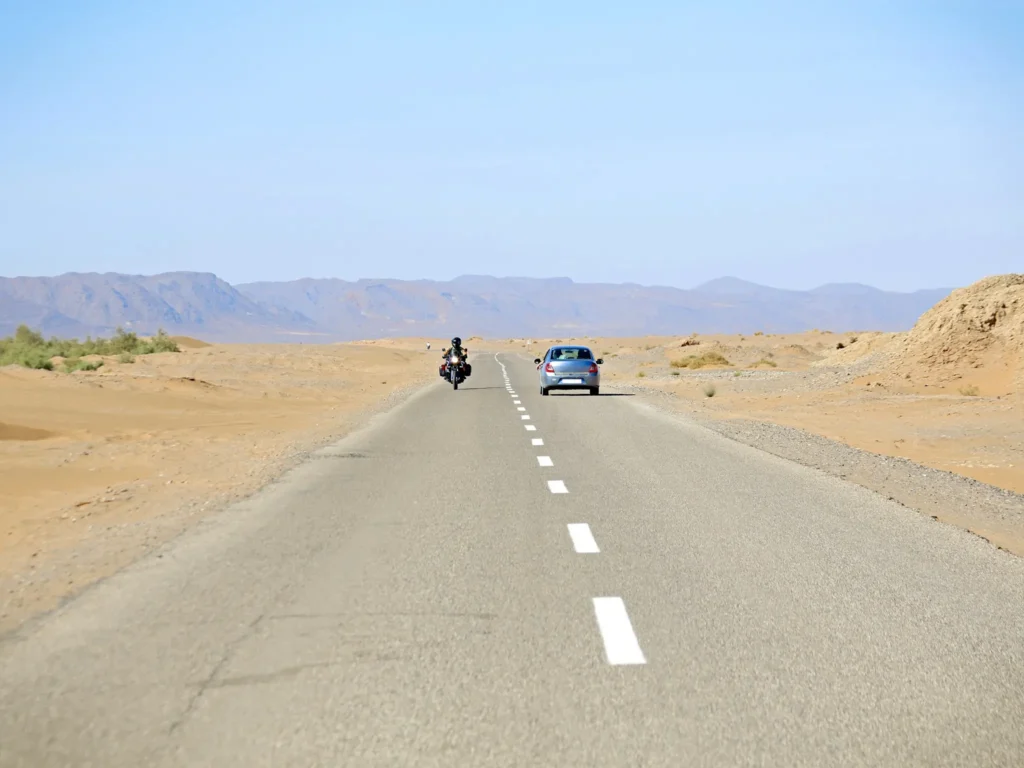
While fuel stations are generally plentiful in Moroccan cities and larger towns, they can be few and far between in rural, mountainous, or desert areas. Running low in these regions could leave you stranded for hours, far from help or facilities.
Make it a habit to refuel whenever you get the chance, even if your tank is still half full.
Top Tip: Planning your fuel stops ahead of time will make your road trip much smoother and far less stressful.
Always Carry Spare Cash and Small Change When Driving in Morocco
While many places in Morocco now accept card payments, it’s not guaranteed. Tolls, smaller petrol stations, local markets, and parking areas often only take cash.
Having Moroccan Dirhams, a mix of coins and notes, is incredibly helpful.
Parking Tips for Cities and Urban Areas When Driving in Morocco
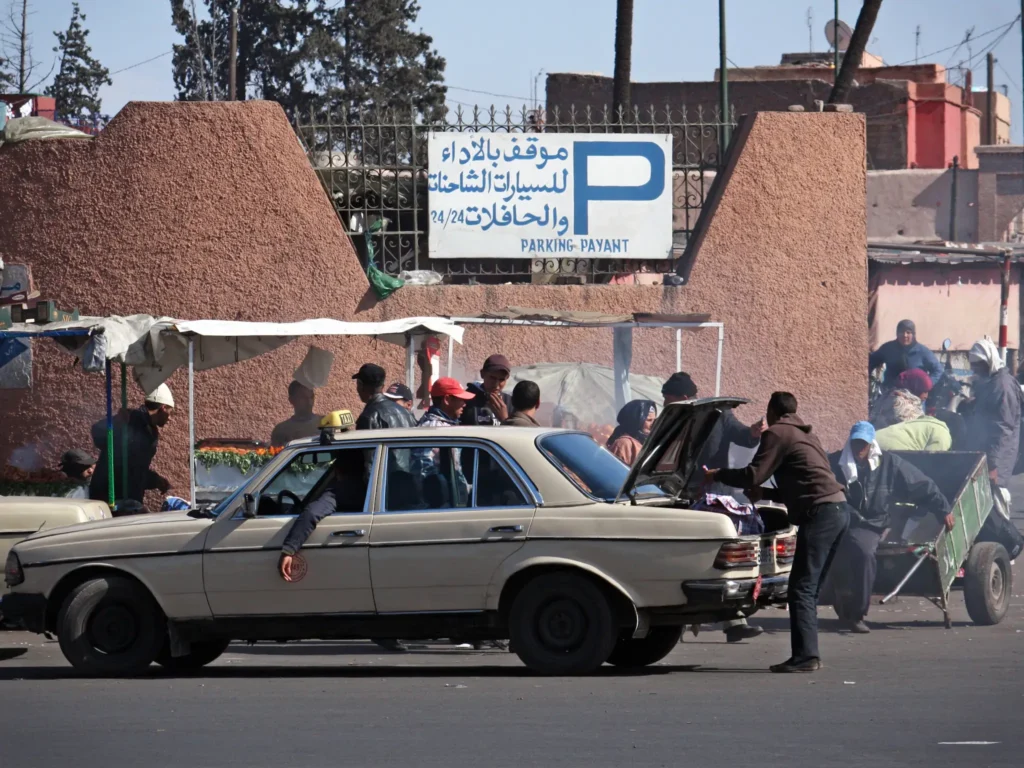
Parking in Moroccan cities can be tricky, especially in busy areas like Marrakech or Casablanca. Whenever possible, opt for secure parking lots or garages rather than leaving your car on the street. These facilities usually have attendants and offer extra security for your vehicle.
Also, avoid leaving valuables visible inside your car. Parking in well-lit, monitored spaces and keeping your belongings out of sight will give you peace of mind while you are out exploring.
Etiquette and Local Customs When Driving in Morocco
Driving customs in Morocco can be quite different from what you might be used to. For instance, honking isn’t always a sign of frustration — it’s often a way to communicate with other drivers.
Locals may honk to alert you to their presence, signal their intentions, or even show appreciation for letting them pass.
Lane discipline is also more relaxed, and overtaking can happen frequently, sometimes in tight spots. Understanding these customs and staying calm will help you navigate the roads safely and blend in with local traffic.
Planning Your Moroccan Driving Adventure
Getting a Moroccan SIM Card for Driving in Morocco
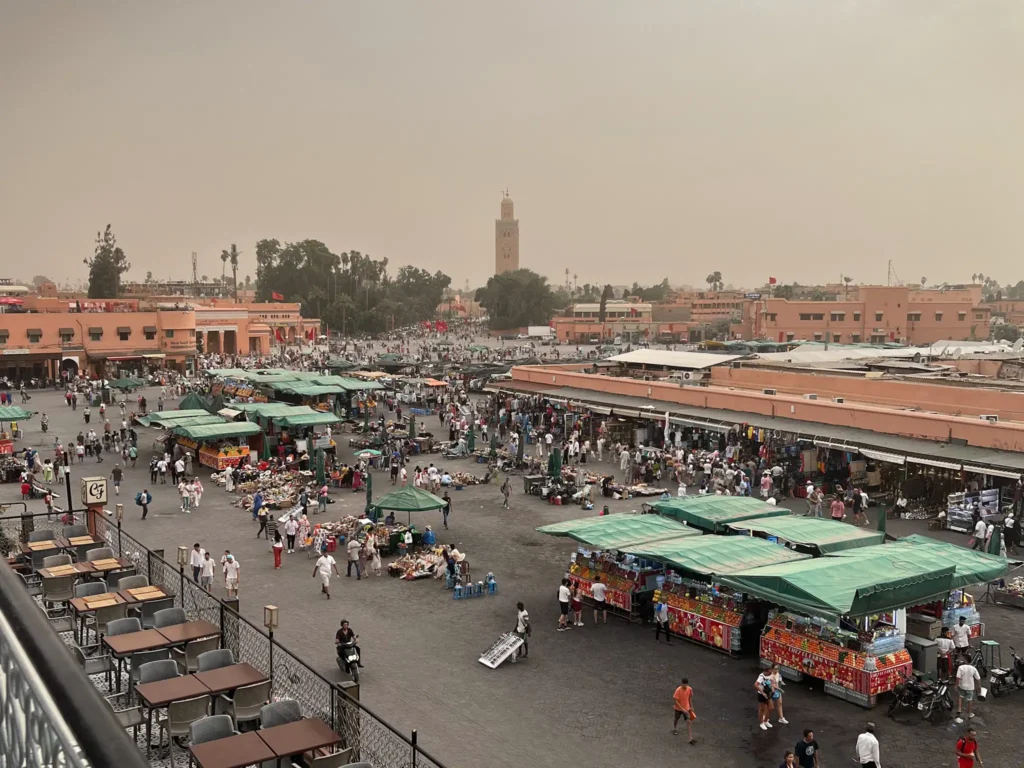
Getting a Moroccan SIM card is absolutely essential if you’re planning to drive through Morocco.
It’s particularly important in case of emergencies — a local SIM ensures a stable connection for internet and phone calls, even in remote areas like Tinghir.
Another reason to get a Moroccan SIM is to avoid astronomical roaming charges. My UK phone company, for example, wanted to charge €7 per minute for calls and €11 per MB of data — that’s crazy! Imagine needing to call for help in a remote area with prices like that.
Avoid buying a SIM at Marrakech airport — I made this mistake! If you buy there, 20GB of data costs around 200 MAD (~€18). Instead, head to Jemaa el-Fnaa square, where you can get 100GB for just 50 MAD (~€5). The staff will set it up for you, so it’s quick and hassle-free.
If you want to get your SIM sorted before you even arrive, try a Yesim international electronic SIM.
It provides a stable internet connection in 150+ countries, is pay-as-you-go, and means you don’t have to physically swap SIM cards. Just select your country, and you’re good to go — no lost SIMs or fiddly setup required.
Learn Some French or Arabic for Driving in Morocco
Having a basic grasp of French or Arabic can make a huge difference when driving in Morocco.
English isn’t as widely spoken as you might expect, and I definitely encountered a language barrier a fair few times. Knowing the basics also helps you understand road signs, which are often in French or Arabic.
The French I learned at school was helpful to a point, and locals really appreciate it when you make an effort to speak their language. That being said, I still struggled to communicate with petrol station attendants or police at checkpoints.
I’d suggest focusing on learning key French or Arabic words related to driving, such as petrol, diesel, full tank, or half tank. It will make your journey much smoother.
Why You Should Have Basic Car Knowledge For Driving in Morocco
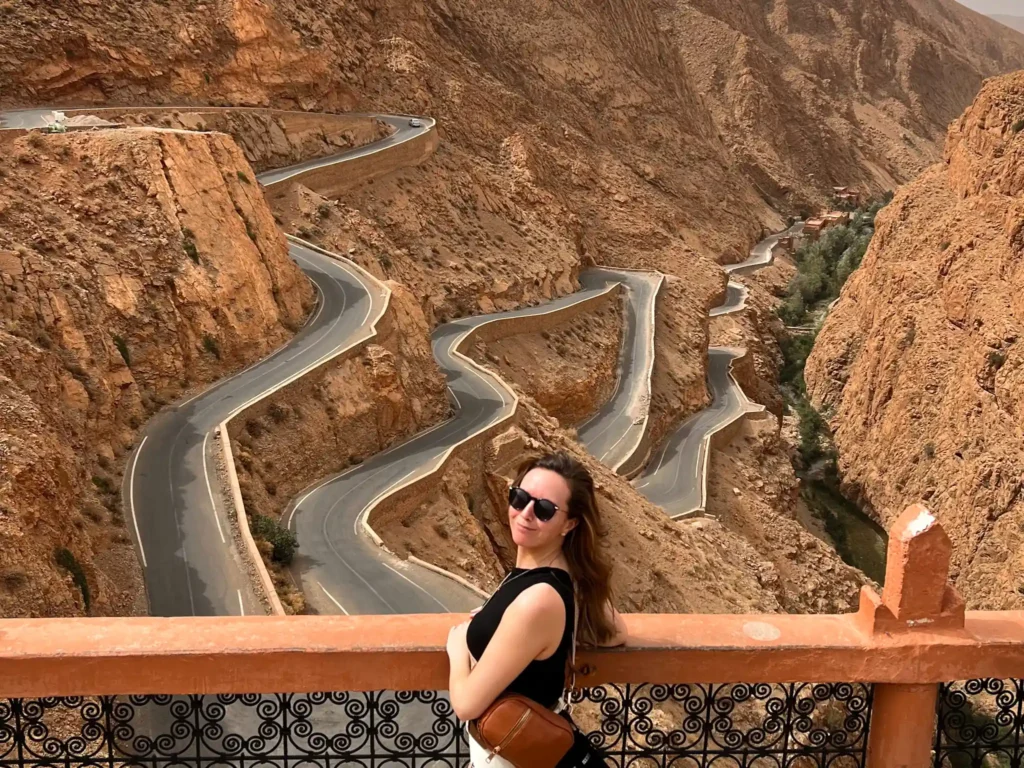
A basic knowledge of cars is essential when driving in Morocco. What struck me most on the way to Merzouga was just how desolate the route was — we didn’t see another car or settlement for miles.
Breaking down in a place like that could be scary, as help might be hours away. Even knowing something as simple as how to change a tyre could be super useful.
The Importance of Using Google Maps Offline When Driving in Morocco
Even if you get a Moroccan SIM, you don’t want to waste all your data on Google Maps. A great way to conserve data — and avoid relying on unreliable Wi-Fi — is by downloading Google Maps offline. Without it, I would’ve got so lost driving in Morocco.
Check out this handy guide on how to download Google Maps offline to make sure you’re fully prepared for driving in Morocco.
Why You Should Leave Early in the Morning When Driving in Morocco
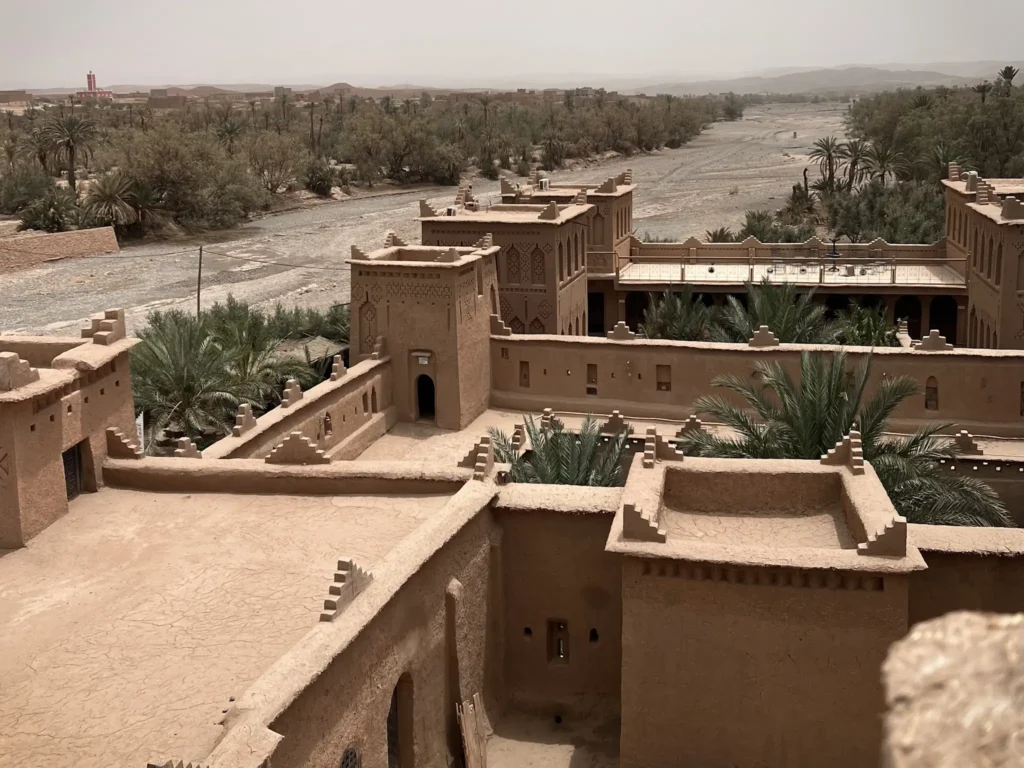
Getting from place to place in Morocco can take several hours. Most of my drives were around 4–5 hours per day.
Driving in Morocco can feel a bit monotonous, and your journey often takes longer than Google Maps predicts — especially if you drive cautiously or get stuck behind slower vehicles.
My advice would be to leave early in the morning (around 9 am) when the roads are quieter and temperatures are cooler. This gives you plenty of time for taking breaks and allows you to do some sightseeing along the way.
Always Carry Plenty of Water When Driving in Morocco
Some parts of Morocco are largely uninhabited, meaning you can drive for hours without seeing another person. This can be a real problem if your car breaks down, but it’s equally important to avoid being stranded without water, especially in the height of summer.
I drove through Morocco in July, when temperatures often reached 40–50°C (105–110°F) — almost unbearable to be out in. We always made sure to keep a couple of bottles of water in the car to stay hydrated in case of emergencies.
All that to say… Summer is most definitely not the best time to drive in Morocco.
Five Common Mistakes When Driving in Morocco
Many first-time visitors make the same mistakes. Try to avoid these:
- Trusting Google Maps blindly
- Driving after dark
- Waiting too long to refuel in rural areas
- Assuming parking is free (there’s usually an attendant)
- Underestimating travel times
Five Important Road Signs in Morocco to Know
Stop Sign in Morocco
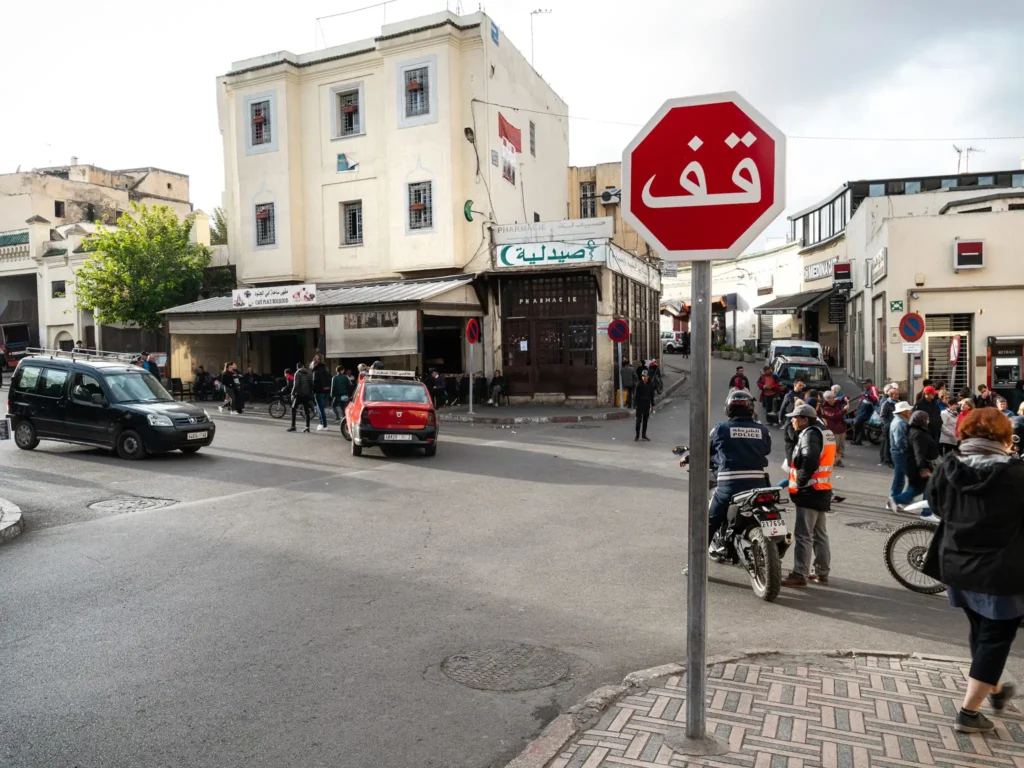
These signs are everywhere in Morocco, usually written in Arabic. When you see one, you must come to a complete stop, not just slow down.
They’re commonly found when exiting petrol stations or joining a main road from a side street. However, they can sometimes appear in unusual spots — even in the middle of a roundabout!
When I was driving in Boumalne Dades, I slowed down at a stop sign on a roundabout and immediately encountered a police checkpoint.
The officers waved me over and explained that because I hadn’t come to a full stop, I’d technically committed a traffic violation. Luckily, I managed to avoid a fine, but Moroccan police can be very strict about this rule!
Police Checkpoint Sign in Morocco
As mentioned, police checkpoints are very common throughout Morocco, especially on popular roads and in tourist-heavy areas. And they can appear when you least expect them, so it’s important to always stick to the speed limit.
A good clue that a checkpoint is ahead is if another driver flashes their lights or if the vehicle in front slows down significantly.
You don’t need to stop at every checkpoint, but slow down to around 20 km/h. If the police want to question you, they will signal for you to pull over.
When stopped, officers will typically ask to see your driving licence, passport, and insurance documents, so always have these ready. If you don’t speak French or Arabic, a translator app can be very helpful for communication.
The most common fines are for speeding, not fully stopping at stop signs, or driving past a checkpoint when waved to stop. Fines usually cost around €40 each, so it’s best to be cautious and follow the rules.
No Parking Sign in Morocco
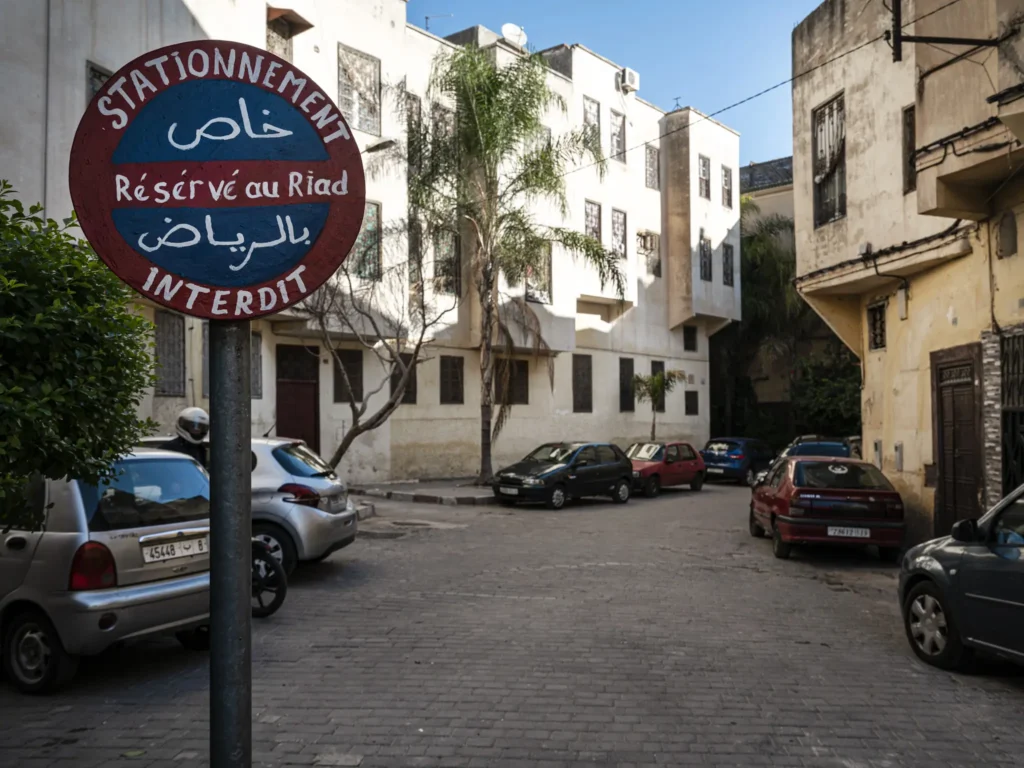
If somewhere doesn’t allow parking, look for this no parking sign, often with Arabic or French text explaining why. Even if spots appear vacant, the sign might say they reserve the spaces for nearby hotels or riads, so always check carefully.
You can find plenty of legal places to park, either on the street or in designated car parks. In areas where you can park, look for a blue sign with a capital “P” or parking attendants wearing brightly coloured vests.
The attendants can help you park and keep your car safe, but you must pay for their service — always confirm the price beforehand.
In smaller towns or remote areas, parking attendants may not appear, so park carefully to avoid fines for illegal parking.
No Overtaking Sign in Morocco
When you see a sign with a red circle and two cars side by side — one red, one black — it means overtaking is strictly prohibited. If you get stuck behind a slow vehicle, you’ll have to wait until you’ve left the restricted section to pass.
Once you’re past the no-overtaking sign, there are usually plenty of opportunities to pass slower vehicles, especially as you move further from the cities. Roads become straighter, with better visibility for miles.
Don’t rush to overtake. Wait until you feel ready, take your time, leave plenty of space, and make sure the other side is clear before making your move.
Pedestrian Crossing in Morocco
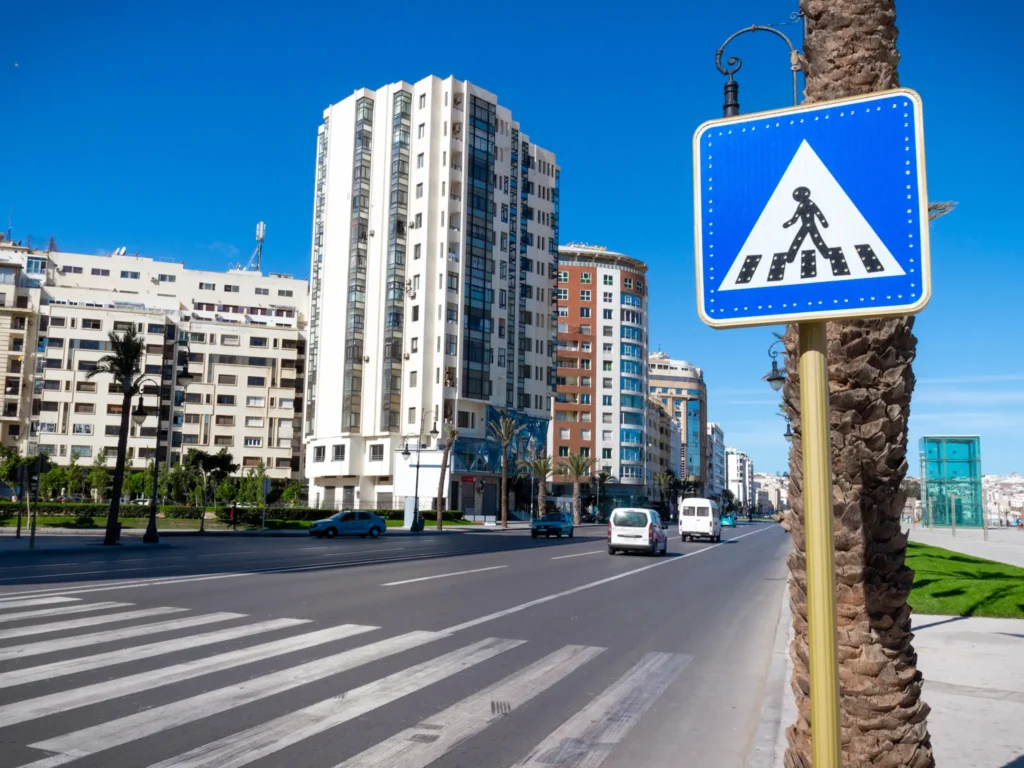
When you see this sign along with a crosswalk, it technically means you should stop and allow pedestrians to cross. However, this varies depending on the city.
In larger cities like Marrakech and Casablanca, drivers rarely stop for pedestrians. In cities such as Fes, Tangier, Rabat, and Agadir, they are generally more likely to respect pedestrian crossings. Regardless of where you are, always stay alert in busy urban areas and be ready to stop if needed.
Is it Safe to Drive in Morocco?
Yes, absolutely! I found driving in Morocco perfectly safe — as long as you are prepared for anything!
Public transport can be limited, and group tours don’t always give you the freedom to stop at hidden gems along the way. So, in my opinion, hiring a car can be one of the best ways to explore the country at your own pace.
With a rental car in Morocco, you can go wherever you want, like to some of these day trips from Marrakech.
That being said, a Sahara Desert group tour does take the hassle out of planning (and potential stress of driving) and is a great way to see Southern Morocco, including Todra Gorge and Merzouga, especially if you’re short on time.
Let me just finish this by saying… If I can drive in Morocco, anyone can – you just need to keep your wits about you!
How Much Did It Cost Me to Drive in Morocco?
- Renting a Manual Car: 7 Days x €40 = €280 (~£240)
- Car Insurance against Excess: €30 (~£26)
- Petrol for 7 Days: €110 (~£94)
TOTAL FOR ONE WEEK = €420 (~£358)
Found these driving in Morocco tips helpful? Pin this post on Pinterest so you’ll have it ready for your Moroccan road trip!
I’d love it if you could drop a comment below, share my Pinterest pins, and subscribe to my blog to stay updated with new posts. Every bit of engagement helps my little travel blog grow!
This post is all about driving in Morocco.
Thanks so much for reading – it means the world!
Kirsty