💌 Just a quick note before we get started: this post contains affiliate links. That simply means I might earn a small commission (at no extra cost to you) if you decide to book or buy through one of the links. It helps me keep Postcards from Kirsty running — and hopefully helps you plan your own adventure too!
I recently took a solo trip to a Taghazout surf camp, and it turned out to be exactly what I needed — sunshine, saltwater, and a complete reset (plus an unintentional digital detox). I came back to Scotland feeling lighter, calmer, and clearer. If you’re craving the same kind of escape, this might just be your sign…
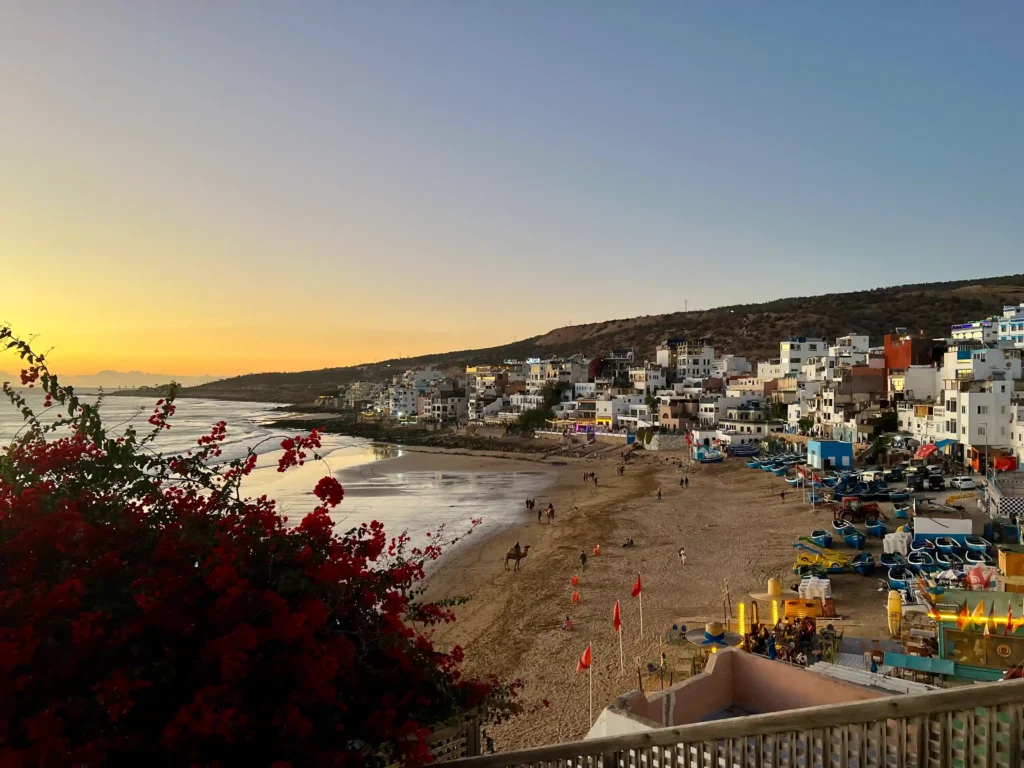
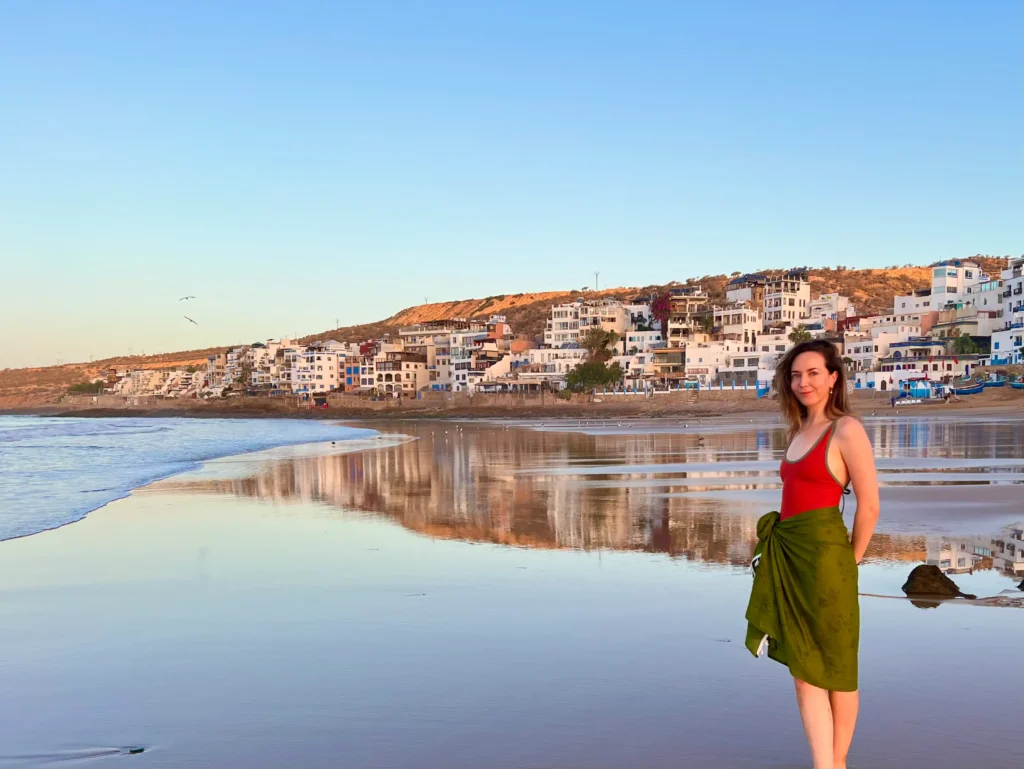
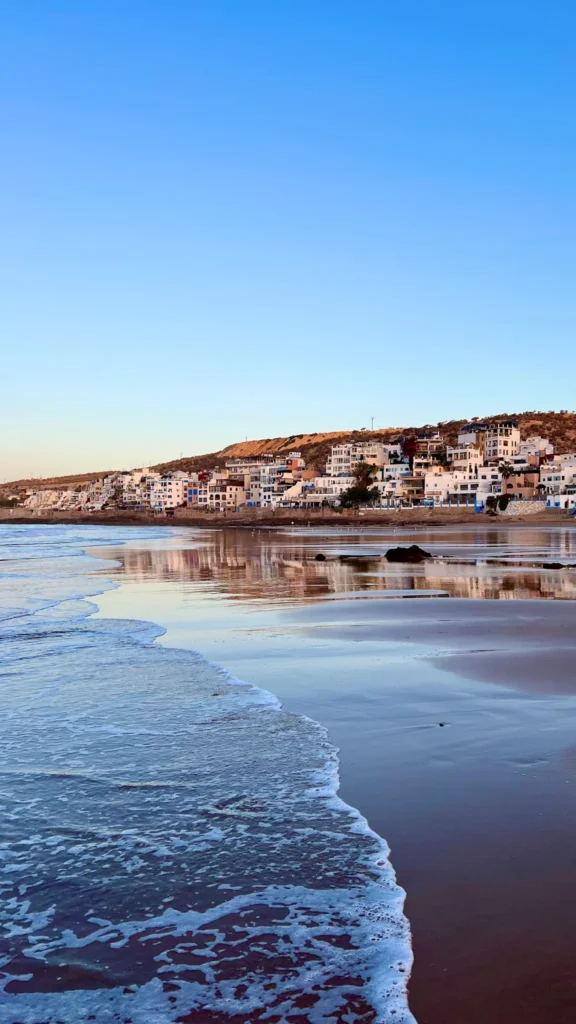
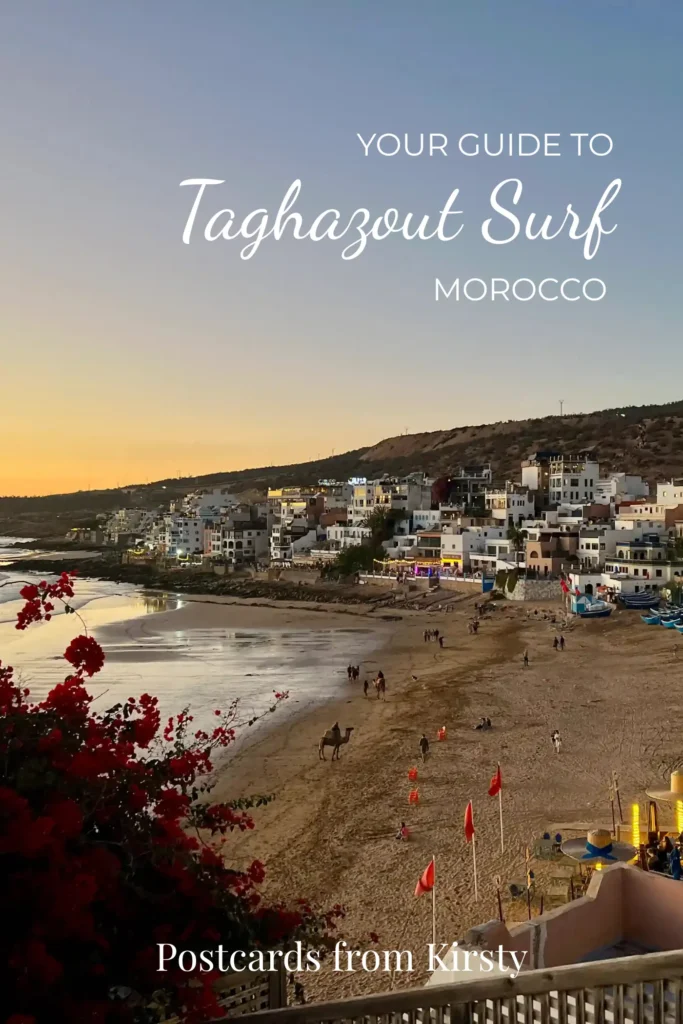
Taghazout itself is nothing short of magical. I arrived at sunset and honestly couldn’t have picked a better introduction to this beautiful, laid-back Moroccan town. Nestled along the coastline, it’s the perfect place to slow down and watch the sun rise or set over the horizon.
I can’t recommend booking a surf camp in Taghazout enough; it’s good for the mind, body, and soul. In this guide, I’ll take you through everything you can expect, from surf and yoga lessons to the best time to visit Morocco and even the budget, so by the end, I hope you’ll feel prepared and inspired to take the leap and book your own Taghazout surf camp adventure.
Why I Chose to Go to a Surf Camp in Taghazout
Why Taghazout Is Perfect for First-Time Surfers
I had only surfed once before going to Taghazout. This lesson was in Peru, and let’s just say it became very evident, very quickly, that I’m not naturally gifted at surfing.
It also didn’t help that the instructor didn’t speak a word of English, and I didn’t speak a word of Spanish. So, we both ended up completely frustrated… It’s safe to say it wasn’t a very successful first surfing lesson.
Fortunately, in Taghazout, I had a much better surfing experience. It really is the perfect place to go to learn to surf!
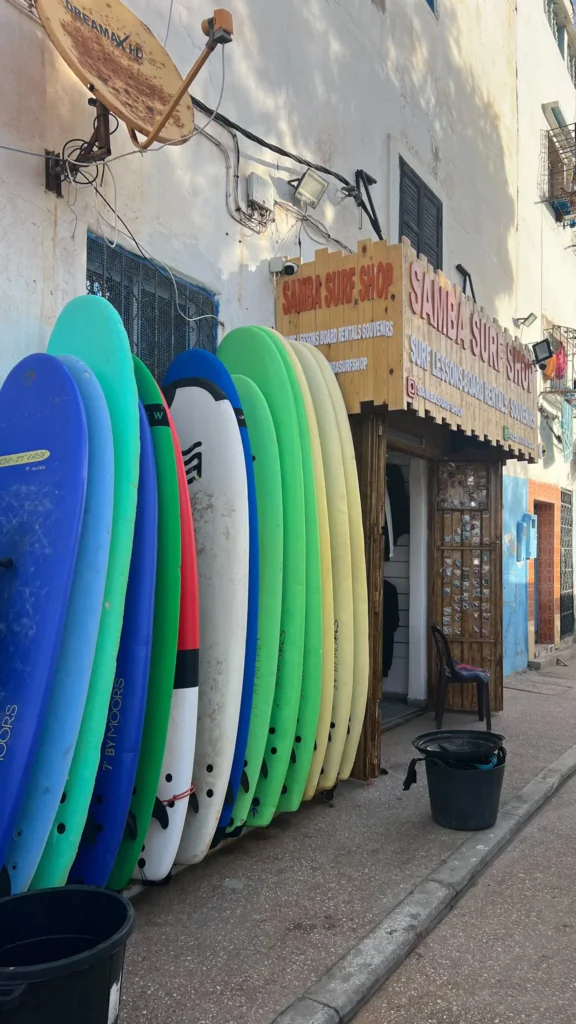
Firstly, the town is geared towards surf, so whether you go to a surf camp or you just go there independently, there are plenty of shops to get wetsuits, surfboards, and some pretty cool t-shirts to kick about in afterwards!
Secondly, the instructors are fantastic! They have the best insider knowledge of which beaches to go to, and they make sure to pick spots that are beginner-friendly. They also all spoke English really well and were clear in explaining the basics of surfing. Plus, they gave great advice on how to improve.
Thirdly, the temperature in Taghazout is fairly consistent year-round and sits at a comfortable level, typically ranging between 20 and 30 degrees.
This makes a huge difference compared to inland Morocco, where places like Merzouga can commonly reach 50 degrees at the height of summer.
Throughout the year in Taghazout, you’ll also find good swell and waves suitable for beginner surfers.
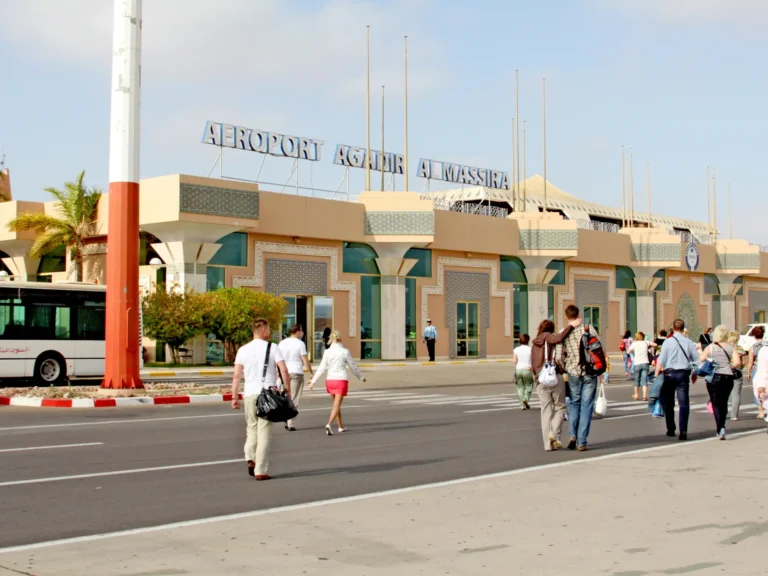
Finally, getting to Taghazout from Agadir Airport is super easy – just a 30-minute drive – and with so many airlines offering affordable flights to Agadir, escaping to a Taghazout surf camp has never been simpler.
What It’s Really Like Staying at a Taghazout Surf Camp
The Accommodation and Daily Comfort
This will vary depending on the Taghazout surf camp you choose to stay in. I choose to stay at Surf Coast Morocco.
They offer a mix of dorms and private rooms, which I think is pretty standard for a lot of the Taghazout surf camps.
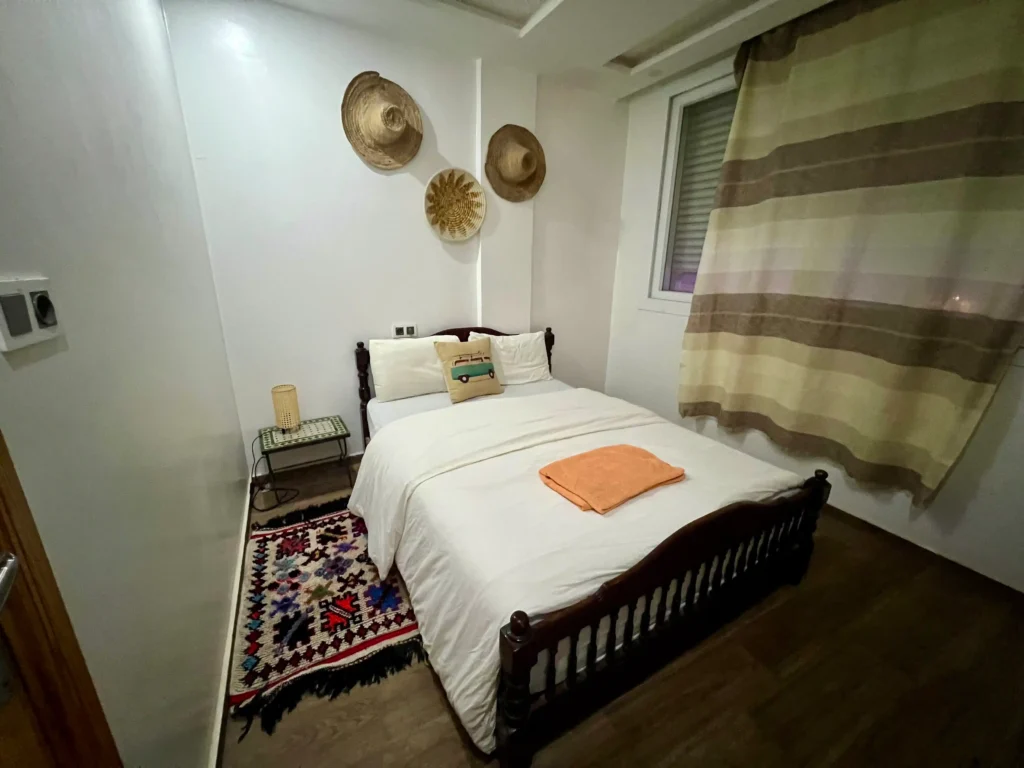
I opted for my own private room – it was on the small side but had enough space for my luggage and a comfortable double bed. The bathroom facilities were shared, which I didn’t mind, though it’s worth noting that only a limited number of rooms come with a private ensuite.
If you’re looking to save money, the dorm rooms are a great option. I personally wanted my own double bed and a bit of quiet, especially after a long day of surfing. It didn’t quite turn out to be “quiet” — but more on that later!
Meals, Coffee, and Sunset Dinners
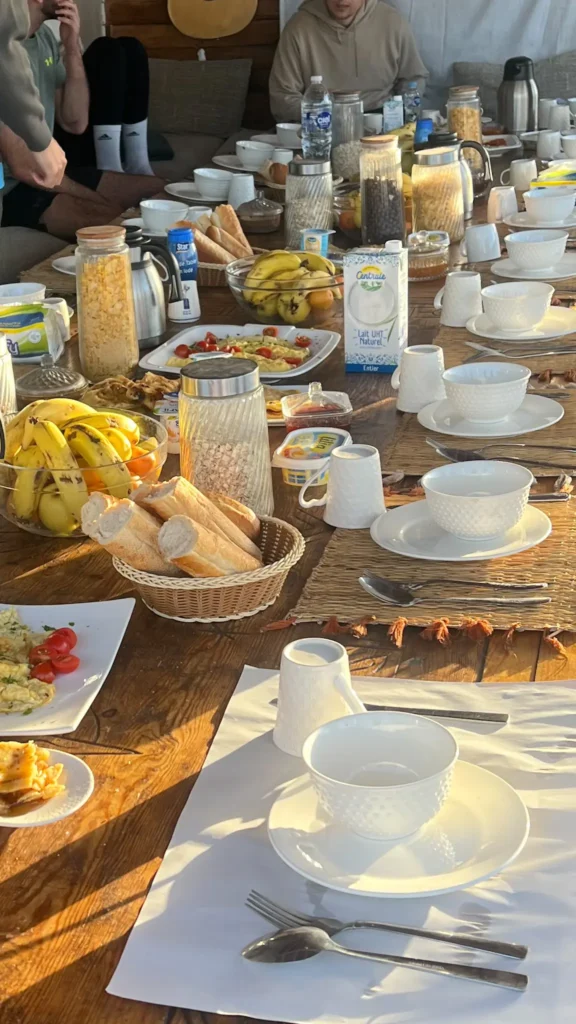
At Surf Coast Morocco, meals were served family-style, which meant everyone staying at the camp gathered around one big table, and the food was placed in the middle for everyone to help themselves.
Three meals per day were included as part of this Taghazout surf camp. Breakfast was served at 9 am, and dinner at 8 pm — usually the perfect time to catch an epic sunset.
They also kindly prepared packed lunches for when we went out surfing. All meals included a mix of meat and vegetarian options, along with tea and coffee.
If you fancy venturing out, Taghazout is geared towards tourists, as there are some lovely beachfront cafes and restaurants that you can go to.
The Community and Camp Atmosphere
Everyone at the camp was incredibly welcoming. As a solo traveller, I was a little apprehensive about whether I’d meet many people, but that fear quickly proved unfounded.
I ended up meeting so many lovely female solo travellers from across Europe, mostly in their late 20s and early 30s, who also happened to be in my beginner group.
When people go to surf camps or communities like these as solo travellers, they are oftentimes more open to getting to know people, and it makes it easier to get close in just a few days. Whereas, back home, it would take months, even years, to build up these sorts of connections.
The family-style dinners also really helped to get people talking to each other, and then after dinner, people would sit and play cards or go out in the town for drinks or to just hang out. So, I never felt lonely!
My Daily Routine at a Taghazout Surf Camp
Early Mornings and Board Prep
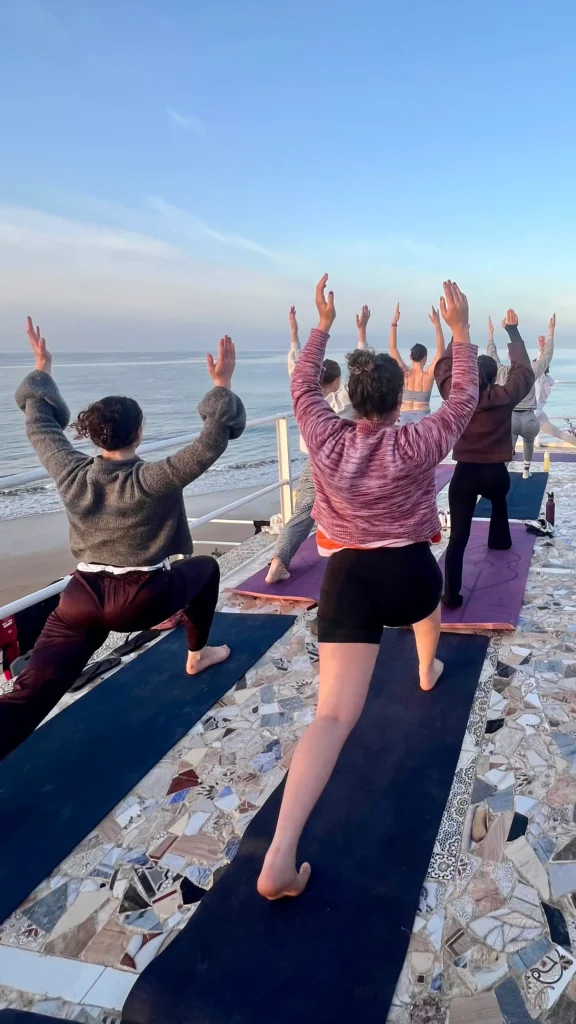
As part of the package I booked at Surf Coast Morocco, I got daily morning energising vinyasa yoga sessions at 7.45am included, or, if I wanted more of a restorative practice, I could opt for the evening yoga at 6pm.
Whether you opt for morning or evening yoga, it was timed pretty perfectly to watch the sun rise or set over Taghazout. These yoga sessions were done on the rooftop terrace with a beautiful view over the Atlantic Ocean and the town.
So, as you are doing yoga, you are hearing the waves lap on the beach, which was just magical.
Surf Lessons and Free Surf Time
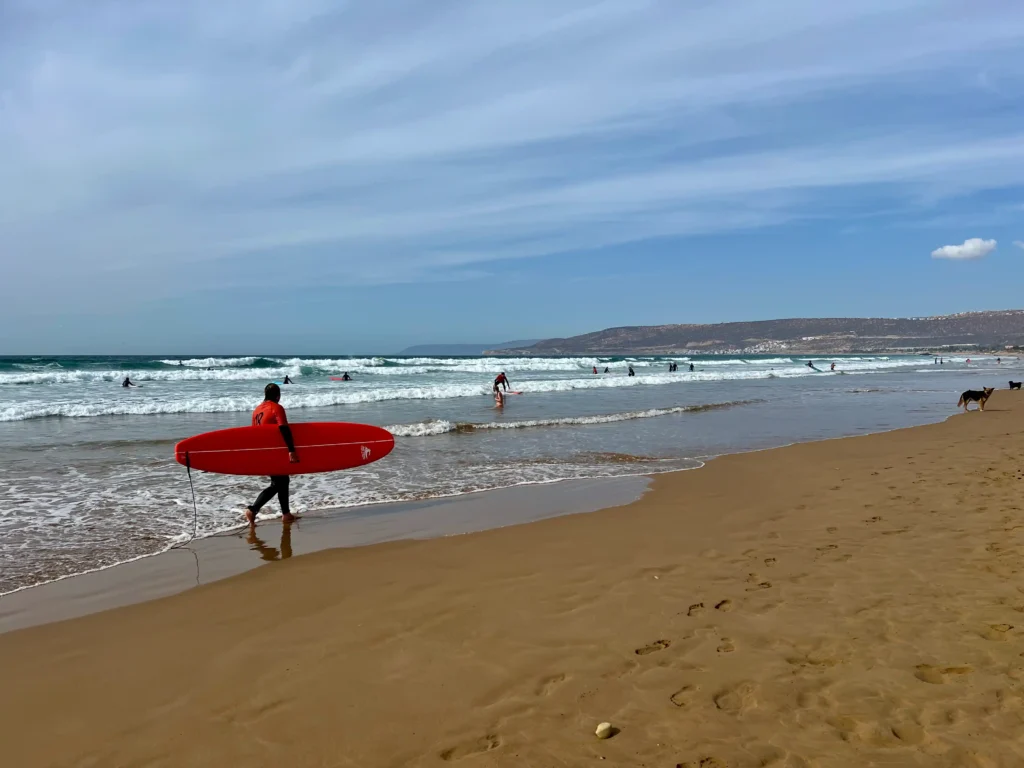
Surf lessons were between 10am-4pm. This included transport time, so usually we had about 5 hours on the beach.
Between roughly 10.30am and 12pm were instructor-led lessons. This involved doing a warm-up, being shown and having to demonstrate techniques on the beach like the “pop-up”. Then, we’d get into the sea, and our instructor would call on one of us at a time.
The instructors would then give us a push (if we needed it) as the whitewash waves roll in to give us a bit of a head start. They then watched our technique and gave us some great advice on how to improve our surf.
They often notice things you wouldn’t: the first day I went surfing, I kept coming off my board, and they said I was looking down at my feet when I needed to look to the horizon. This was actually super helpful as I hadn’t realised I was doing it, and the next time, I managed to stay on the board for a bit longer.
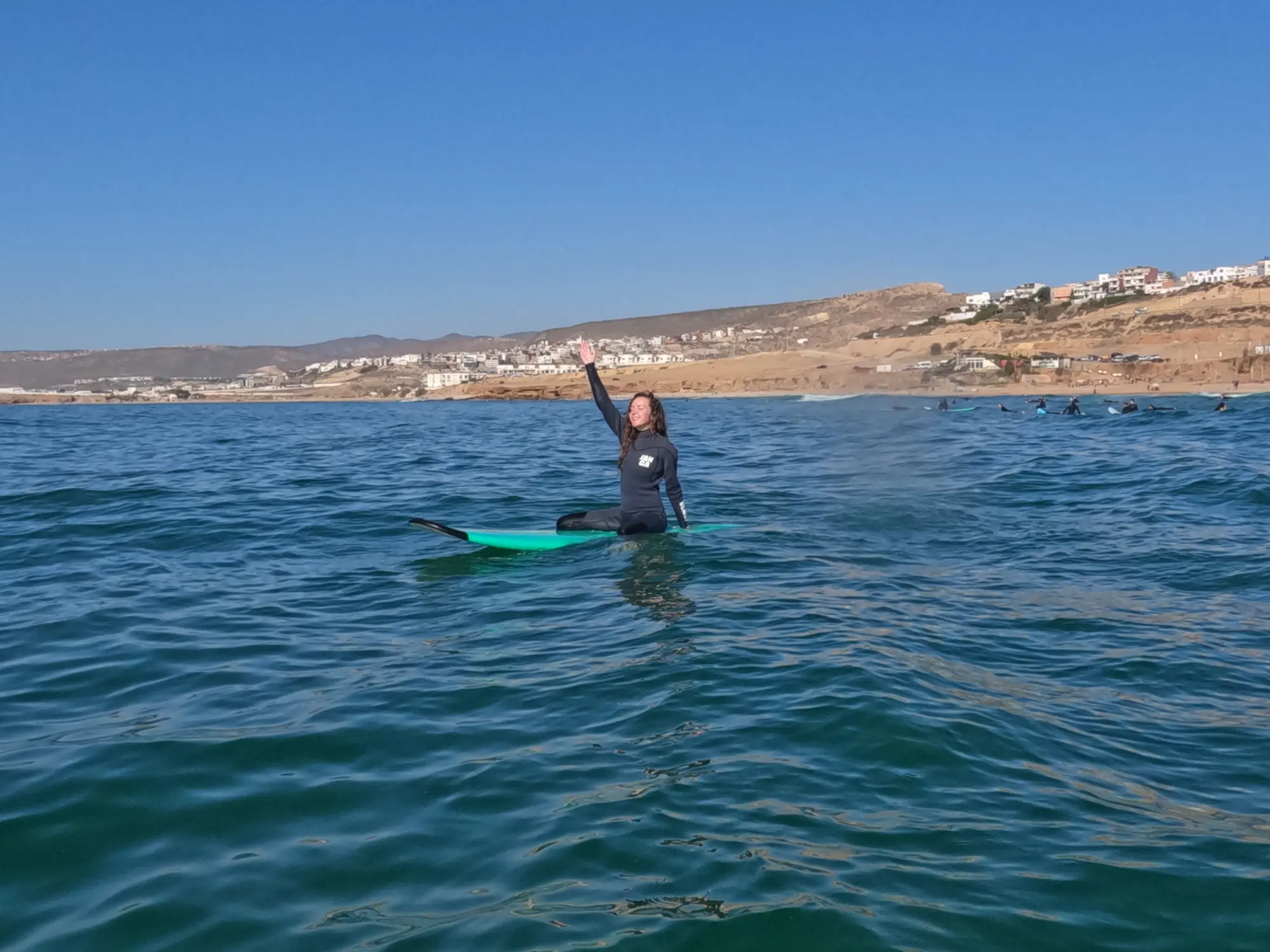
After lunch, from roughly 1 pm to 3.30 pm, it was free time. We either continue surfing on our own, putting the instructor’s advice into practice, or simply relax on the beach with a book. Sometimes I did just that, or I’d take my surfboard and sit in the ocean — especially after a few days of surfing in a row and feeling sore.
The surf lessons were split into groups based on capability, so beginners and intermediates. In my beginner group, there were only three or four of us. So, it was a great ratio of one teacher to students.
Afternoons in Taghazout Village
After your surf lessons, which for me ended at 4, you’ll have time to explore Taghazout village. Make sure to check out the clothing shops; there are some really cool t-shirts and things that you can pick up. Don’t miss the skatepark to watch the sunset – a must when in Taghazout!
There are also some great restaurants and crepe stands. One night, I got a Nutella and Kinder Bueno crepe, which was delicious for the first couple of bites, then it got super sickly (which is saying something because I usually have such a sweet tooth!).
Make sure to go to Suzi’s Cookies; it has incredible coffee and Nutella cookies, plus it has an outdoor seating area with the best sunset view over the Atlantic Ocean.
Is a Taghazout Surf Camp Right for You?
Best for Solo Travellers and Beginners
If you are a solo traveller or a beginner, opting for a Taghazout surf camp is absolutely the right decision for you.
It is one of the best ways to meet people and also learn how to surf. You’ll be in groups with people who are at the exact same level as you, which creates an “all in it together” mentality. Plus, these intensive surfing blocks are some of the best ways to build up a skill.
Who Might Prefer a Different Experience
If you are a high-level surfer, you might benefit from going on an independent trip to Taghazout. You could opt for one or two surf lessons, and ask those guides for the best local spots. Then, the next day, hire your own board (or bring your own) and make your way to those recommended beaches.
The reason I’m saying this is because the beaches we got taken to as beginners and intermediates were incredibly overcrowded, which just won’t be a fun experience for someone who is a pretty good surfer.
Budget, Comfort, and Expectations
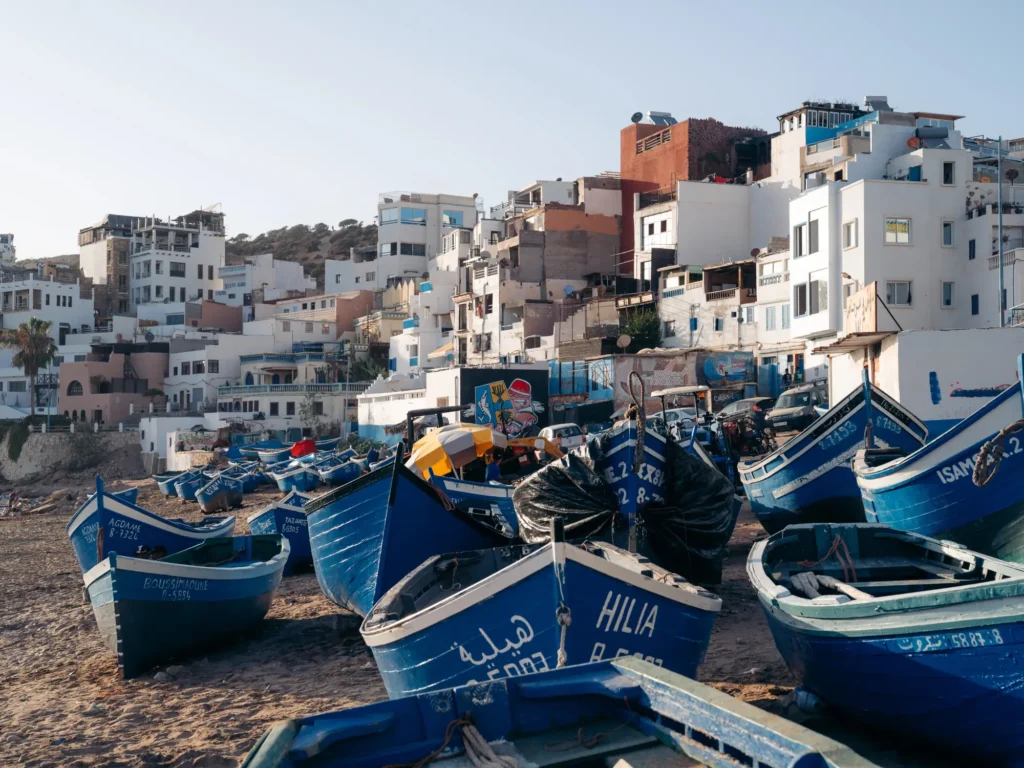
A Taghazout surf camp is incredibly budget-friendly for what you are getting. There’s a reason I opted to go here rather than elsewhere to surf, because for a private room, yoga, surf lessons, meals included, and transport from the airport, it works out to be really affordable (more on this later!). Plus, the town is geared more towards tourists and is undoubtedly stunning!
What’s Included in a Taghazout Surf Camp Package?
Surf Lessons, Boards, and Wetsuits
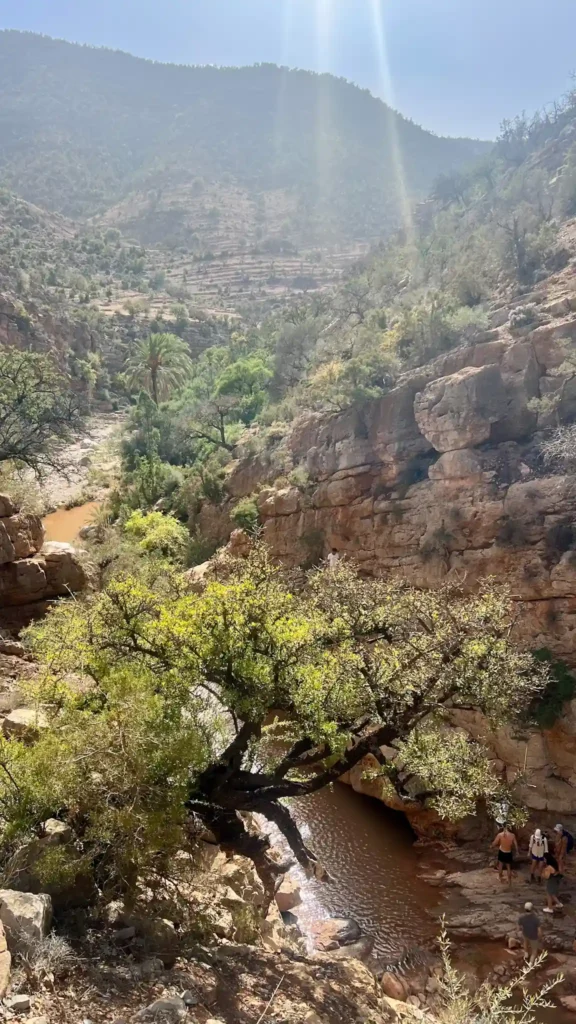
Daily surf lessons are usually included. With the Taghazout surf camp I went to, these were scheduled between 10am and 4pm daily (except on Wednesdays, when we took a trip to Paradise Valley instead – this was also included in the price). A softboard and a full-length wetsuit were also included in the package. This is pretty standard for most Taghazout surf camps.
Transport to Surf Spots
Taghazout surf camps usually include transport to surf spots. For the surf camp I went to, the whole group was given a designated spot to meet at 10am, then as soon as everyone was there, we got into the minibus, which could seat around 15 people. The surf spots weren’t that far away.
By the time we’d carried the boards down to the beach, got changed into our wetsuits and done a warm-up, it was closer to 11am.
The first day, we were taken to Imourane beach, and the second and final day was to Banana beach. Both were great for beginners, but Imourane beach was the best one, in my opinion. We started to get everything packed up around 3.30pm and taken back to our accommodation.
Yoga, Trips, and Extra Activities
Extras that are included depend on which Taghazout surf camp you end up booking. At Surf Coast Morocco, you can either choose to do just the surf package, or you can get a yoga and surf package – this is what I opted for.
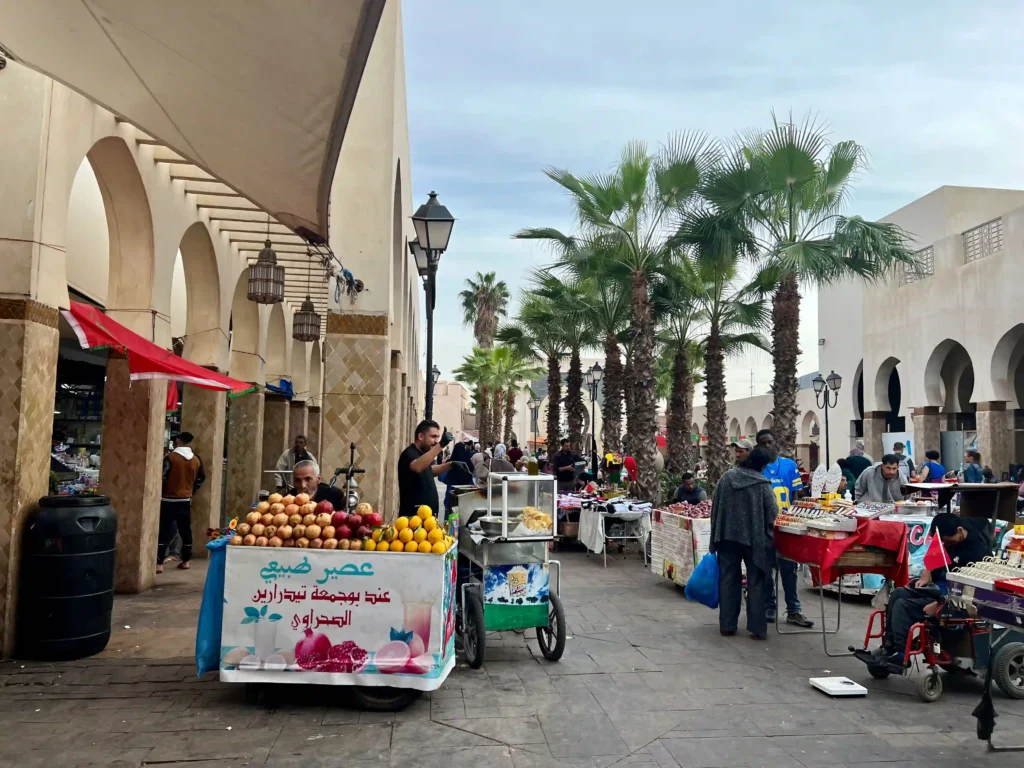
This included one daily yoga session, either in the morning or evening. My package also included three meals per day (pretty standard for a surf camp), a visit to Agadir Market on Thursday, a Paradise Valley day trip on Wednesday, and sandboarding in the dunes on Sunday (mind you, I missed this as I was heading home).
It’s common for Taghazout surf camps to include these little extra offers, as it makes them a bit more enticing, allows you to see the local area, and breaks up the surf days.
I’d highly recommend, after your surfing trip, to go for a traditional Moroccan hammam or get a massage in Taghazout. This is exactly what I did, and it was the perfect ending to the holiday!
How Much Does a Taghazout Surf Camp in Morocco Really Cost?
Typical Prices and What You Get
I stayed at Surf Coast Morocco for 5 nights, and it cost me £479 (or €553/$656). This would cost €658/$781 for 7 nights. This price was just for me, but pretty much included everything – my own private double bedroom, all meals, all surf and yoga lessons.
I thought this was pretty reasonable considering everything that is included. I didn’t actually need that much spending money either, only if I bought myself little treats or souvenirs from the town or markets.
The only thing that wasn’t included was transport to and from the airport. I added transfers to my package on the Surf Coast Morocco website, and it cost €20 each way.
Hidden Costs to Know About
I can’t speak for all Taghazout surf camps, but for the one I booked, there were no hidden costs.
Is a Taghazout Surf Camp Worth the Money?
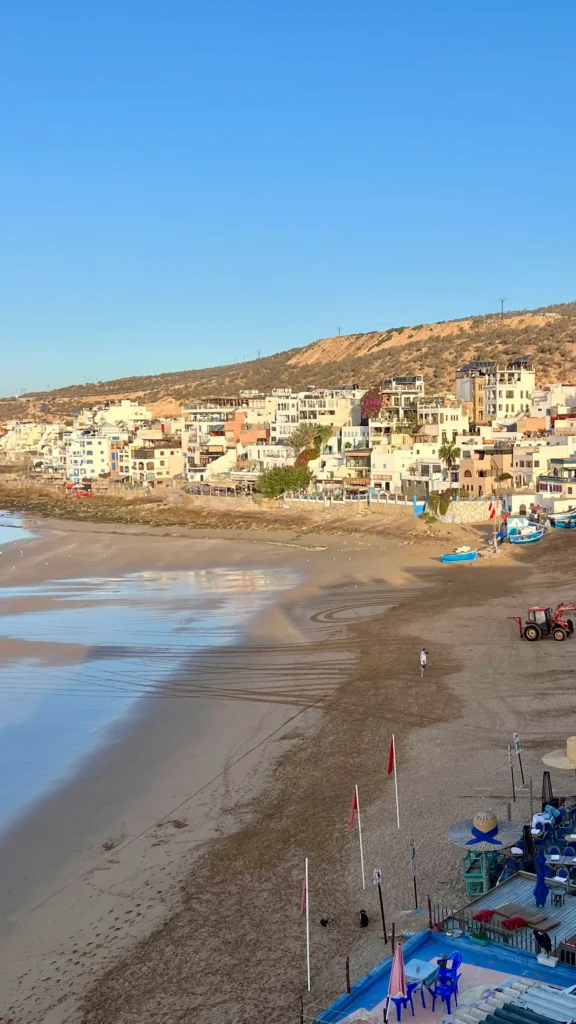
Absolutely, 100%! I honestly had the best time at my Taghazout surf camp, it was exactly what I needed when I went, and I came back feeling so much lighter! A week in the sun, learning to surf and do yoga with minimal screen time and surrounded by lovely people, is like food for the soul!
Best Time to Visit a Taghazout Surf Camp
The best time to visit a Taghazout surf camp depends on your surf level.
Peak Surf Season in Taghazout
Peak season for surfing in Taghazout tends to be between December and March. This is when the Atlantic swells are at their biggest and most consistent, so it’s best for experienced and advanced surfers. Around this time, you can expect the beaches to be busier with more serious surf crowds.
If you’re planning to travel further inland to places like Ait Ben Haddou or the Dades Valley, this is the best time to go.
Shoulder Season vs High Season
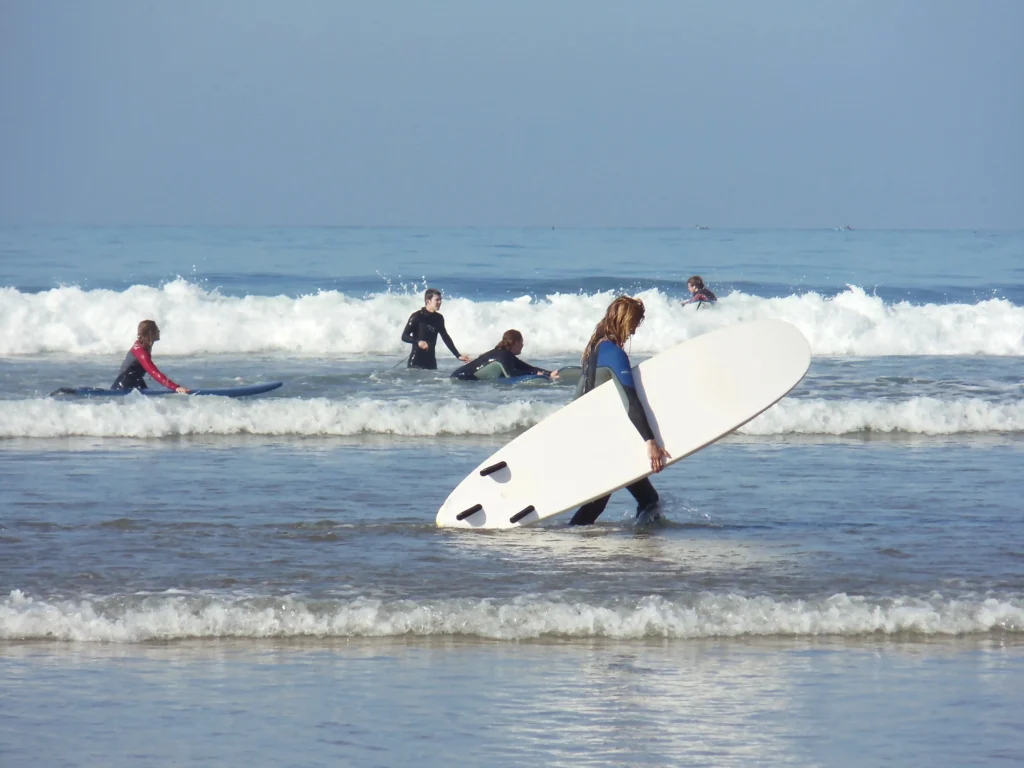
The shoulder seasons run from March to May and from September to November. I went surfing in Tagahzout in November, right in the shoulder season.
This is the perfect time for beginners and intermediates to go. You can expect moderate swells and waves, and fewer crowds than during the peak high season.
Weather, Water Temperature, and Crowds
The weather is pretty steady year-round, sticking to between highs of 20 and 30 degrees. For me, this was a really enjoyable temperature, especially for surfing.
I didn’t feel like I was melting when I was just sitting on my board in the sea. But it was a tad too cold to sunbathe on the beach, especially when hit with a cold breeze.
In Taghazout, water temperatures vary gently with the seasons: during peak surf season from October to April, the Atlantic sits at around 16–19°C (61–66°F) and feels cool, especially in winter – so, it’s definitely wetsuit weather.
In the shoulder months of May and September, the water temperatures warm slightly to about 18–21°C (64–70°F), and in the low summer season from June to August, it reaches its warmest at roughly 20–22°C (68–72°F), making lighter wetsuits or even boardshorts more tolerable.
If you want the fewest crowds, then visit in the low season between June and August. The waves are smaller and calmer than other times of the year, which is good for beginners. The water is also warmer during this time.
That being said, I visited other places in Morocco in July, like Ouarzazate and Tinghir, and found it far too hot for my liking (regularly over 40 degrees). So if you do visit in the summer, stick to the coastline.
What to Pack for a Taghazout Surf Camp in Morocco
Surf Essentials and Clothing
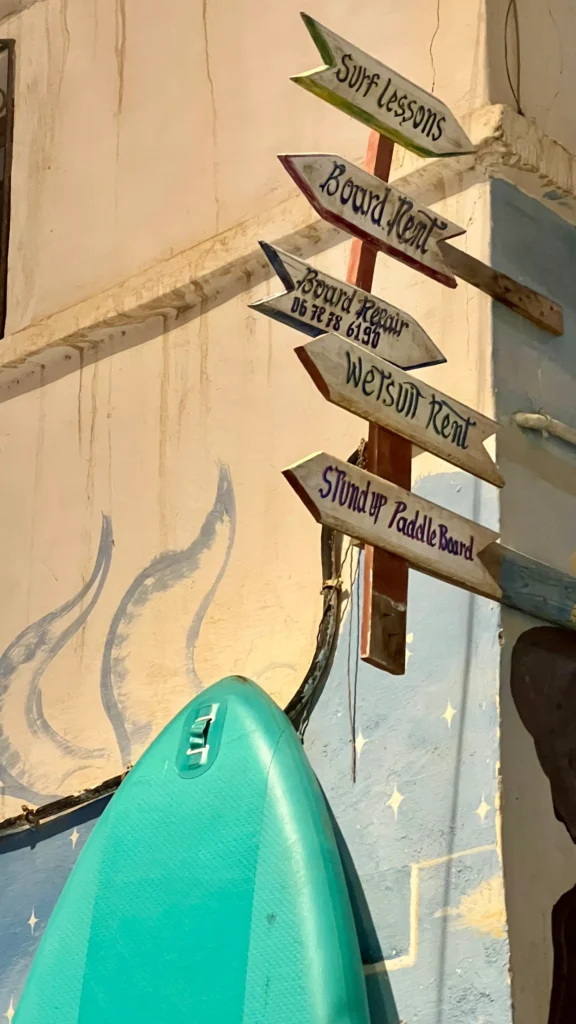
When packing for a Taghazout surf camp, pack light and practical. Most Taghazout surf camps provide boards and wetsuits, so this saves you from having to lug yours over to Morocco.
That being said, bringing your own favourite board, etc., can make a difference if you’re particular about performance. Of course, you’ll also need to pack a couple of swimsuits, too.
Since you’ll be spending your days on the water, make sure to pack water-resistant spf to protect you from the sun’s glare. For extra protection from the sun, you could take Zinc stick sunscreen.
If you are travelling with only a carry-on bag, I swear by a microfiber towel to save space – these are super convenient as they dry really quickly after a day on the beach. Make sure to take a reusable water bottle and fill it up before you go to the beach, so you can stay hydrated while surfing.
Taghazout isn’t a fancy place and is really casual, so think loose trousers or shorts and a top. Pack casual, lightweight clothes, breathable fabrics, and a few layering pieces for when it gets colder at night.
Travel Documents and Insurance
Some important documents to make sure you pack are:
- Make sure your passport is valid for at least six months beyond your return date. It’s also worth checking visa requirements for Morocco based on your nationality.
- Print your boarding passes. I flew from Agadir Airport, and on my flight home, even though I checked in online, they wanted me to have a physical boarding pass, which I managed to get from the check-in desk. This might be the same for you, so I’d suggest getting to the airport a bit earlier, just in case.
- Travel insurance is another essential you shouldn’t overlook. Choose a policy that covers surfing and other water sports, as many standard plans exclude adventure activities.
- If you plan on driving in Morocco, make sure to take your driving licence and International Driving Permit (IDP) with you.
Little Things I Was Glad I Brought
I’d highly recommend packing a cap and high-quality sunglasses to help you protect yourself further from the sun.
It’s a good idea to take a beach cover-up with you, as when you’re done with surfing and lying on the beach, it can get a bit chilly.
A good book is ideal for downtime, when you’re lying on the beach or have free time, and a tote bag is a great way to carry your essentials to the beach.
Also, a good conditioner or hair mask goes a long way. I have long hair, and after spending time in the salty sea and lying out in the sun, my hair was so tuggy and broken!
My Honest Review of My Taghazout Surf Camp
What I Loved Most About This Camp
I loved so many things about Surf Coast Morocco, but what stood out most was how socialable it was.
From the moment I arrived, it felt easy to connect with other travellers, especially solo travellers. Whether it was sharing meals, watching sunsets, or chatting after surf sessions, there was always a relaxed, friendly atmosphere.
The balance between surf and wellness was another highlight. Morning yoga on the rooftop terrace, with the sound of ocean waves in the background, was the perfect way to stretch out tired muscles and get ready for the day. Paired with surf lessons, it was exactly what my mind and body needed.
The location in Taghazout also made the experience even better. Being so close to the beach, surf spots, restaurants, and cafes was ideal. When it came to the end of my six-day trip, I honestly didn’t want to leave!
What Could Be Better & Would I Stay Here Again?
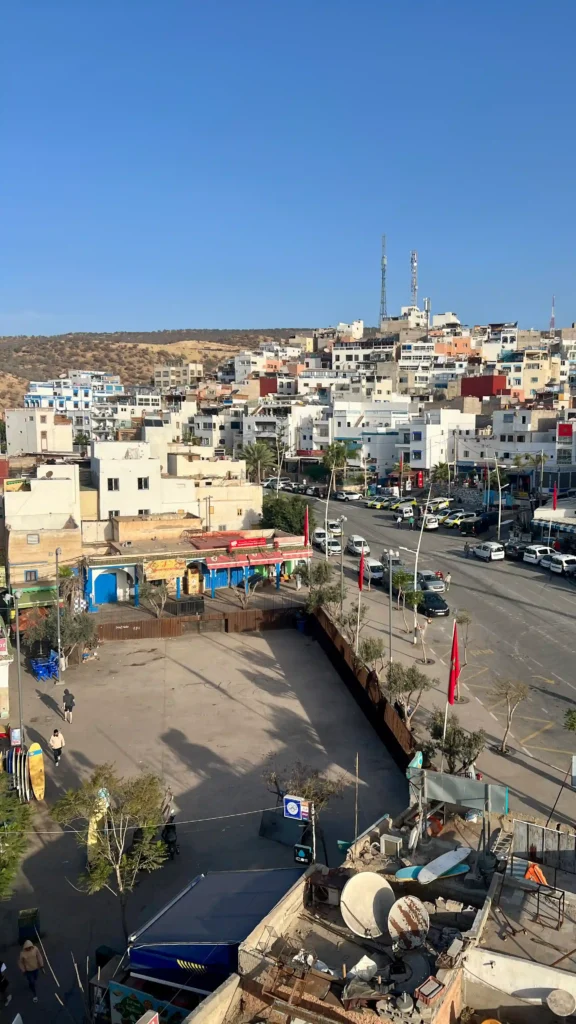
Pulling at straws here, but there were a few things that could be improved. By the time I booked, only rooms in the second building at Surf Coast Morocco were available – and honestly, I wouldn’t recommend staying there.
It’s right in the heart of town, next to the market square, which makes it super noisy, especially in the early hours when dogs are barking and screaming. Even earplugs didn’t fully help (but definitely take some with you to just help a little bit with the noise!).
If you can, try to book the main building instead. Situated right by the water, you’ll fall asleep to the soothing sound of ocean waves rather than the chaos of the town.
The yoga terrace is a beautiful space, but it’s quite small. During busy periods, it can get cramped, which makes it harder to fully enjoy the sessions.
Lastly, while this isn’t the fault of the camp itself, the nearby beaches we visited were extremely crowded. No exaggeration – there were around 300 surfers waiting for waves, and it sometimes felt like an accident waiting to happen.
If you’re after quieter lineups, it’s worth asking your instructors about alternative spots or organising your own surf trip.
Other Taghazout Surf Camps Worth Considering
I’m not affiliated with Surf Coast Morocco; this is just purely a review of my time there, but there are plenty of other great Taghazout surf camps. These are some of the most well-known and highly reviewed:
- Hashpoint Surf Camp – A smaller, more intimate camp with a friendly atmosphere and yoga sessions, making it ideal for relaxed stays.
- Surf Berbere – One of the area’s classics, offering surf lessons and a lovely community. It’s great for solo travellers and groups.
- We Surf Morocco – Highly rated camp with strong surf coaching, comfortable stays, and enthusiastic instructors — a solid all-round option for all levels.
Taghazout isn’t the only place to go surfing. Check out my surfing in Morocco guide to find out other places worth visiting.
Tips for Choosing the Right Taghazout Surf Camp
Location and Access to Surf Spots
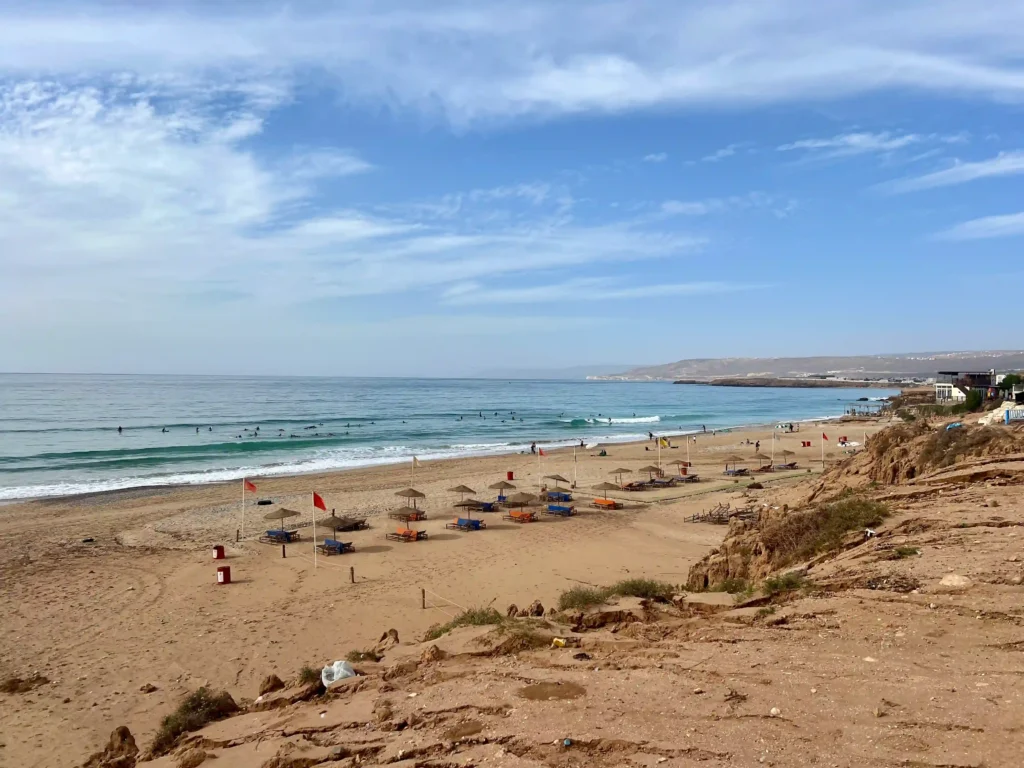
One of the main things to look out for when booking a Taghazout surf camp is its location. It depends on whether you want to stay in Taghazout (more lively and more choice of surf camps) or the quieter Tamraght.
Now that I’ve been to Taghazout once and experienced it (I loved it, btw!), I’d opt to stay in Tamraght next time.
Surf camps based in Taghazout or nearby Tamraght offer quick access to nice beaches and famous spots. Some of which are even within walking distance, while others are just a short drive away.
Many Taghazout surf camps already include daily transport to different surf spots as part of their packages, but it’s worth just double-checking when you’re booking.
Instructor Experience and Group Size
When choosing a Taghazout surf camp, the experience of the instructors and the size of the groups can make a huge difference to your progress.
So look out for skilled, certified instructors with strong local knowledge who understand how Morocco’s waves work and know exactly where to take you based on conditions and ability level.
Smaller group sizes often lead to better results, especially for beginners and intermediate surfers. With fewer students per instructor, you’ll receive more personalised feedback, extra support in the lineup, and clearer tips on technique and positioning. This individual attention is so useful when it comes to catching waves and building solid foundations.
Before booking, it’s worth checking how many surfers are assigned to each coach. A well-balanced instructor-to-student ratio will greatly enhance your overall surf camp experience.
Many quality Taghazout surf camps also organise surfers by ability, ensuring you’re learning alongside others at a similar level – this is another thing to look out for when booking. I found that this created a more relaxed atmosphere and avoided the frustration of feeling rushed or held back.
Reading Reviews and Asking Questions
Before booking a Taghazout surf camp, take the time to read guest reviews, as this can give you valuable insight into what the experience is really like.
Look for consistent feedback on surf coaching quality, accommodation comfort, food, cleanliness, and overall atmosphere. Honest reviews often highlight both strengths and small drawbacks, helping you set realistic expectations.
Pay close attention to comments from travellers with a similar skill level or travel style to yours. A beginner’s experience may differ from that of an advanced surfer, just as a solo traveller’s stay may feel different from a group trip. These details can help you decide whether a particular camp is the right fit for you.
Don’t hesitate to contact surf camps directly with any questions before booking and ask them about group sizes, lesson structure, equipment, etc. Responsive, helpful communication is often a good sign of reliable management!
Lastly, whichever Taghazout surf camp you end up booking, I hope you have the best time (just as I did!). Please leave a comment below and let me know how your surfing experience in Taghazout was!
Loved this guide to going to a Taghazout surf camp? Save it to Pinterest for your visit there!
I’d love it if you could drop a comment below, share my Pinterest pins, and subscribe to my blog to stay updated with new posts. Every bit of engagement helps my little travel blog grow!
This post is all about Taghazout surf camp.
Thanks so much for reading – it means the world!
Kirsty x