💌 Just a quick note before we get started: this post contains affiliate links. That simply means I might earn a small commission (at no extra cost to you) if you decide to book or buy through one of the links. It helps me keep Postcards from Kirsty running — and hopefully helps you plan your own adventure too!
Whether you’re a complete beginner or already chasing green waves, surfing in Morocco is a great decision. With warm sunshine, long sandy beaches, rolling Atlantic swells, and laid-back coastal towns — all without the eye-watering price tag — it’s one of the best places to surf.
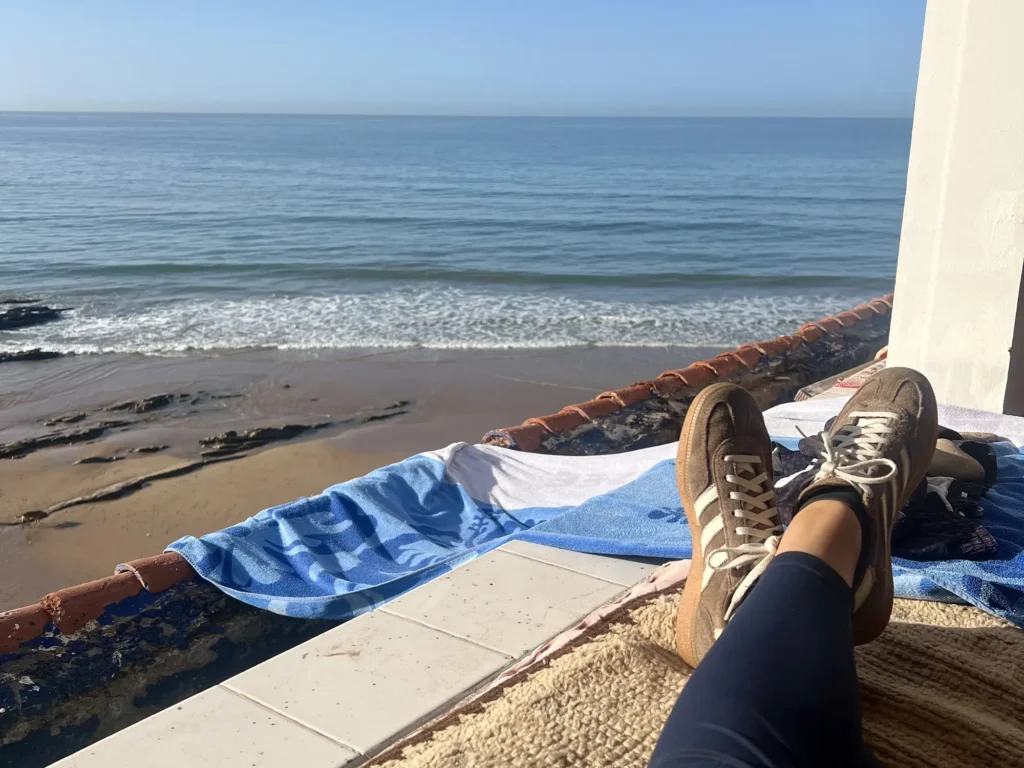
I spent a week at a Taghazout surf camp and genuinely didn’t want to leave. Early morning yoga sessions, slow rooftop breakfasts, afternoon surf lessons, and sunset walks along the beach – it was honestly the perfect break. Taghazout has that effortless surfer vibe, and as a solo traveller, I found it ridiculously easy to meet like-minded people.
Now, because surfing in Morocco is an easy yes, the only thing left to figure out is where exactly to surf in Morocco — and when to go. Let’s break it down.
Why Surfing in Morocco Is So Popular
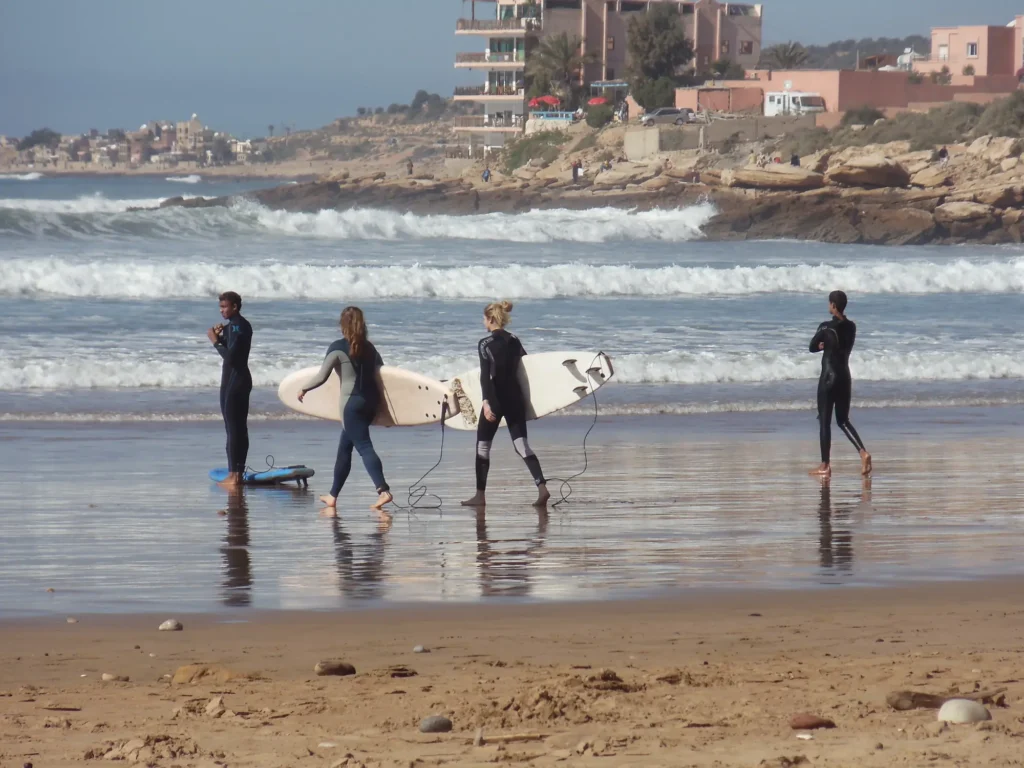
There are plenty of reasons why Morocco is such a popular surf destination.
Firstly, the weather along the coastline is pretty perfect year-round, usually sitting between 20–30°C. This is a stark contrast to inland Morocco, like Tinghir or Merzouga, where summer temperatures regularly climb to 40–50°C.
On the coast, those milder temperatures make surfing a joy. You can happily sit out on your board without feeling like you’re being absolutely scorched. You’ll still need a wetsuit, as the water is on the cooler side. However, once you’re out of the ocean, it’s a great temperature for relaxing on the beach (although bring a beach cover-up just in case you get hit with a cold wind).
Secondly, Morocco’s surf towns — particularly Taghazout — are completely geared towards tourists and surfers. It’s a genuinely lovely little town and very safe, with great bars, cafes, and restaurants (not to mention the crepe stalls!!). It also has plenty of surf shops where you can rent a wetsuit and board.
Thirdly, I found visiting a surf camp in Morocco surprisingly budget-friendly, especially considering how much is included — meals, yoga sessions, and daily surf lessons. Plus, Morocco is well-connected, and I found it so easy to pick up affordable flights from the UK to Agadir Airport.
Lastly, the waves are consistently beginner-friendly throughout the year, meaning you can visit almost anytime. Not so much for advanced surfers — but more on that later.
The Best Places for Surfing in Morocco
Morocco’s coastline is packed with surf spots. Some are world-famous point breaks, although these do tend to be quite crowded, whereas others are quiet beach stretches where you’ll share the waves with a handful of experienced surfers and locals.
The beauty of surfing in Morocco is that you can base yourself in one town and have multiple breaks within easy reach.
Here’s where you should be looking:
Taghazout — The Surf Capital
Taghazout is where I tried surfing in Morocco, and honestly, I think it’s the perfect spot for first-timers.
It’s a stunning, small fishing village turned surf hotspot. You can expect a slower pace of life here – listening to the sound of ocean waves and watching spectacular sunrises and sunsets – it’s honestly just good for the soul.
It’s home to a huge variety of surf spots, for beginners and advanced surfers alike, including:
- Panorama Beach – Located right next to Taghazout, the waves on this beach are much softer and perfect for beginners getting to grips with standing up or turning.
- Devil’s Rock – This is a fun, forgiving beach break that most surf schools use, especially for beginner groups.
- Anchor Point – Mostly for advanced surfers, this spot serves up long, powerful right-hand waves that peel endlessly.
Surfing in Taghazout is pretty great. It’s extremely convenient to Agadir Airport, being only 30-minutes drive away, and it’s built for tourists. If you’re travelling solo, it’s also the place to meet people without even trying.
The only downside is that it can get pretty noisy at night, as there’s a large population of stray dogs that bark and scream into the wee hours.
Tamraght and Aourir — Chill Alternatives to Taghazout
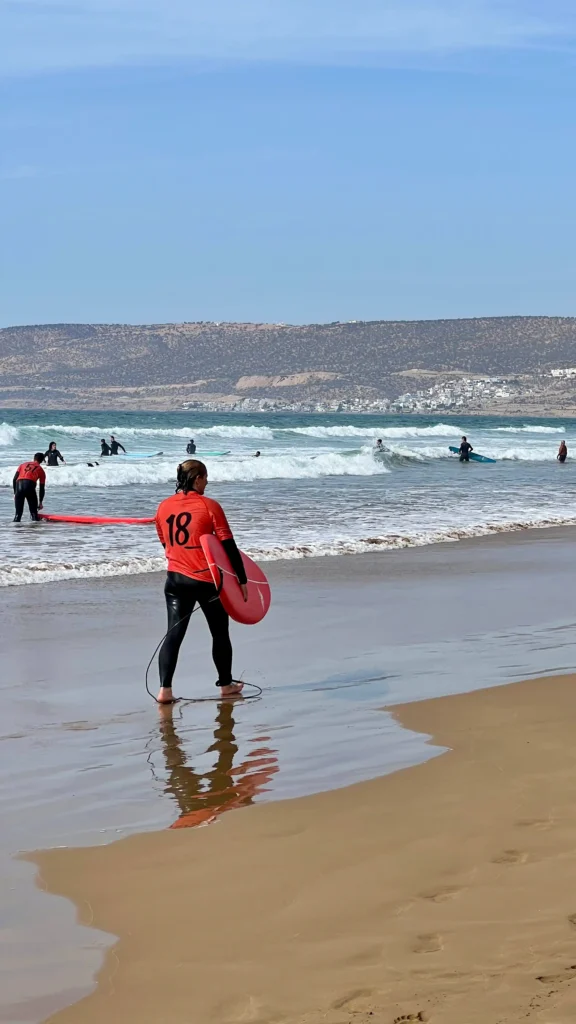
Just south of Taghazout are towns like Tamraght and Aourir, which offer a slightly quieter surf vibe.
They are similar to Taghazout but feel slightly less polished and a bit more local. Plus, accommodation also tends to be cheaper, and it’s still close to all the main breaks, like the nearby Banana Point, which is a fun right-hander that works well for beginners and intermediates.
Now that I’ve experienced Taghazout, I’m 100% going to Tamraght for surfing next.
Imsouane — Home of the Long Wave
About 1.5 hours north of Taghazout lies Imsouane, famous for its surfing. It’s home to one of the longest waves in Africa — The Bay.
On a good day, you can ride it for what feels like forever. It’s ideal for beginners and longboarders because the wave peels gently, and it gives you that much-needed thinking time.
There’s also Cathedral Point nearby, which offers a slightly more powerful ride for intermediates looking for a bit more challenge.
Essaouira and Sidi Kaouki — North Coast Options
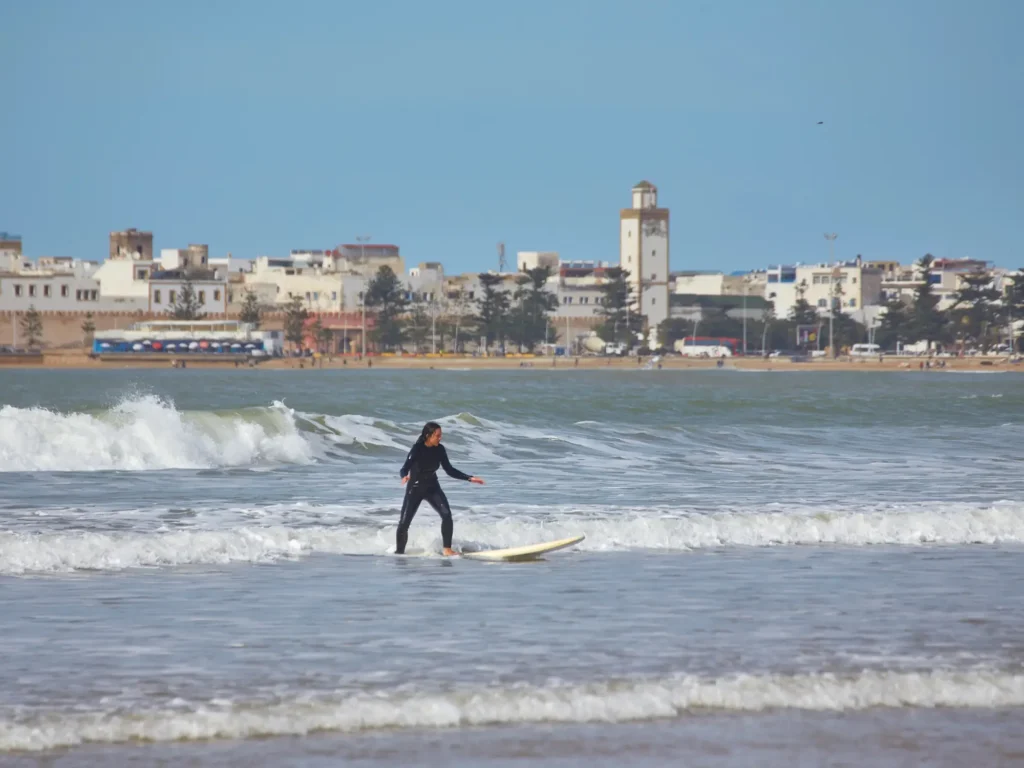
If you travel further north toward Essaouira, you’ll find additional surf opportunities.
Essaouira Bay has gentle beach breaks ideal for beginner lessons, and nearby Sidi Kaouki offers a long, uncrowded beach with waves that suit all levels, depending on conditions.
It does tend to be windier here, which makes it popular with kitesurfers. These are less classic “surf towns” and more laid-back coastal escapes that happen to have good waves.
TL;DR: So… Where Should You Base Yourself? If it’s your first time surfing in Morocco, Taghazout (or nearby Tamraght) is the easiest choice. Everything is set up for you. If you want long waves and a slower pace, head to Imsouane. And if you prefer something less polished and a bit more rugged, look north. Morocco really does have something for every level.
The Best Time of Year for Surfing in Morocco
Best Months for Beginner Surfing in Morocco
If you’re new to surfing (or still very much in your “standing up is a win” era – don’t worry, I’m with you on this), aim for September to November or March to May.
These shoulder months are the sweet spot. I can personally vouch for this – I went surfing in Morocco in November, and it was such a good time to go. There are consistent waves, the weather is comfortable, and it’s not as crowded.
Best Season for Advanced Surfing in Morocco
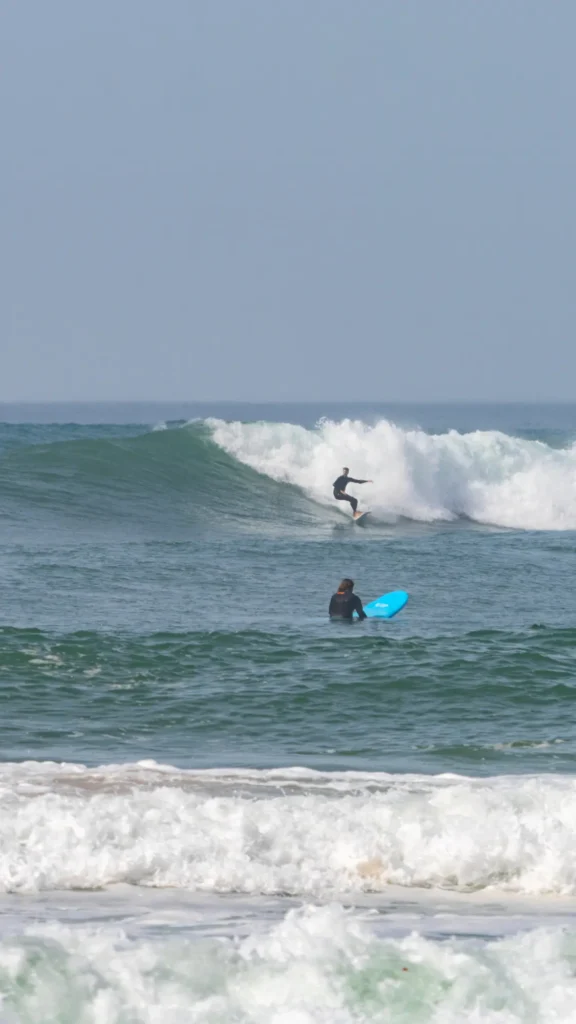
If you’re chasing proper swell, winter is your season. From December through February (and often into March), the Atlantic really ramps up. This is when Morocco’s famous point breaks start delivering longer, more powerful rides that experienced surfers travel here for.
Conditions are more consistent, waves are bigger, and the overall surf scene feels more serious. It’s not the easiest time for beginners, but for confident intermediates and advanced surfers, winter is when Morocco truly shows off.
It’s also worth noting that if you’re planning to combine your trip with inland travel — to places like Ait Ben Haddou or the Dades Valley — winter and early spring bring much more comfortable temperatures away from the coast.
Surf Camps and Lessons for Surfing in Morocco
Whether you choose a full surf camp or just a few lessons depends on the kind of trip you’re planning. Below, I’ll break down both options so you can decide what’s right for you:
Surf Camps in Morocco
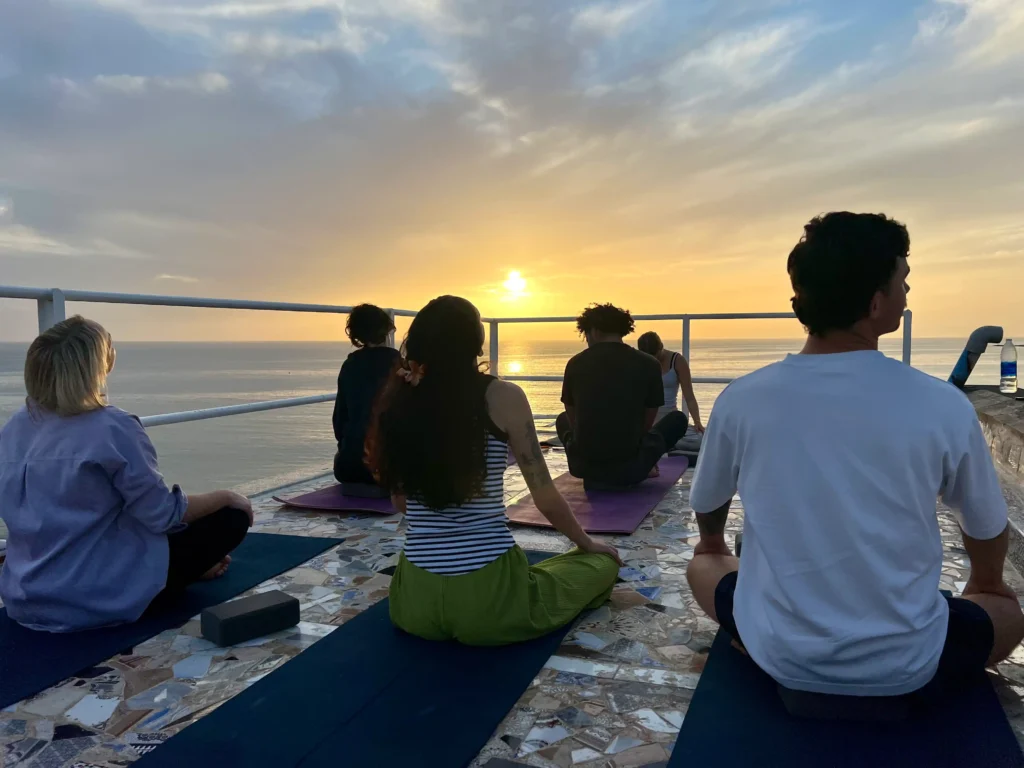
Surf camps in Morocco are usually all-in-one packages, which makes life really simple. The things that are usually included are:
- Daily surf lessons with experienced local instructors.
- Board and wetsuit rental included.
- Transfers to the best breaks each day.
- Accommodation in surf hostels, guesthouses, or private rooms.
- Extras like yoga, guided trips, or meals.
These camps are perfect if you want to improve your surfing fast, meet like-minded travellers (especially other solo travellers), and enjoy a hassle-free experience.
When picking a surf camp in Morocco, look for level suitability, what’s included in the package, group size, and reviews.
Surf Lessons in Morocco
Surf lessons in Morocco are a great alternative to a full-on surf camp. If you want more freedom to plan your own trip, aren’t too concerned about meeting other travellers, and just want to spend a few days in the water, lessons are probably the better choice.
- For beginners, your surf lessons will likely focus on paddling, safety, and popping up on your board.
- For more advanced surfers, your surf lessons will mostly involve tips on timing, wave reading, and advanced manoeuvres. Plus, access to more challenging breaks with guidance.
How Much Does Surfing in Morocco Cost?
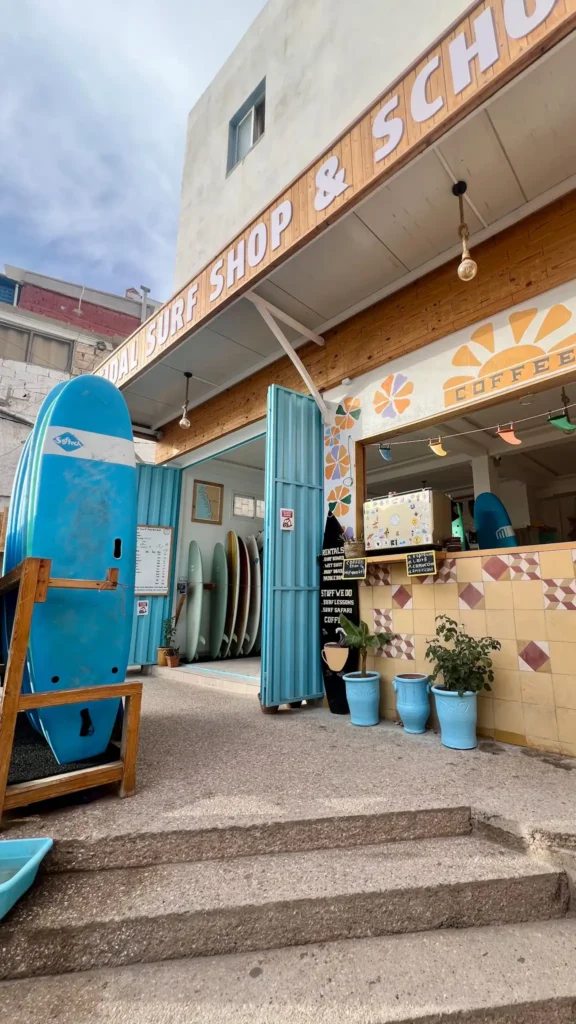
I can only speak from my experience at Surf Coast Morocco in Taghazout, where I stayed for five nights. This cost me £479 (or €553/$656). Whereas, a seven-night stay would come to around €658/$781.
I thought this was pretty reasonable, considering it included three meals a day, a private room, and daily yoga and surf sessions.
Taghazout is the most popular surf town in Morocco, so it’s probably on the pricier side. If you head to places like Tamraght or towns further north, you’ll likely find slightly cheaper options.
Of course, this is for a full surf camp. If you’re planning to surf independently — renting your own boards, finding your own spots, and going at your own pace — it can be significantly cheaper. Here’s a rough idea of independent surfing costs:
- Rent a surfboard for around €10–€15 per day
- Rent a wetsuit for €5–€10 per day
- Book a group surf lesson in Morocco for €20–€40 per session
Tips for Planning a Surfing Trip to Morocco
After surfing in Morocco myself, I’ve put together some top tips to help you make the most of your trip:
- Book your surf lessons or camp well in advance, especially during peak season. The most popular surf camps fill up fast — I booked mine a month before my trip, and by then, options were already limited.
- Bring sun protection for long days on the beach – sunscreen, a hat, and sunglasses are essential, even on cloudy days.
- To save space — especially if you’re travelling with just a carry-on — leave your wetsuit and board at home and rent them once you arrive in Morocco.
- Fly into Agadir Airport for convenience. If you are arriving further afield or fancy venturing to other places, consider driving in Morocco.
- Respect the local culture — Morocco is largely alcohol-free (there’s only one bar in Taghazout that serves alcohol), so be mindful of local rules and customs.
- The vibe here is nice and slow – make sure to soak it in! Take time to enjoy that sunrise or sunset.
Loved this guide to surfing in Morocco? Save it to Pinterest for your visit there!
I’d love it if you could drop a comment below, share my Pinterest pins, and subscribe to my blog to stay updated with new posts. Every bit of engagement helps my little travel blog grow!
This post is all about surfing in Morocco.
Thanks so much for reading – it means the world!
Kirsty x